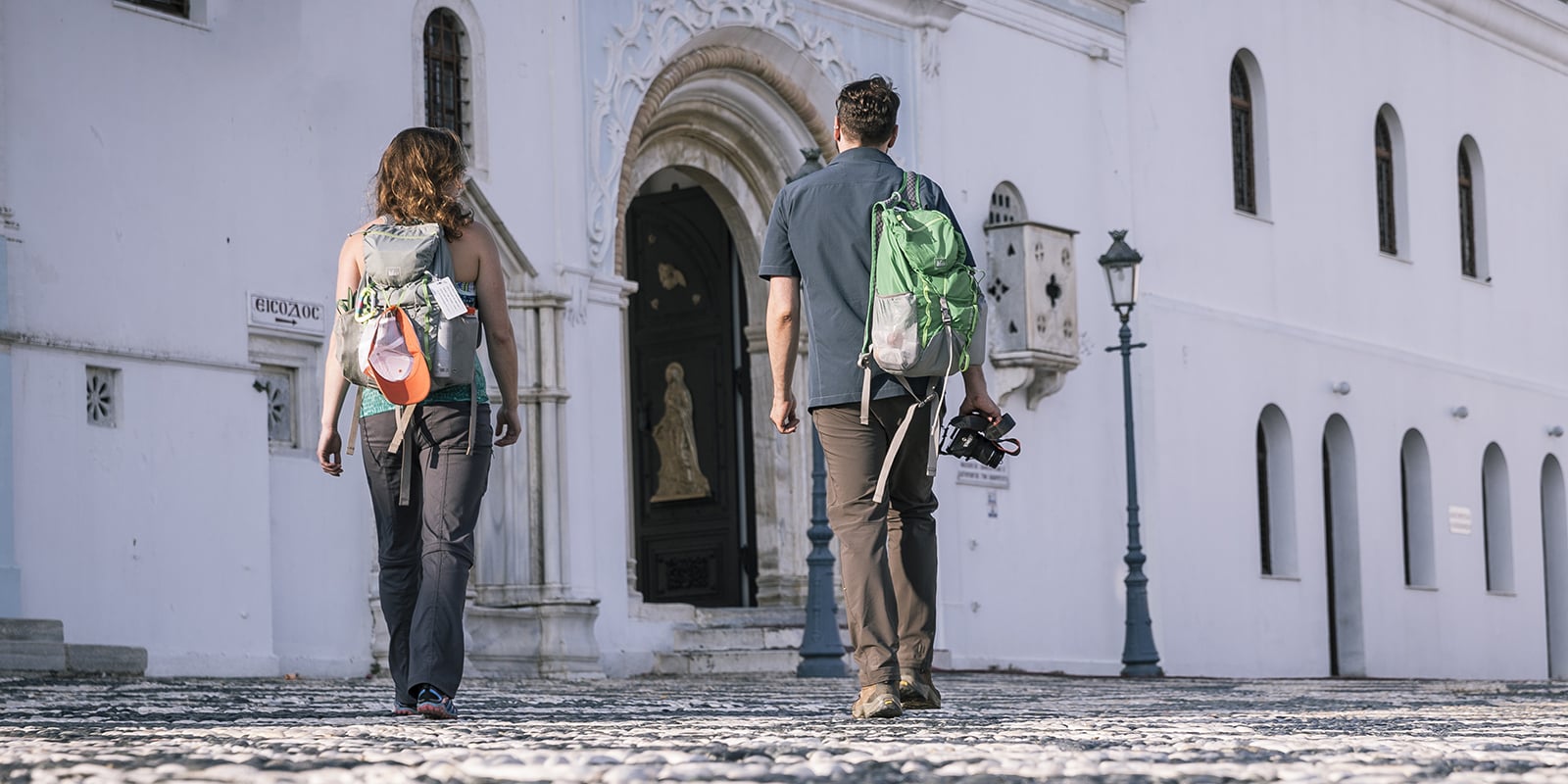
Walking might be the one human activity that has literally been done in every type of shoe. If you're looking for a pair of "walking shoes," however, you're really looking for shoes that will be comfortable for long stretches of walking. The good news is that a broad range of outdoor shoes can help you hit your stride.
Think about where you plan to walk most of the time. Then narrow your walking shoes choices into one of the following categories:
- Road-running shoes: Made for pavement, these lightweight shoes are good for walking at a brisk pace. They're also good if you want one pair of shoes for walking and running.
- Hiking shoes: These are a good option for paths in urban parks or greenbelts and surfaces like cobblestone streets and gravel paths. They also work if you want one pair of shoes for hiking and walking, or if you want extra durability or stability.
- Trail-running shoes: Also a good option for non-paved surfaces, they offer a compromise between the performance of road runners and the stable build of hiking shoes.
For an in-depth look at each of the preceding categories, look at How to Choose Running Shoes, How to Choose Hiking Boots and How to Choose Trail-Running Shoes.
When you're considering any walking shoes, focus on these factors:
- Stability: You want good lateral support: a shoe that you can't bend or twist easily in your hands.
- Cushioning: Having a uniform level of cushioning, rather than a huge heel cushion, is more comfortable for many walkers.
- Fit: Getting shoes that fit you well is the most important factor of all. Getting fit by a footwear expert is your best way to do that.
Walking Shoe Stability
To gauge if a shoe has the minimum level of needed stability, try these tests:
- Hold the shoe by its heel and bend the toe upward. The shoe should bend at the ball of the foot, not a random point halfway along the arch.
- Grasp the shoe at its heel and toe, then twist it. You want to feel moderate resistance.
Specialized stability features in running shoes: Support features in some running shoes can help correct alignment issues in your stride. This is less of an issue for walkers than for runners, who generate more stress on each stride. The following types of running shoes can be helpful if you overpronate, meaning each foot rolls inward as you stride:
Stability shoes: These are designed to help people with moderate overpronation.
Motion control shoes: These are only needed if you severely overpronate.
Hiking shoes and trail runners offer good overall stability. While they don't correct for pronation like the types of road-running shoes noted above, most hiking shoes and many trail-running shoes have a wider (more stable) base than typical road-running shoes. Some hiking shoes and trail runners also have an internal shank that increases stability.
Rocker sole vs. straight sole: Rockered soles are an emerging trend in road-running shoes. The best way to find one is simply to look at shoes from the side—the toe and heel on a rockered sole curve slightly upward. Rockered soles are intended to smooth out your stride and reduce impact stresses by inducing a slight rolling motion to your gait. If that's intriguing, try out shoes with a rockered sole to see if you like how it feels.
Rocker sole stability: Shoes with less rocker tend to be more stable, so look for a traditional flat sole if you prefer greater stability.
Walking Shoe Cushioning
Running shoes are categorized into cushioning levels: barefoot (hardly any), minimal, moderate and maximum. The amount of cushioning is ultimately a matter of personal preference. If you want a lot of cushioning, look at road runners or even trail runners, rather than hiking shoes.
Walking causes less impact to your feet than running, so you can feel comfortable with less cushioning. A lot of walkers also prefer a shoe that's evenly cushioned, rather than one with a large heel stack (significantly more cushioning in the heel than in the toe).
Heel-to-toe drop: This spec, measured in millimeters, indicates the evenness of a shoe's cushioning. Most walkers need a shoe with a low drop number— "zero drop" indicates perfectly even cushioning. Larger drop numbers tell you how much higher the heel is in relation to the toe. This spec is mainly a concern if you'll also be running in your shoes because wearing new shoes with a big difference in heel drop can alter running-stride mechanics, which is something best done after consultation with a doctor, physical therapist or trainer.
Walking-Shoe Fit
Fit supersedes all other considerations: technology, reviews, fashion or recommendations from friends. A proper fit helps prevent bruised toenails and heel blisters, as well as more serious foot problems. Buying a shoe that fits you well is the best way to end up with a shoe that'll keep you and your feet happy for miles to come.
A good fit is snug everywhere and tight nowhere. You want the snug fit in the heel through midfoot, then room for your toes to splay out a bit. You also need at least a finger's width of space between your longest toe and the end of the shoe. A common running-shoe fit tactic also applies to fitness walking shoes: Buy one-half size bigger than your casual shoe size.
Shoe volume: Volume is the height (thickness) of your foot. If a shoe has too much volume, your foot can move around too much. If the shoe has too little volume, it might be uncomfortably snug across the top of your foot. You can adjust the volume somewhat by how tightly you lace a shoe, but getting shoes with the right volume for your feet is best. Shoes vary in volume, but there's no spec or category that reflects it. If you have a shoe brand that has fit comfortably in the past, then buying that brand again increases the odds that the volume is correct for you. Your best tactic to get the right volume in a shoe, though, is to get fit by a footwear expert.
Want to Talk to an Expert About How to Choose Walking Shoes?
You can try on shoes and get expert fit advice in REI stores. Call ahead and ask for details on the store's current COVID protocols.
Consider New Insoles
A lot of shoe brands know that many customers prefer to get their own insoles, so many shoe insoles are easily replaceable. Aftermarket insoles are often the best way to provide your feet with optimal arch support and internal stability. How to Choose Insoles can help you learn more.
You can transfer old support insoles into new shoes, but the lifespan of your insoles, like the lifespan of your shoes, is limited—about 300 to 500 miles. If you've racked up that kind of mileage, then you've definitely earned yourself a new pair of kicks.