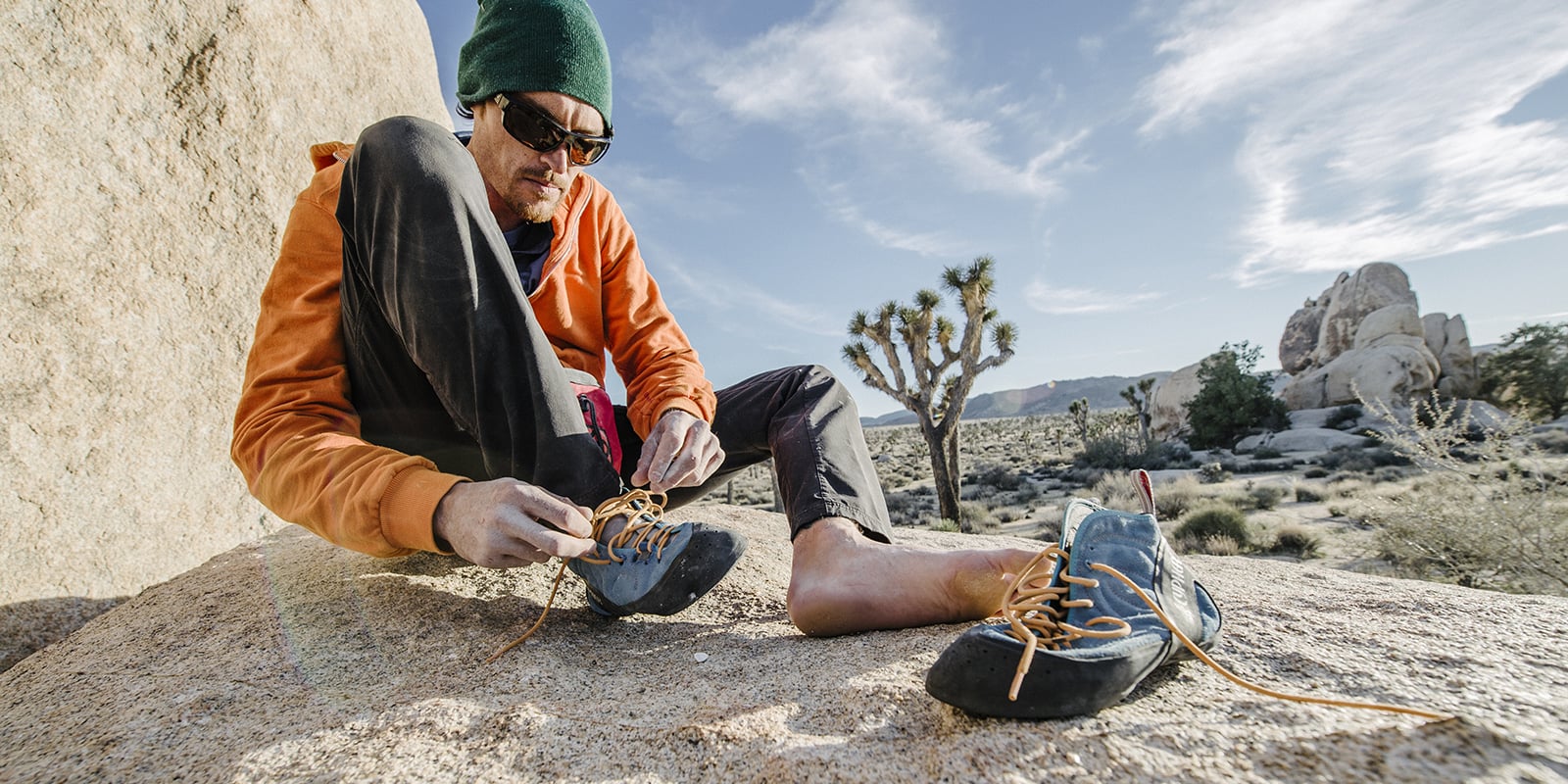
The average active climber can wear out two pairs of rock shoes in a year. Avid climbers, especially gym climbers, can go through three or more pairs in a year. Following a few basic guidelines can help your climbing shoes last longer and perform better:
- Get the right fit. Ill-fitting shoes perform poorly and wear out faster.
- Wear them only for climbing. Dirt and grit on hiking trails grinds down rubber prematurely. Dirty soles also have less grip when you get on the rock. And never walk around with only your toes slipped inside—that crushes the shoes' heel cups.
- Strive for clean footwork. The cleaner your footwork, the less you'll wear out the rubber by dragging your shoes' softer rubber across rough surfaces.
- Use a shoe bag. It keeps your shoes clean and protects them from direct sunlight.
For more details on selecting and fitting rock shoes, see Rock Climbing Shoes: How to Choose
Keeping Climbing Shoes Clean and Odor-Free
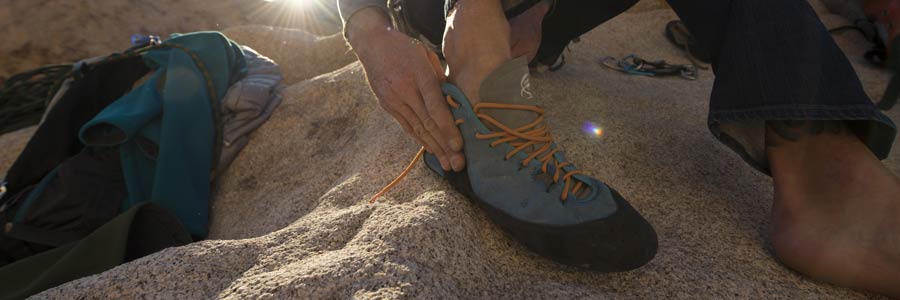
A little prevention can help keep your shoes looking and smelling cleaner:
- On the approach, keep feet clean by wearing closed shoes rather than sandals.
- While waiting to climb, don't walk around barefoot.
- Bring a tarp to keep shoes and bare feet off of the soil.
- When you get home, prevent mildew and odor by removing shoes from your pack.
- Clean dirty shoes by wiping insoles and linings with a damp cloth; leave shoes out to dry afterwards, avoiding direct sunlight and its damaging UV rays.
- Use deodorizing foot powders or sprays if shoes get smelly.
- Spot-clean dirty uppers with rubbing alcohol or a little water; don't use too much water because that can prematurely break down the leather.
Caring for Climbing Shoe Soles and Rands
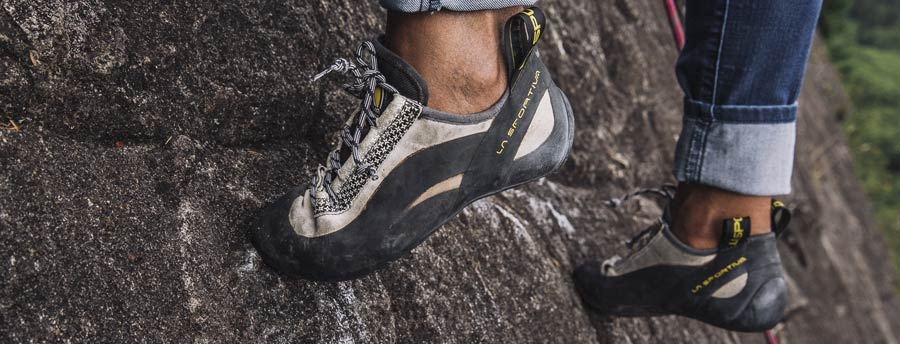
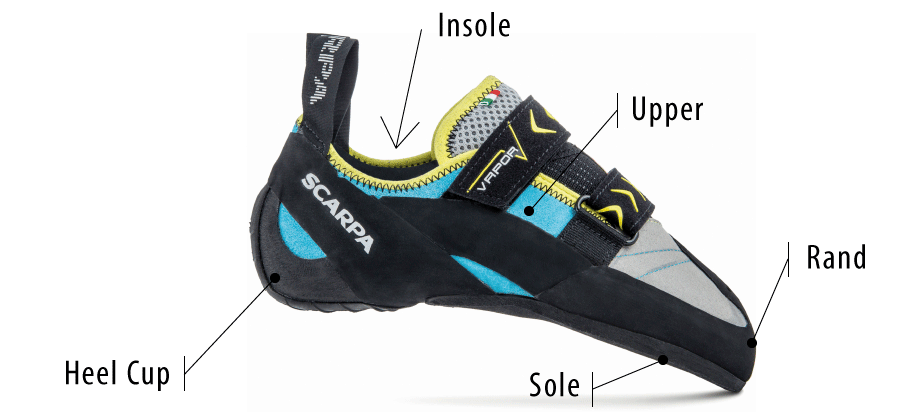
The sole and rand (rubber strip above the sole that wraps around the shoe) are where the rubber meets the rock, so do everything possible to keep the grippy rubber clean and in good repair:
- After climbs, rub the soles and rands lightly with a wet rag, removing as much dirt as possible; then, wipe them dry.
- To revive performance, gently use coarse sandpaper or a wire brush on areas that have lost grippiness; this is messy and can cause premature wear, so be judicious.
- Never leave shoes in a hot car; high temperatures can deform rubber, melt glue and delaminate rands.
Climbing Shoe Resoling and Repair
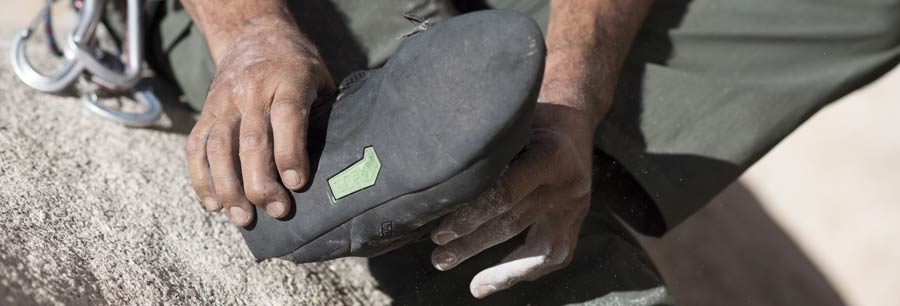
Keep an eye on the high-wear areas of your soles and rands, looking for thin or pitted areas, dings and loose edges. Areas prone to wear include:
- where the sole meets the rand
- the ball of the foot
- the toe area
Climbing Shoe Rubber Repair
You can fix small dings and repair a delaminating rand using an adhesive like Shoe Goo. When repairing the rand, trim off any excess first.
Climbing Shoe Resoling
If the soles wear out before the rest of your shoes, a somewhat common scenario, consider getting your shoes resoled. That will be less expensive than new shoes. Most repair shops resole the front half of shoes, using a medium-grade rubber blend.
- Ask your local REI or other climbing store about repair shops that specialize in climbing-shoe resoling.
- Save money by getting your friends to resole their shoes at the same time; you'll be able to split shipping costs and some shops offer a volume discount.
- If you're ambitious and handy, you can also buy a resoling kit and do it yourself.
Climbing safety is your responsibility. No article or video can replace proper instruction and experience. Make sure you practice proper techniques and safety guidelines before you climb.