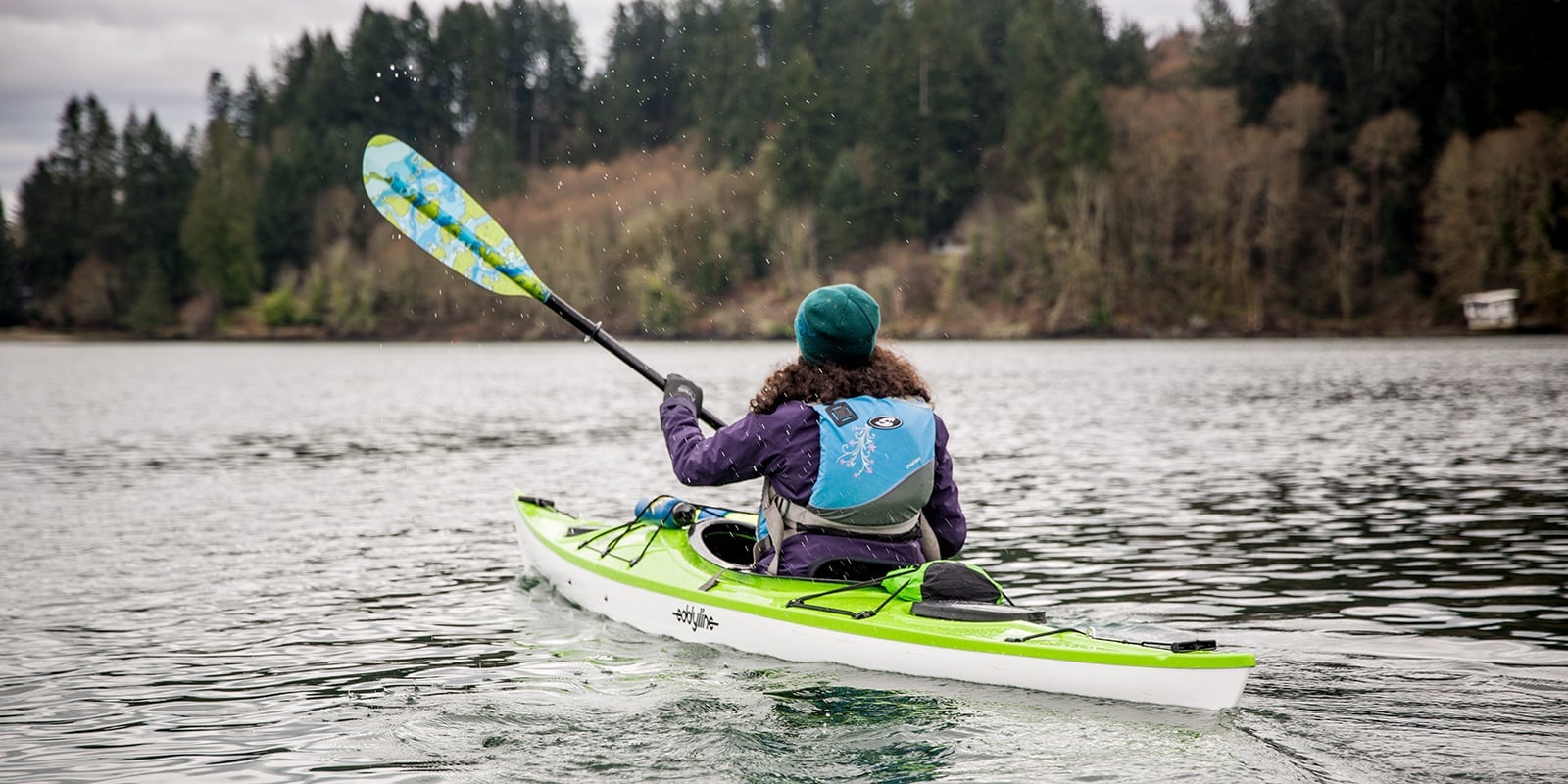
A personal flotation device—also known as a PFD—gives you more buoyancy to help you stay afloat in water. A PFD is an essential piece of gear for every kayaker, canoer and stand up paddle boarder. (Note that a life jacket or life vest denotes a certain type of PFD, though many people use the terms interchangeably.)
There are two different categories of U.S. Coast Guard-approved PFD—wearable or throwable—that have a variety of end uses. This article focuses on wearables used primarily for kayaking, canoeing and stand up paddle boarding. These come in five different numerical buoyancy classifications. To help you choose the right PFD for you, this article covers:
- Standard PFDs vs. Inflatable PFDs: You can't go wrong with a tried-and-true standard PFD, but you might find that an inflatable one suits your needs better.
- PFD sizing and fitting: Sizing for adults is based on your chest size, and you're looking for a snug-but-comfortable fit.
- PFD features and specs: Features such as pockets, color and tabs, and specifications like flotation and U.S. Coast Guard Type, are things you may want to look for when shopping.
As you consider what PFD is right for you, keep in mind that the most important advice about PFDs is simply this: Be sure to wear one.
Standard PFDs vs. Inflatable PFDs
Most PFDs on the market are standard, non-inflatable ones, however, an inflatable PFD might be right for you depending on your needs.
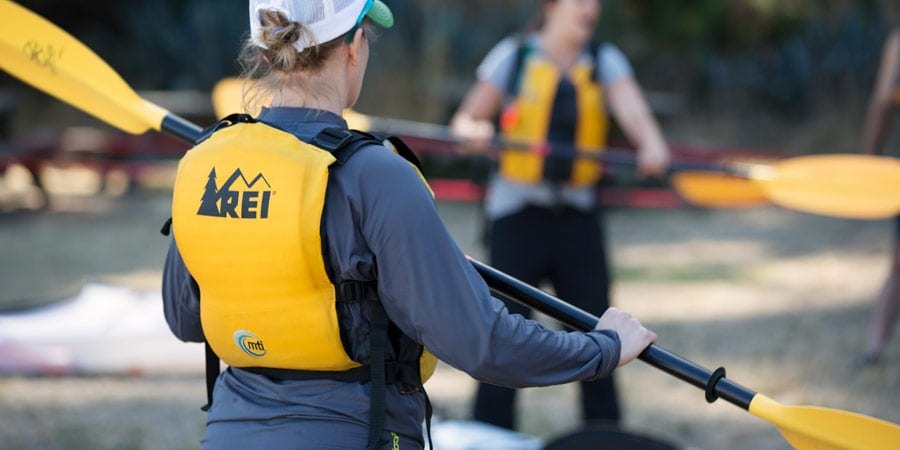
Standard PFDs
These are PFDs that you'll see most recreational kayakers, canoers and stand up paddle boarders wearing. They look like a vest and rely on flotation material, often foam, to create buoyancy. These are labeled based on performance levels. The higher the level, the greater the flotation and stability when in the water.
- Level 50: These PFDs are only for strong swimmers who are near the shore. They are designed for those with nearby help or rescue. This level is not recommended for weak swimmers or nonswimmers.
- Level 70: Equivalent to the old Type III PFD, these PFDs provide good mobility and are for kayaking, canoeing or stand-up paddle boarding. They are designed for quick rescue in relatively calm waters.
- Level 100 and higher: These higher-performance PFDs are made for rough or remote waters, with increased buoyancy and the ability to turn some unconscious wearers face-up. These were previously Type I and II PFDs. Level 150 and 275 PFDs provide more flotation for higher waves and offshore use where it may take rescuers more time to reach someone.
Pros of standard PFDs:
- Low-maintenance: Other than keeping it clean, dry and out of the sun when not in use, a standard PFD requires very little care.
- Inherently buoyant: Other than putting it on properly, you don't need to activate a standard PFD in any way for it to provide flotation.
- Versatile: A standard PFD can be used for many different water sports, such as kayaking, canoeing, paddle boarding, waterskiing and fishing.
- Pockets: Most standard PFDs provide pockets for stashing snacks, tools, sunscreen, emergency gear and fishing equipment, something you won't find on inflatable PFDs.
Cons of standard PFDs:
- Bulk: Some find these PFDs to be bulky and restrictive while paddling, especially when stand up paddle boarding.
- Hot: On a hot summer day, a standard PFD can be quite warm.
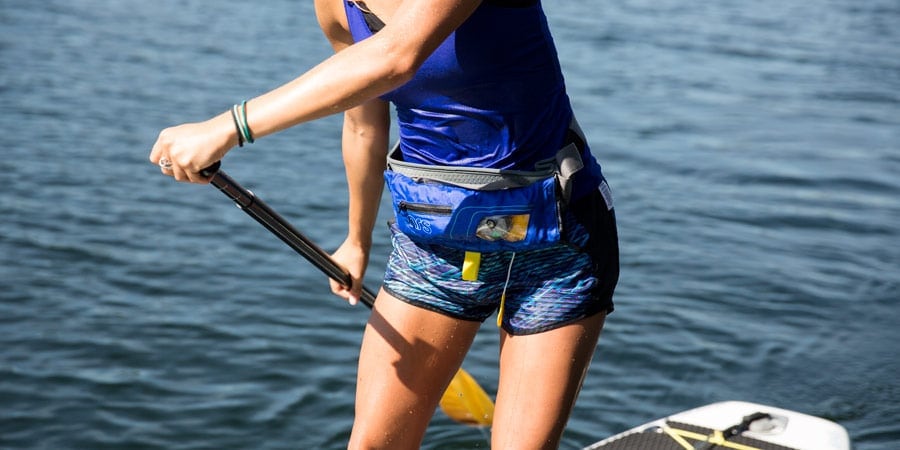
Inflatable PFDs
Inflatable PFDs include vests and waistpacks. These can be used for kayaking, canoeing or stand up paddle boarding. Their slim profile when uninflated makes them very comfortable to wear. These PFDs are typically classified as Level 70 or higher, depending on their design and buoyancy.
These PFDs inflate one of two ways: manually or automatically. With the manual style, you pull a cord, which activates a CO2 gas cartridge and inflates the vest. The automatic design inflates when submerged in water. The manual design is usually best for active sports like kayaking, canoeing and stand up paddle boarding because of the likelihood of getting wet.
Pros of inflatable PFDs:
- Comfortable: The slim profile is very comfortable and is less likely to obstruct your range of motion while paddling.
- Cool: They cover less of your body than a standard PFD, which can help keep you comfortable on a hot day.
Cons of inflatable PFDs:
- Inflation required: Remember that inflatable PFDs are not inherently buoyant, so you need to inflate the PFD before it will provide any flotation. If you're injured or unconscious and wearing a manual-style inflatable PFD, this poses an obvious problem.
- Maintenance required: Regular maintenance is required to ensure proper operation and you need to replace the CO2 cartridge after each inflation.
- Not for everyone: Inflatable PFDs are not for use during high-impact activities, such as whitewater kayaking, whitewater canoeing, river rafting or other sports like waterskiing. Also, they are not recommended for children under the age of 16 or for nonswimmers.
Hybrid PFDs
You'll occasionally find a PFD for kayaking, canoeing or stand up paddle boarding that's a combination of a standard PFD and an inflatable one. These are a specialized best-of-both-worlds solution that provides inherent buoyancy in a compact, comfortable-to-wear package, but they typically cost significantly more.
PFD Sizing and Fitting
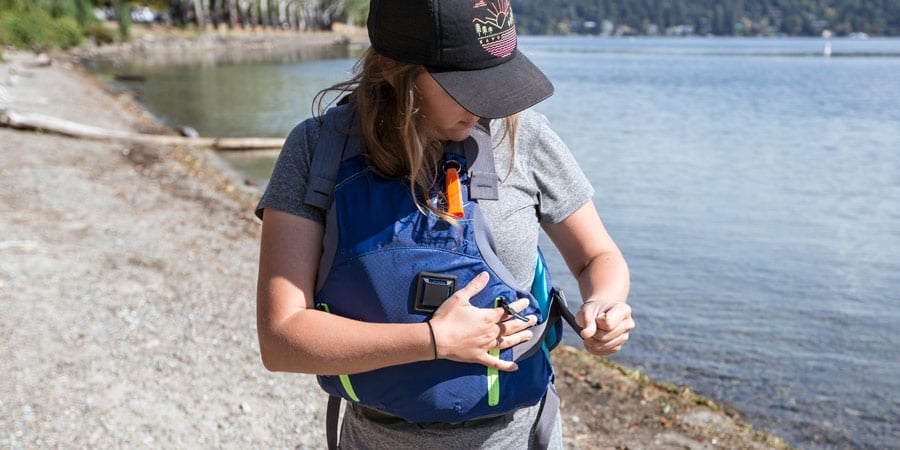
PFDs for Adults
Get the right size: For adults, your chest size—not your weight—will determine what size PFD you need. (For children, their weight will determine the size.) To get your chest size, measure the circumference of your chest at its broadest point. Use this number along with the PFD manufacturer's size recommendations to find the right size for you. You can find sizing information on REI product pages.
To get the right fit for your PFD, follow these steps:
- With a standard PFD, loosen all the straps, put the PFD on and zip it up. With an inflatable, put it on over your head (if it's a vest style) or clip it around your waist (if it's a waistpack style).
- Start at the waist and tighten all the straps. If it has shoulder straps, tighten them last. It should feel snug but not uncomfortable.
- With a standard PFD, have someone pull up on the PFD shoulders. If it moves up past your nose or head, tighten the straps. If it still moves up, the PFD is too large.
- A properly sized PFD should be snug and fit like a glove, yet allow you to move freely and not chafe while paddling and playing.
PFD fit tips:
- To get the best feel and fit when trying on a PFD, wear the clothes you would while paddling.
- Check your movements to make sure it's comfortable and won't chafe you while paddling. If you're a stand up paddle boarder, grab a paddle and mimic the motion of paddling. If you're a kayaker or canoer, do this in your own boat at home, or in a floor model if you're at an REI store. This will simulate how it feels while actually paddling.
- If you're a kayaker, take note of how the PFD works with the seat. The PFD shouldn't ride up or feel uncomfortable. Most kayakers find that a short PFD works best.
- If possible, test your PFD in a pool or shallow water to see how it works. It should not ride up or slip over your chin while floating.
- The more straps a PFD has, the more adjustments can be made to customize its fit.
- Women-specific PFDs typically offer a better fit than unisex ones for females thanks to contoured cups for bust lines and styles made for women's torso lengths.
PFDs for Kids
There are important sizing and fit differences between an adult PFD and a child's PFD. Most notably, you use the child's weight to determine the correct size rather than using a chest measurement like you do for an adult.
Children's life jackets are labeled as being for an infant, child or youth. To figure out which life jacket to buy for your child, you use their weight as a guide:
- Infant PFDs: 8-30 pounds
- Child PFDs: 30-50 pounds
- Youth PFDs: 50-90 pounds
To learn more about life jackets for children, see our article PFDs for Children: How to Choose.
PFDs for Dogs
While many dogs are good swimmers, others lack confidence in the water or they may tire or panic away from shore. Dog PFDs are not USCG certified, but they can still be a lifesaver and help your pet to enjoy the water.
To get the right life jacket for your dog:
- It should fit snugly so your dog cannot twist, step or swim out of it.
- Look for a low-profile style that will have less potential of catching a snag.
- Look for one with easy-release buckles.
- Choose one that has a handle for lifting your pooch out of the water.
PFD Features and Specs
Here are a handful of specifications and features you'll want to be aware of when looking for a PFD.
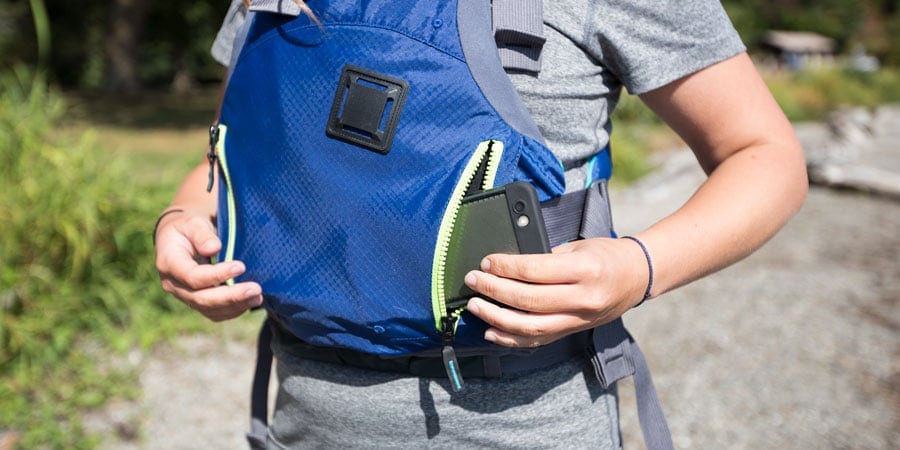
PFD Features
Pockets: Most standard, non-inflatable PFDs have pockets on the front. Consider their size and placement and the gear you'd like to stow in them.
Color: A bright color improves visibility.
Tabs: Tabs let you attach a knife, whistle, strobes or other accessories. Look at the number of tabs and their location on the front and back on the PFD.
Reflective tape: This adds visibility in low-light conditions.
Ventilation: If you're regularly paddling in hot locations, look for a PFD that has built-in vents that allow body heat to escape.
Fishing features: Some PFDs have multiple tool hangers, loops for a rod and a drop-down pocket table for working with lures and flies.
PFD Specifications
Flotation (aka buoyancy) is the force (in pounds) required to keep a person's head and chin afloat above water. Most adults need just an extra seven to 12 pounds of flotation to stay afloat. Any quality PFD will provide more than this amount, so you don't need to spend much time analyzing this number. However, knowing flotation does give you a reliable way to compare one PFD to another. For this reason, you can find PFD flotation on REI.com product pages.
Keep in mind when comparing buoyancy numbers that a person's weight, body fat, lung size and clothing, and whether the water is rough or calm, are all factors that affect flotation.
If you own a PFD, or have the opportunity to try one before buying, and want to check the effectiveness of its buoyancy. Here's how:
- Put your PFD on and enter water deep enough that you can float without touching the bottom.
- Tilt your head back and relax your body.
- Your chin should be above water and your breathing should be easy. If your mouth is not above the water, you need a PFD with more buoyancy.

USCG classification: The new PFD classification system makes it easier to choose the right flotation device by focusing on performance levels rather than the previous Type I-V system. Kayakers, canoers and stand up paddle boarders almost always choose one of three types:
- Level 50 PFDs are designed for competent swimmers and for specific water sports and activities, like kayaking and stand up paddleboarding where mobility is needed, but quick rescue is expected. The label should specify the activity for which it is designed.
- Level 70 PFDs are intended for calm, inland waters, where fast rescue is likely. These offer paddlers freedom of movement and comfort for continuous wear, similar to the old Type III PFDs. These PFDs are designed so wearers can put themselves in a face-up position, but they may have to tilt their head back to avoid being face down in water. These come in inherently buoyant, inflatable or hybrid designs.
- Level 100 PFDs are geared for rough or remote waters or offshore where rescue may take a while. Though bulky, they have the most buoyancy and will turn most unconscious people into a face-up position. They are the kind of PFD you'll likely find on commercial vessels. Most like the old Type I and II PFDs, these are available in inherently buoyant, inflatable or hybrid designs. For added safety and flotation, there are level 150 and 275 PFDs.
Special Use Devices
- Throwable PFDs are flotation devices meant to be thrown to a conscious person who is in trouble and provide backup to a PFD. Designed for emergency flotation, examples include life rings and buoyant cushions. These are the former Type IV PFDs and are not meant to be worn. There is no specific performance level for these PFDs. They are not required for canoes, kayaks or SUPs.
- Special Use PFDs are intended for specific activities. To be acceptable by the USCG, these special-use devices must be worn at all times and used for the activity specified on the label. Varieties include kayaking, waterskiing, windsurfing, deck suits and hybrid inflatable vests. These are the former Type V PFDs. These PFDs no longer fall under a single type or performance level.