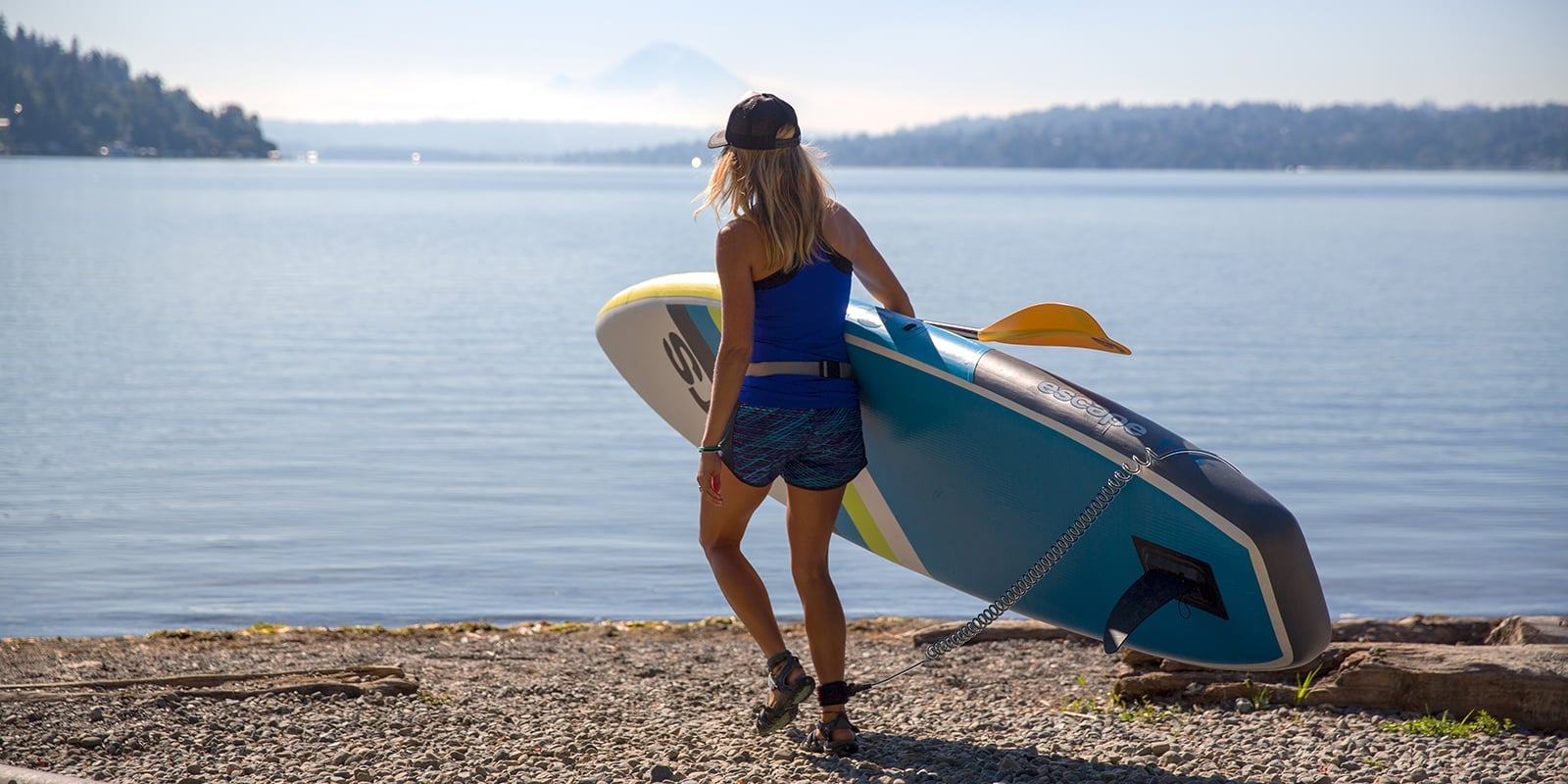
Stand up paddle boarding (SUP) offers a fun way to play on the water, with the added benefit of a full-body workout. And, since you stand at full height on your board, it gives you a unique vantage point for viewing what's down under the water and out on the horizon.
Before you head out on the water for the first time, it's helpful to know how to paddleboard and what gear to bring. To get started paddle boarding, you'll want to learn:
- How to get geared up to SUP; you'll need your paddle board, of course, plus just a couple other essentials.
- Basic SUP paddling techniques; just a few skills will ensure you don't end up paddling in circles.
- A few helpful tips for your first SUP outing (hint: try to make wind your friend).
Video: How to Paddleboard (SUP)
Get Geared Up to SUP
Good news: You need just a few key pieces of equipment to enjoy stand up paddle boarding.
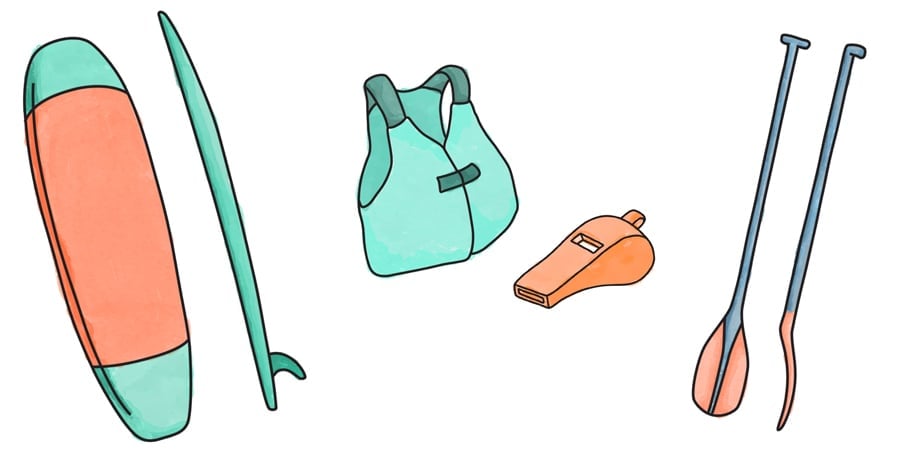
Stand up paddle board: Your first time or two out, you may want to rent gear or borrow from a friend. After that, if you decide you love to SUP and want to do more of it, consider buying your own. Your board choice is determined by a combination of paddler weight and skill, your intended use and the local conditions. Different boards excel at different disciplines, such as recreational paddling, surfing, touring, racing and SUP yoga. If you're renting, the staff at the rental shop will help guide your choice. To learn more about boards, see Stand Up Paddle Boards: How to Choose.
Paddle: A SUP paddle looks a bit like a stretched-out canoe paddle with a tear-drop-shaped blade that angles forward for maximum paddling efficiency. The correct length paddle will reach up to your wrist when you stand the paddle up in front of you and raise your arm above your head. Read more about choosing and sizing paddles in our article, SUP Paddles: How to Choose.
PFD (Personal Flotation Device): The U.S. Coast Guard classifies stand up paddle boards as vessels, so if you're paddling outside a surf or swimming area, you have to have a PFD on board. Adults don't have to wear the PFD, but children must. Check your state's regulations for age requirements. You can learn how to pick the right PFD for you in our article, PFDs: How to Choose.
Safety whistle and light: The Coast Guard also requires that you carry a safety whistle to warn other boaters. If you expect to be out after sunset, be sure to have a light on board.
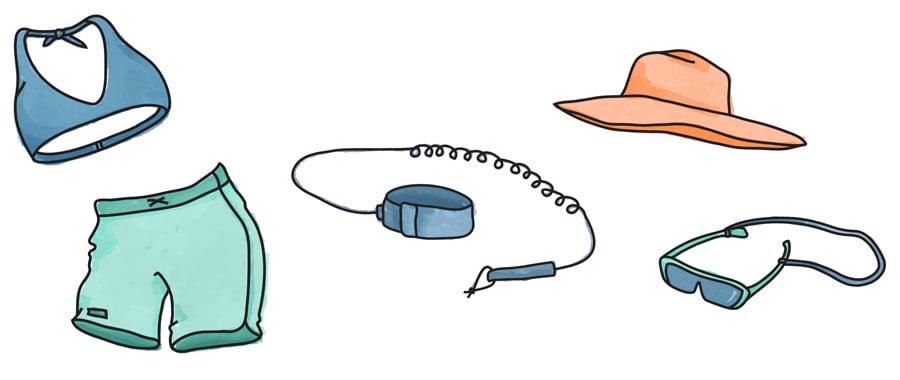
Proper clothing: During the summer months on a warm body of water, most people choose to wear some combination of a swimsuit, board shorts, and a short- or long-sleeved rash guard for sun protection. For cool conditions where hypothermia is a concern, wear a wetsuit or dry suit.
Leash: Typically sold separately, a leash tethers your SUP to you, keeping it close by if you fall off. Your SUP is a large flotation device, so being attached to it can be important for your safety. There are leashes designed specifically for surf, flatwater and rivers; be sure to purchase the correct one for your intended use.
Sun protection: Wear sunscreen, sunglasses and sun-protective clothing.
Basic SUP Paddling Techniques
With only a little instruction, most beginners are able to stand up and start paddling shortly after taking a SUP out for the very first time. To get you started, here are some tips on:
- Standing up
- Balance
- Falling and getting back on
How to Stand Up on Your SUP
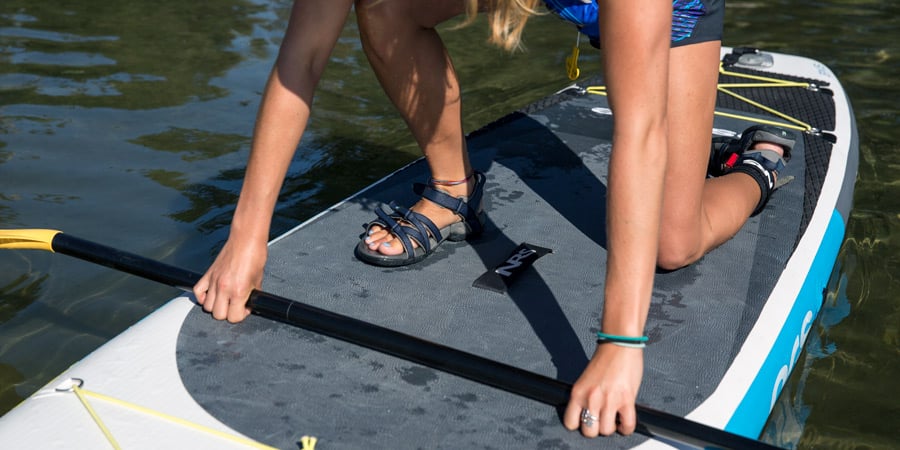
Practice this technique for standing up:
- Stand alongside the board in about knee-deep water (just deep enough that the fins on the board don't hit the bottom).
- Hold the board by the edges and work your way onto the board in a kneeling position, just behind the center point of the board (you can quickly locate the center of the board by finding the carry handle).
- Keep your hands on the sides of the board to stabilize it and move one foot at a time to place your feet where your knees were.
- Rather than standing up in one motion, start by raising your chest up while keeping your knees bent. Once your chest is vertical, extend your legs to stand up.
Staying Balanced on a SUP
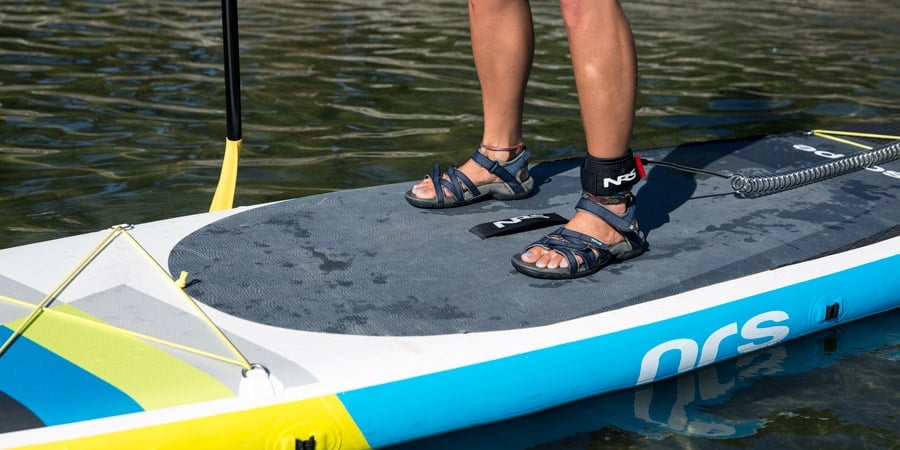
Once you're standing, there are a handful of things you can do to maintain your balance on the board:
- Position your feet so they are parallel, about hip-width distance apart, and centered between the edges of the board.
- Keep your toes pointed forward, knees slightly bent and your back straight.
- Keep your head and shoulders steady and upright, and shift your weight by moving your hips.
- Your gaze should be level at the horizon. Avoid staring at your feet.
How to Hold a SUP Paddle
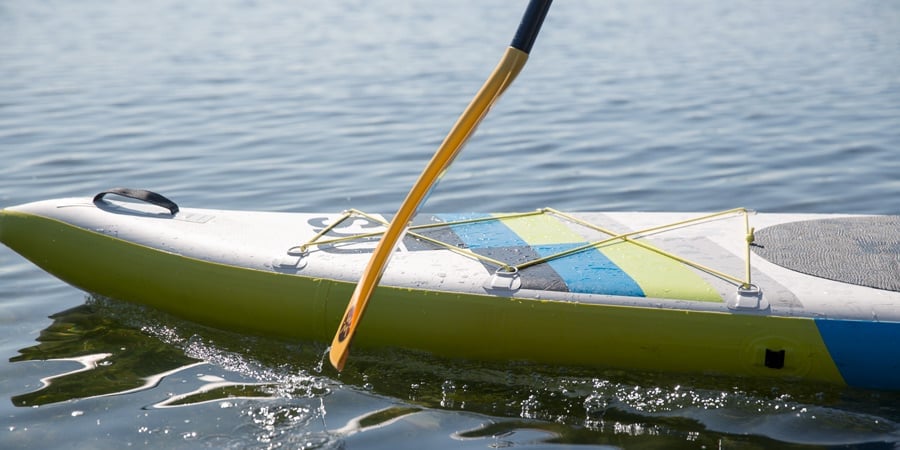
It's fairly common to see beginner paddlers holding their SUP paddles the wrong way. To avoid making the same mistake, here are two things to know when grabbing your paddle:
- The blade should angle forward from the shaft, toward the nose of the board.
- When you're paddling on the right side of your board, your left hand will be on the T-grip and your right hand a few feet down on the shaft. When you switch sides, reverse your hand positions.
Falling and Getting Back On
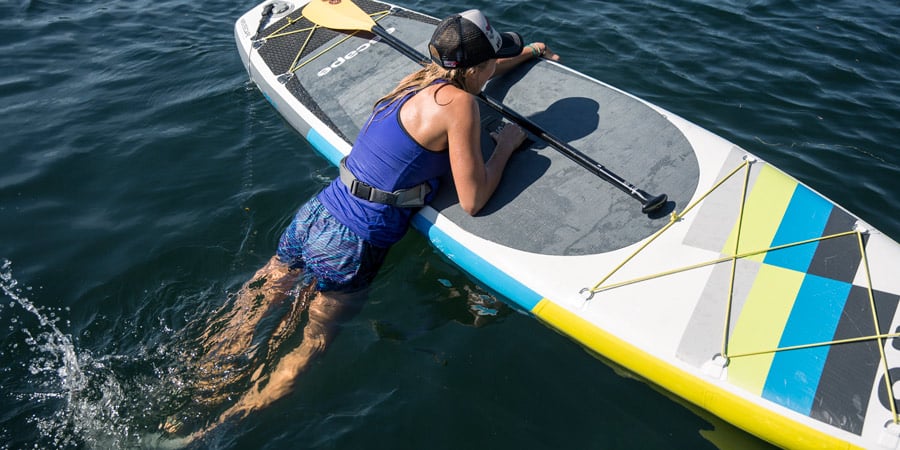
Despite your best efforts to stay balanced on your board, you're going to fall in the water at some point. Even experienced paddlers take the plunge from time to time, so if you're feeling a little wobbly, don't worry about it and remember that SUP is a watersport, so it's okay to get wet.
For those inevitable times when you lose your balance:
- Aim yourself to the side, so that you fall into the water and not onto the board. Falling onto the board is more likely to cause an injury.
- Try to hang onto your paddle while falling. If you get separated from it, retrieve your board first and get back on, then paddle with your hands to get the paddle.
To get back on your SUP after falling off:
- Position yourself next to your board and near the center.
- Grab the handle at the center of the board with one hand.
- Let your legs float up to the surface behind you, then kick your legs while pulling on the handle to slide yourself onto the board.
SUP Strokes
Here's when the real fun begins. As a SUP beginner, there are three basics strokes that will help you get moving:
Forward Stroke
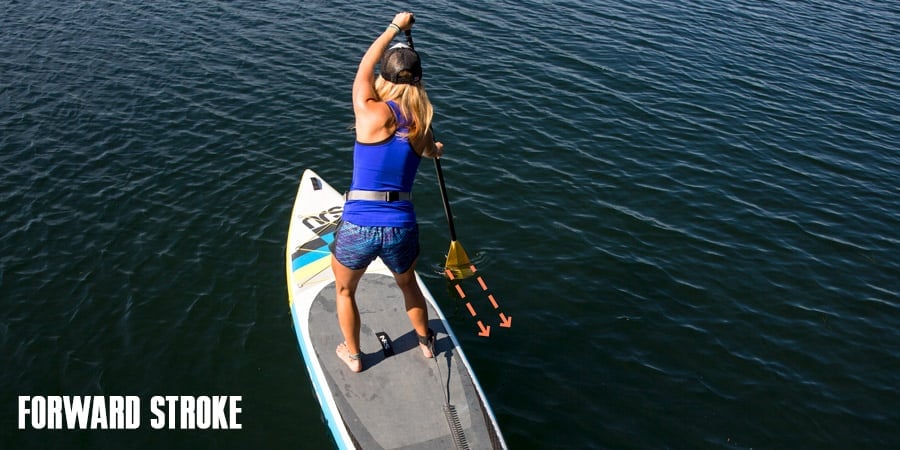
This basic stroke propels your board forward through the water.
- Plant the paddle in the water by reaching about two feet forward, then push the blade all the way under the surface. Move the paddle back through the water to your ankle, then out of the water.
- Keep your arms straight and twist from your torso as you paddle. Push down on the paddle grip with your top hand rather than pulling the paddle back with your lower arm. It's helpful for some people to think of pulling the board past the paddle rather than pulling the paddle through the water.
- To go in a reasonably straight line, you'll need to alternate strokes on either side of the board. There's no set number of strokes per side; try about three or four strokes on one side, then switch to the other.
- The more vertical you keep the paddle, the straighter you will go.
Reverse Stroke
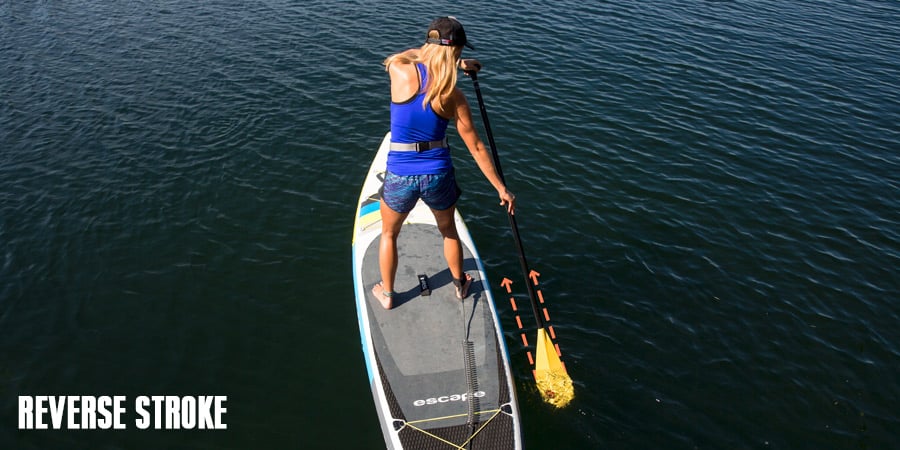
The reverse stroke is simple to perform and can be used for slowing down, stopping and turning. It is essentially the opposite of the forward stroke.
- If you're paddling on the right, reach back behind you and plant the paddle in the water near the tail of your board. Make sure the blade is all the way under the surface of the water.
- Like with the forward stroke, keep your arms straight and twist from your torso rather than pulling the blade forward with your arms.
- Doing the reverse stroke on the right side of your board will cause the nose of your board to turn to the right and vice versa.
Sweep Stroke
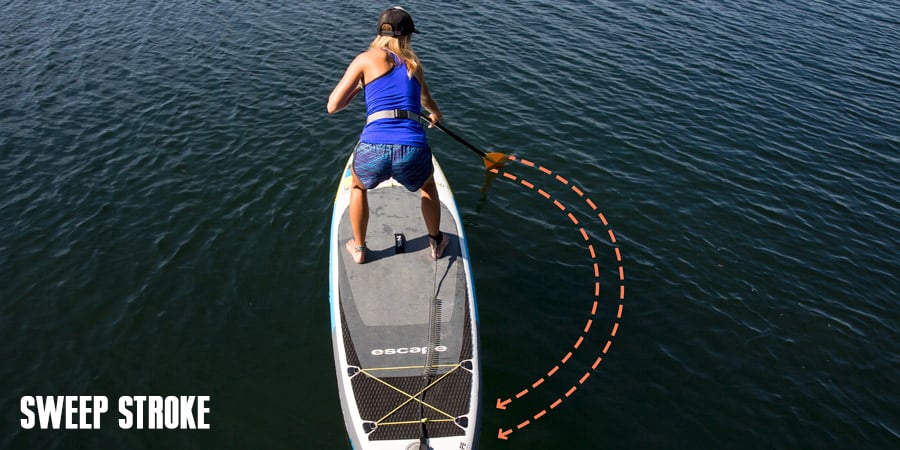
The sweep stroke is useful for turning your board while standing still or moving.
- If you're paddling on the right, rotate your shoulders so that your right shoulder comes forward.
- Reach forward and plant your paddle in the water, submerging the entire blade.
- Sweep the paddle away from the board in a big arcing motion from the nose of the board to the tail by rotating your torso and using the leverage of your legs and hips.
- Doing the sweep stroke on the right side of your board will turn the board to the left and vice versa.
Tips for Your First SUP Outing
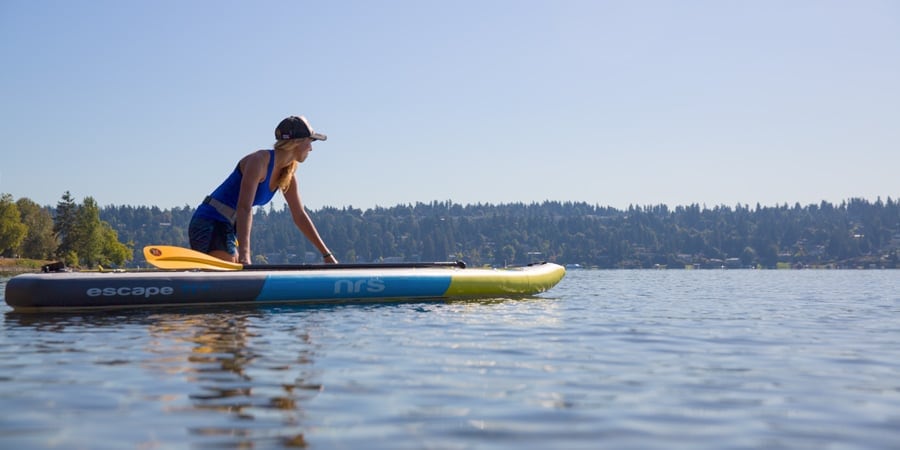
Before you grab your board and head to the water for the first time, here are some simple tips for planning your SUP outing:
- Choose a small, calm body of water, like a lake or pond, that's free of lots of obstacles like boats and buoys.
- Look for a sandy beach or another place you can wade into the water to easily launch your SUP.
- Choose a sunny day with little to no wind.
- If your route requires that you paddle into the wind, do so on your way out so you can get a boost from the wind on the way back when you're getting tired.
- Go with a friend so you can keep an eye on each other.
- Plan to paddle for about one hour on your first outing.