Ever feel lost in the wilderness? Here's a true story of how NOT to respond:
During one early winter afternoon in the mid-1980s, two friends drove for miles on a
Forest Service road in Montana. Far from a paved road, their vehicle became stuck. The pair
elected to hike into the forest rather than retrace their entry route. They eventually
concluded that they were lost. Wandering along, they came across what they believed to be
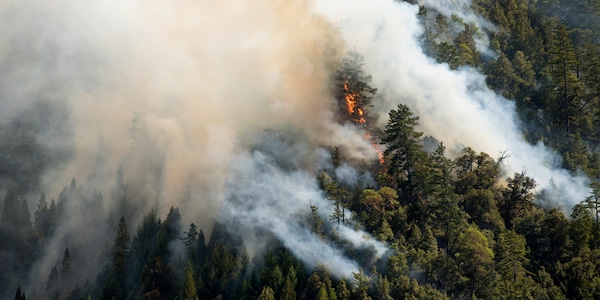
an abandoned ranger station. They decided that they should do something that could attract
attention from afar. Their idea? Set the cabin on fire.
It turns out the cabin had been designated as a historic structure. The hikers,
discovered not long after the cabin was set ablaze, were cited for destroying public
property.
Better options exist for handling such a situation. These hikers, for instance, had
actually found an excellent survival shelter, yet in their panicked thinking they destroyed
it. In the process, they endangered the surrounding forest as well.
We hope you never become lost. If it happens, though, be prepared to calmly respond to
the situation. It would have been much better for these two hikers if they had a backup
plan in mind before they started making bad decisions.
What follows is an assortment of advice we have gleaned from experienced navigators and
search-and-rescue educators. Consider making a printout of these tips and carrying it with
you on your next backcountry trip.
Before the Trip
- Always try to plan for the unexpected "what ifs?" What if I get delayed? Lost? Injured?
Am I prepared to cope with that?
- If you don't already own a compass, select an inexpensive
beginners' model. Prices start around $10. Advance to a more sophisticated compass as
your navigation skills improve. Keep the original as a backup.
-
Learn basic map-and-compass navigational
skills. Some good starting points:
- Review REI's
navigation clinic
.
- Take a navigation class. Check at your nearest REI store
to see if any are scheduled. Community colleges or high schools with adult
extension programs often offer such classes on weekends or at night.
- Find a friend who really understands topographic maps and
compass usage; ask that person to join you on a day hike and learn all you
can.
- Pick a trip, even a day hike, and study your intended route on
a map in advance at home. Doing so when you're not under any
pressure gives you time to become more familiar and comfortable with the unique markings
of a topographic map.
- Worthwhile additional items to carry:
-
Cell phone: Realize that rugged backcountry terrain often
blocks cell phones from connecting to transmitter towers, rendering them useless
in the wilderness. If you're fairly close to a city, cell phones may work high on
an open ridgeline.
-
GPS receiver: These sophisticated units are great for
identifying the points where you have traveled, but usually only a compass (some
GPS models are exceptions) can tell you which direction you are facing —
essential information for backcountry navigation.
-
Two-way radios: These devices typically have a useful
range of about two miles, though certain terrain features (steep cliffs, deep
gorges) may limit their signals. They're handy for keeping track of independent
explorers who insist on traveling at their own pace.
-
Glow stick or chem light: These items could make you
easier to spot at night.
-
IMPORTANT: Let someone know where you're going, what route you
plan to take and your estimated return time. If you get lost, the sooner a rescue
operation begins, the better for your searchers and you, the lost party. Tip: Make a photocopy of a map with your
intended route highlighted, then leave it with a family member, friend or a ranger.
Slide one more copy under the seat of your vehicle at the trailhead. (Rescuers, racing
against time, may attempt to enter your car at a trailhead in search of clues to your
possible whereabouts.) If you change your plans before you start a trip, call and update
someone, even if you simply leave a voice mail.
During the Trip
- Carry the
Ten Essentials
. Consider also carrying a spare flashlight, a pencil or pen, and a stash of emergency
food (such as energy bars) that you promise yourself you won't consume during
hunger attacks earlier in the trip. Tote a lightweight space
blanket, too; it could help you more comfortably endure a chilly night.
-
Check your map regularly, even if you are walking on an obvious
trail. Get acquainted with seeing how markings on a map depict the topography all around
you.
-
Stay together! If members of your group begin hiking separately,
someone might get mixed up at a trail junction and get lost.
- Carry a whistle and keep it within easy reach. If you become
lost or injure yourself, don't rely on easily fatigued vocal chords to signal for help.
A whistle lasts longer and its sound carries farther. Make sure your kids are
individually equipped with whistles. Some people carry whistles attached to the shoulder
straps of their packs for easy access. Tip: Three blasts of a
whistle is a universal signal for help.
-
Wear a watch and know what time sunset occurs. Autumn hikers,
still accustomed to long summer days, often overestimate the amount of daylight
available to them.
-
Avoid overconfidence. Some people believe getting lost "only
happens to other people." Put away your ego and regularly double-check your position and
your understanding of where you think you should be. If the two don't match up, stop and
reevaluate. When you reach major terrain features — a trail crossing, bridge
or shelter — see if you can locate that feature on your map. This will assure
that you know where you are.
If You're Lost
Remember an acronym favored by the Emergency Response Institute of Olympia, Wash.:
S-T-O-P. Stop, Think, Observe and Plan.
-
Stop: If you feel uncomfortable with your situation, don't go
any farther. Don't panic, either. Young or inexperienced backcountry travelers should be
taught to stay put once they feel lost. "Hug a tree" is familiar, and worthwhile,
advice. The rule changes if the area is unsafe or someone in your group needs medical
attention. Count to 10, drink some water or eat a little food. These acts often give you
a fresh perspective and help you better assess your situation.
-
Think: Where were you when you were last certain of your
location? Was it at a trail junction? A river crossing? A place where you can take
bearings to obvious physical landmarks that appear on the map? Can you navigate back to
that point? Can you hear or see helpful landmarks like a road or trail? If so, carefully
return to that spot and reevaluate your options. Remember, you can take control.
-
Observe: Put your senses on full alert. Picture in your mind all
distinctive features you spotted as you came to your current position. Remember the
details or any oddities that spurred you to make a mental note. Can you use them as
waypoints to guide you back to a place where you were confident of your location? If so,
return to that spot. Can you connect with a known trail from that point? Do so. If not,
stay put. It's easier for rescuers to find you near your original line of travel. Are
there any items there that can be useful to you? Any hazards you need to avoid? When
will it get dark? How does the weather look?
-
Plan: If you are with others, talk over a plan. If not, it can
be useful to say the plan out loud as if you were explaining it to someone else. If it
makes sense, then follow your plan. If not, revise your plan. If the situation changes
as you follow that plan, use "STOP" again to improve your chances for a safe recovery.
-
Tip: Are you confident that you are near a "baseline" object
such as a major road? If so, and you are certain of its direction and have sufficient
daylight, consider bushwhacking to that object.
Additional Considerations
- If you have a cell phone and can make contact with the outside
world, describe your position and your route of travel as best you can. Request help,
then STAY PUT — unless there is a trail or other major feature that you can
see from your current location. Start your trip with a fully charged battery and treat
your phone as emergency equipment; don't waste your battery.
- Realize when you request a rescue, it could take a long time — several hours
— before rescuers reach you. This is not like calling the police in a city.
Most often search-and-rescue teams, while very professional, are all-volunteer units of
private individuals who sacrifice their time to come to the aid of strangers. Be patient, and be appreciative of their service.
- Make use of your Ten
Essentials. Use your fire starter to ignite a manageable
blaze. A smoky one is visible even in the day.
- Position yourself in a clear area, away from trees, so you will be
easily visible from the air. Laying out a brightly colored item, such as your
pack or anything that is a contrast from the surrounding environment, is also a sound
approach.
- If you are going to spend the night, do not camp close to rushing
water. Its sound might obscure the voice of rescuers calling out to you.
- Always observe your surroundings at any stage of a trip. A
topographic map tells you a lot, but even a topo using 40-foot contour lines may not
show you a 30-foot cliff. Keep track of noteworthy physical landmarks. How will you be
able to spot them on your return? Sometimes just turn around
during a hike and take note of how the terrain looks from a reverse perspective. Always anticipate the course of your return trip.
- If you use markers on your trip, always remove
them during your return leg. Otherwise your old markers could confuse other
travelers.
Advisers to this clinic:
Rick Hood, director of Navigation Northwest (www.hoodcs.com), a search-and-rescue education service.
Bob and Mike Burns, authors of Wilderness Navigation: Finding Your Way Using Map,
Compass, Altimeter and GPS (The Mountaineers).
Back to Top
Find REI on:
Facebook
Twitter
YouTube
MySpace
Flickr