A kayak allows you to reach scenic beachside campgrounds, quietly explore an estuary, enjoy breathtaking views that can't be seen from shore, get in a morning workout around the lake or just play in the water with the kids.
Just as there are many ways to use kayaks, there are many choices of boats. How do you know which kayak is best for you? When you're trying to decide on a kayak, focus on a few key ideas:
- Where do you want to paddle? Is it a lake, a seacoast or a river? This will help you start to narrow your choices.
- Sit-in or sit-on-top? Do you prefer the protection of a traditional sit-in, or the openness of a sit-on-top? If you're open to either one, that's fine, too.
- Kayak weight and your budget: Materials, which directly impact the boat's price, are the biggest factor in the weight and durability of your boat.
- Shape and size considerations: These affect handling and cargo space.
Where Will You Use Your Kayak?
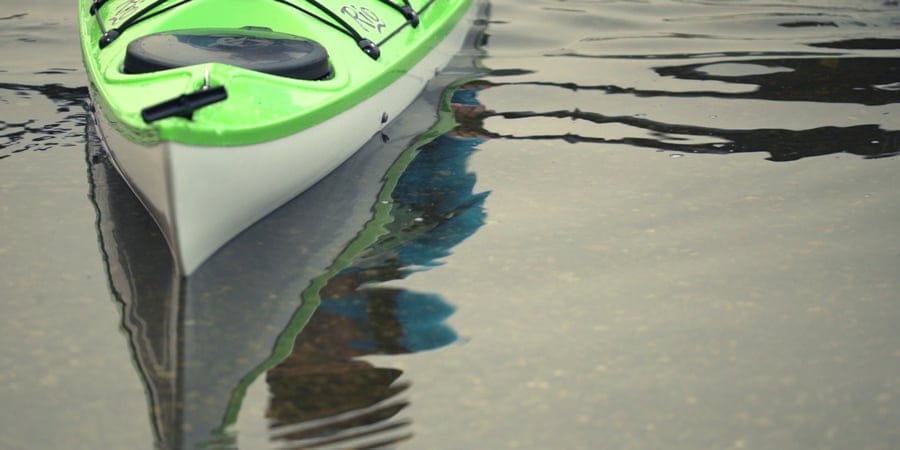
Boats aren't categorized by water type, but it's still helpful to start here and think about which environment you plan to explore before you choose your boat.
Lakes: We're talking the local lake here, not Lake Superior. If the weather is fair and the destination is near, you can go with any sit-on-top or recreational sit-in boat and have fun. If whitecaps appear, then a purely recreational boat can get overmatched.
Coasts: This is where wind, waves, currents, tides and more all come into play. So having a sit-in touring boat with a rudder, fixed tracking fin or a skeg (a dropdown fin) is wise. If you live in a warm environment where you don't mind going for a swim, or you plan to do some kayak surfing, a sit-on-top can still be a fine choice.
Rivers: We're not talking about technical rapids—whitewater kayaks are beyond the scope of this article. If you're floating on a river, you want a stable, sturdy craft that turns quickly. That might be a short, stable recreational sit-in or sit-on-top boat or day touring sit-in kayak.
Rivers and lakes: If you plan to use your boat in both flowing and still waters, go with a short recreational sit-in or sit-on-top kayak. These crossover boats typically have a skeg. That setup will help you turn responsively when the skeg is up and track efficiently when the skeg is down. A short boat with a rudder would also be an option, but rudders are typically found on longer boats.
Types of Kayaks
Kayaks are classified in many ways, including where you sit in them, how you use them, their structure and whether they are built for a specific purpose.
Sit-on-top Vs. Traditional Sit-in Kayaks
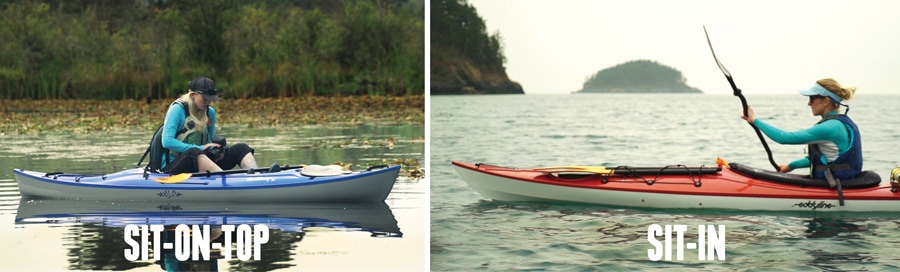
Sit-on-tops are primarily recreational boats for lakes and easy flowing rivers. You'll also see them in warm coastal waters, and a few longer sit-on-tops have enough storage for an overnight trip. If you'd feel too claustrophobic inside a cockpit or you don't want to learn how to do a "wet exit" if you capsize, you're a sit-on-topper. If you're not sure yet, consider the following:
- Sit-on-tops are easy to get on (even in deep water) and off of, so they're good for casual uses, like playing around near a lakeside cabin, or as a kids' boat or swimming platform.
- They're comfortable when air and water are warm (you'll always get wet).
- Scupper holes make them self draining; no need to pump out water.
- They have some deck stash spots, and hard-to-access cargo space (inside the hollow hull).
- They're typically heavier than comparable sit-in kayaks.
- For those interested in fishing, some sit-on-tops include rod holders or at least the option to add them.
Sit-in kayaks come in recreational boats, day touring and touring models. They move fast, track straight and have covered cargo compartments, so they're good for paddling to a destination. Additional considerations:
- They're comfortable when air and water are cool.
- You can add a spray skirt, but a bilge pump is needed if you get fully swamped. Plus, if you get a traditional narrow sit-in kayak, you'll need to know how to do a wet exit.
- The position of your body and multiple points of contact inside the boat (butt, knees and feet) will give you greater control, which is particularly useful in rough water and can also be more fun for maneuvering.
- They're more efficient to paddle than a sit-on-top.
Kayak Categories
Boat categories are worth noting, but be aware that not all kayak makers use the same terms. And one brand's "recreational" boat might be comparable to another's "day touring" boat. That said, here are some general guidelines:
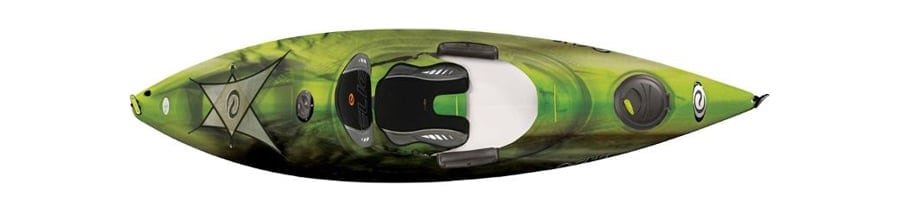
Recreational kayaks (sit-ins and sit-on-tops): Affordable, stable, easy to get in and out of, and simple to turn. They're for flatwater fun or meandering rivers, not for longer trips, waves or rapids. Storage is typically limited to stash spots for a few essentials.
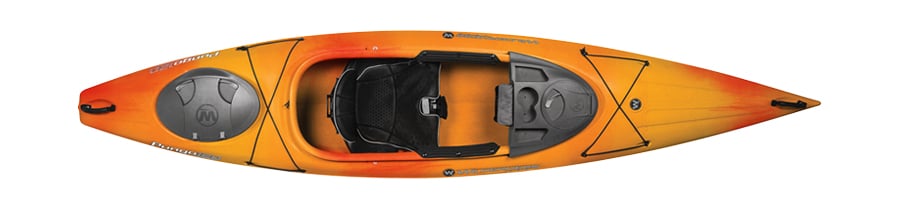
Day touring kayaks (sit-ins): These versatile boats are sleeker and more efficient to move than recreational boats—and will often have a higher price. Day touring kayaks also track straighter and give you more control in rough water than recreational boats. Because they are shorter than sea kayaks, day touring kayaks will be easier to transport and handle. They offer a moderate amount of cargo space.
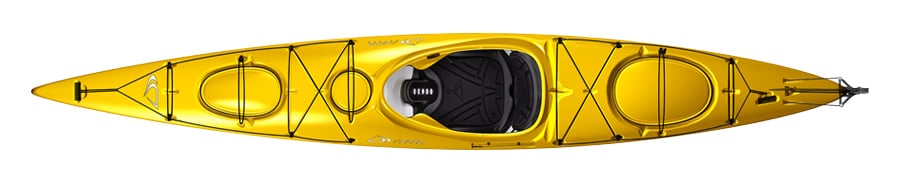
Touring kayaks (sit-in sea kayaks): These long, robust touring boats are super efficient over distances. They track well and have a rudder or skeg to deal with wind and currents. You'll find ample cargo space and higher prices in this category. (Note: If you're absolutely committed to long trips and coastal kayaking, then you'll save money by going to a sea kayak at the outset. If you're not sure, a day-touring boat will cost less as an introductory boat, and make it easier to develop paddling skills.)
Specialty Kayaks
The categories below are good options for some specific situations: Perhaps you're tight on space, you want to paddle with a partner, or maybe your focus is fishing.
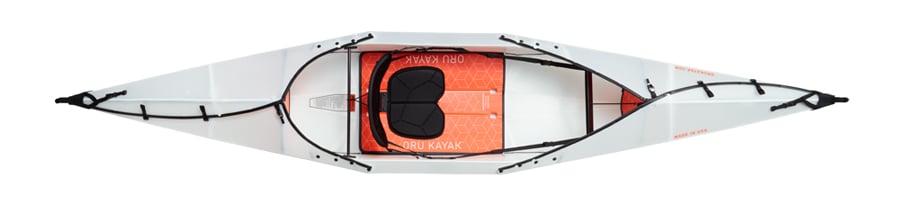
Folding kayaks: If you live in an apartment, plan to travel or to hike to a remote location for a trip, then a folding boat might make sense. it won't be as rugged as a hard-shell kayak, but it offers comparable handling and storage to many touring boats.
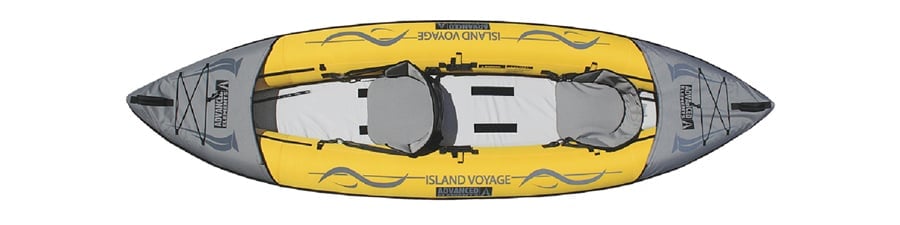
Inflatable kayaks: Like a folding boat, these also save storage space. They are also surprisingly sturdy and versatile. Purely recreational models won't go anywhere very fast, so are best for close to shore play. Wide, rugged inflatables are good for flowing rivers (they bounce off obstacles). And a few inflatables are designed to be serious touring kayaks.

Tandem kayaks: One boat or two? You and your partner can save some dollars by buying one tandem boat, rather than two solo kayaks. Tandems are typically more stable than their single counterparts and are also a great choice if you're taking kids along. But you'll be forgoing a potential rescue boat and the flexibility to go solo on future trips. But if you're super simpatico and certain that you'll always be going together when you paddle, a tandem boat makes sense.
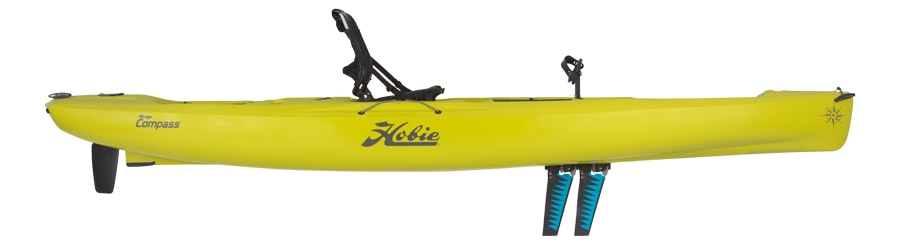
Pedal-powered kayaks: If you want to free your hands for fishing, photography or watching wildlife with binoculars, look at boats with sophisticated pedal propulsion systems. These use bike-like pedals that turn a prop, or push-pedals that power a pair of fins. Steering is done via a rudder that's operated by a hand control. You sit higher to allow room for the pedaling motion. Pedal kayaks tend to be wide, offering a stable platform (in calm conditions), and because you're using your powerful leg muscles, you may be able to sustain longer stretches more comfortably. On the con side, pedal technology adds to the cost of a kayak; it also requires more maintenance. You also have to be mindful of the prop or fins beneath the kayak when you're in the shallows, and you won't be able to handle quick turns or rough waters like you can in a kayak that you paddle. Pedal kayaks are also heavier than traditional kayaks, which impacts handling in and out of the water (plan to trailer a pedal kayak because it is too heavy to carry on a roof rack).
Kayak Materials, Weight and Price
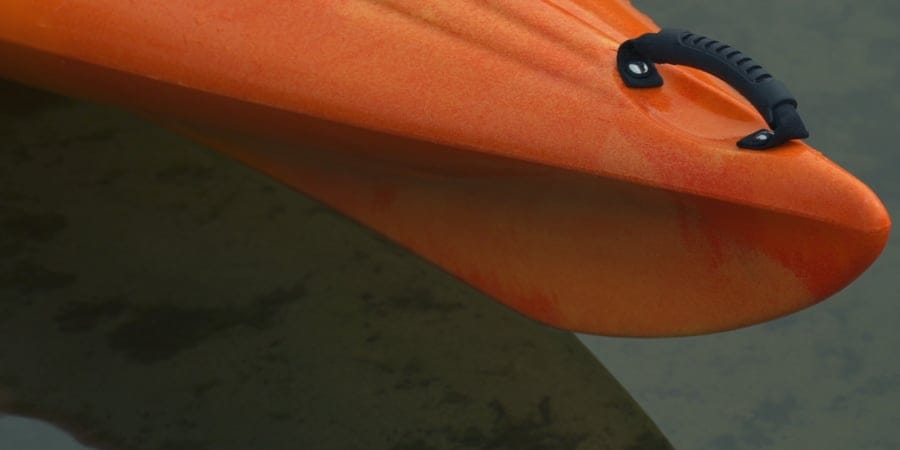
A more lightweight kayak is easier to carry, easier to load onto your car (especially by yourself) and easier to get up to speed. A lighter boat also allows you to carry more gear because less of the weight capacity is taken up by the weight of the boat itself. The tradeoff is that lightweight materials can make a kayak cost significantly more.
Polyethylene plastic is inexpensive and abrasion-resistant, though it's the heaviest option and the sun's UV rays will degrade it after an extended time in the sun. (Store it in a covered location.)
ABS plastic: Slightly more expensive than polyethylene, it offers similar durability. The higher price gets you a slightly lower weight than polyethylene, plus some UV resistance. Thermoformed ABS boats' distinctive two-tone designs come from having the deck and hull made separately then bonded together.
Composites: Lightweight fiberglass and ultralight carbon-fiber boats offer a huge leap in performance and price. UV rays aren't a big concern with these materials, but a major impact with rocks can be.
Additional Kayak Considerations
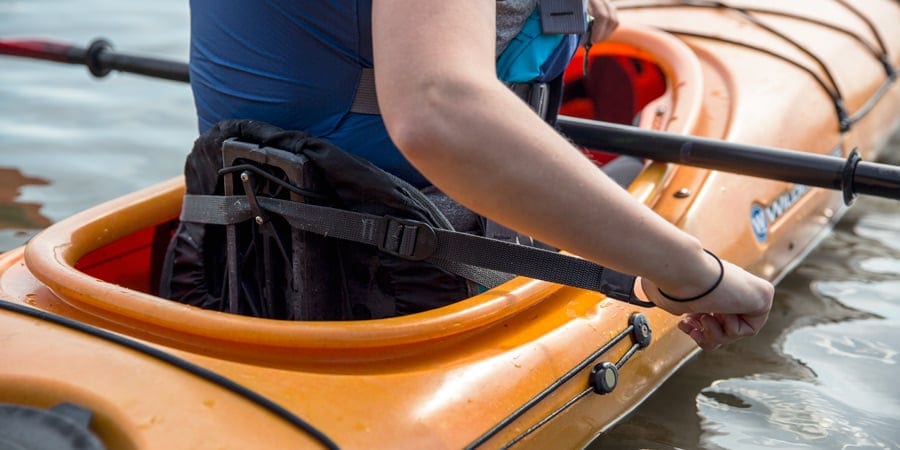
Comparable boats are likely to have similar specs. Weight capacity and length can vary, though, so those are the most important specs to check.
Weight Capacity: This is the total of the boat, your gear and you. This spec is important if you plan to haul gear for a multiday tour: If the boat is overloaded, it will sit too low in the water and compromise your paddling efficiency.
Length: Longer boats cruise more efficiently and offer lots of storage space for overnight touring gear, while shorter hulls turn more quickly. A few inches in length won't matter much, but two feet or more will be noticeable.
Depth: Deeper hulls offer more room for long-legged kayakers, plus a little more storage. Shallower hulls are less affected by wind.
Width: Wider hulls offer more initial stability, while narrower hulls can go faster.
Skegs, tracking fins and rudders: These accessories help a boat track straighter in the wind.
- A skeg is a simple dropdown fin that helps prevent a side wind from blowing the boat off course.
- A tracking fin provides a similar benefit, but unlike a skeg, it cannot be retracted while you're paddling. It's most commonly found on inflatable kayaks. You have the option of removing a tracking fin prior to paddling if you want to prioritize the ability to turn quickly over the ability to stay on course.
- A rudder, a fin which flips down from the back of a boat, does the same thing except that it's not fixed in one position: Its angle can be constantly readjusted via foot pedals, so it's more responsive to changing conditions when you're on the move.
Seats: A great seat can add $100 or more to a boat's bottom line. But you'll be spending a lot of hours in that seat, so having one that's more adjustable, more padded and more ergonomically suited to you might be worth those extra dollars.
Cockpit size: A small, snug cockpit gives you more control and protection in rough conditions. A large cockpit makes it easier to get in and out of the boat.
Hatches: These provide access to interior storage areas. Bigger touring boats will have two, while day touring boats and a few recreational boats will have one.