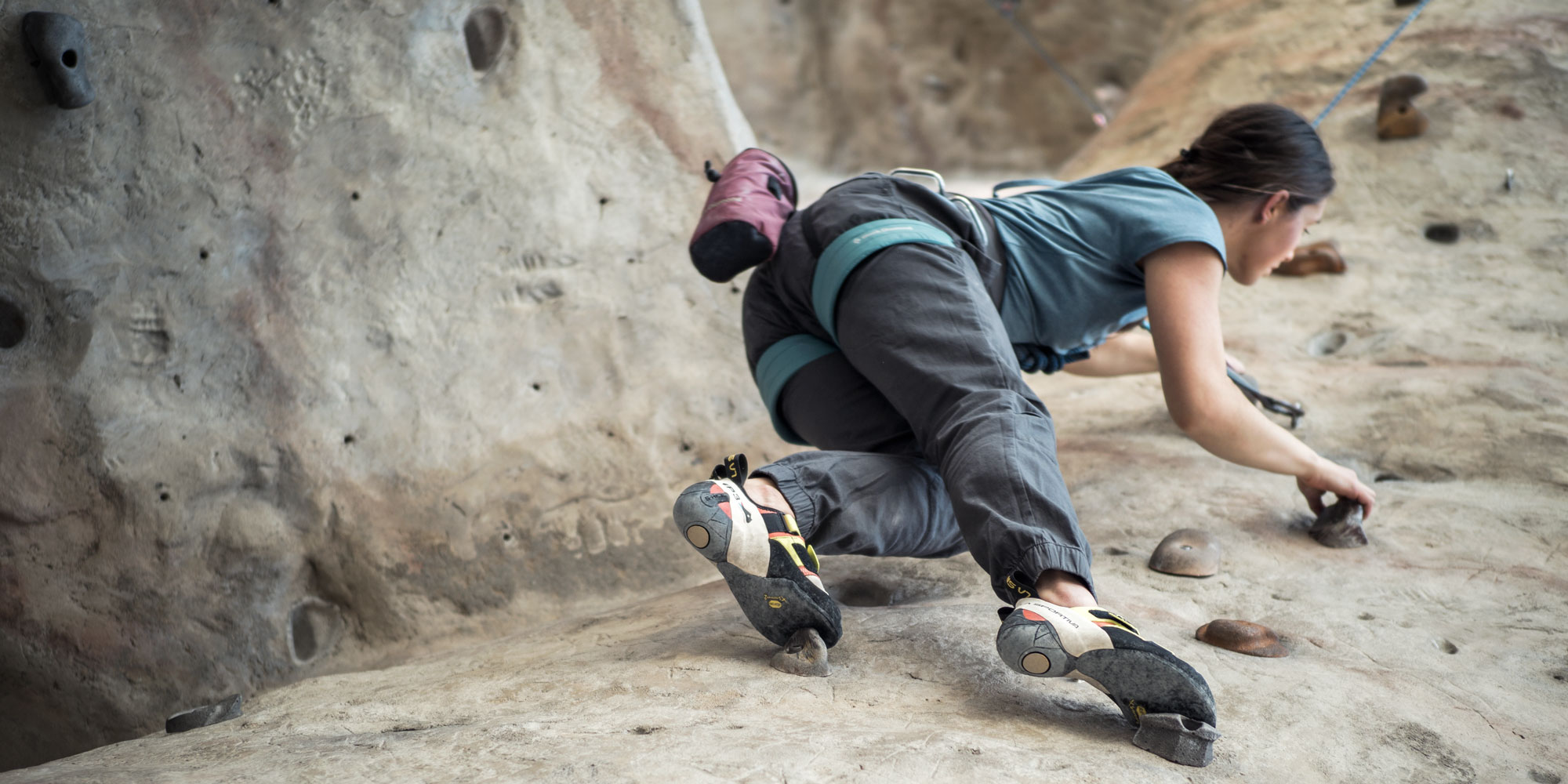
If you're interested in learning how to climb, or you're looking to amp up your climbing strength and skills, joining a climbing gym is a great way to go.
A good resource for finding a gym near you is the interactive Climbing Gym Map maintained by the Climbing Business Journal.
Available classes, as well as pricing and the height and complexity of climbing walls, vary between gyms. Some short-walled facilities only offer bouldering. Some big-wall gyms are architectural temples that have athletic-club amenities ranging from weight rooms to snack bars and childcare.
Other options include climbing walls and pinnacles in parks and other outdoor spaces. These can't be used during uncooperative weather, though, which is a big reason climbing gyms are preferred by so many people.
Types of Gym Climbing
Bouldering
Requiring neither a harness nor a rope, bouldering involves routes that are close to the ground. A thick crash pad acts as a protective mat below you. Some gyms also require spotters, people who help prevent falls from injuring your head and neck.
Bouldering is a great way to build skill because you can focus solely on using your strength and balance to keep yourself on the wall. Novices appreciate the simplicity of it; skilled climbers like the challenge of more difficult routes.
For more information, see our article on bouldering.
Top-Rope Climbing
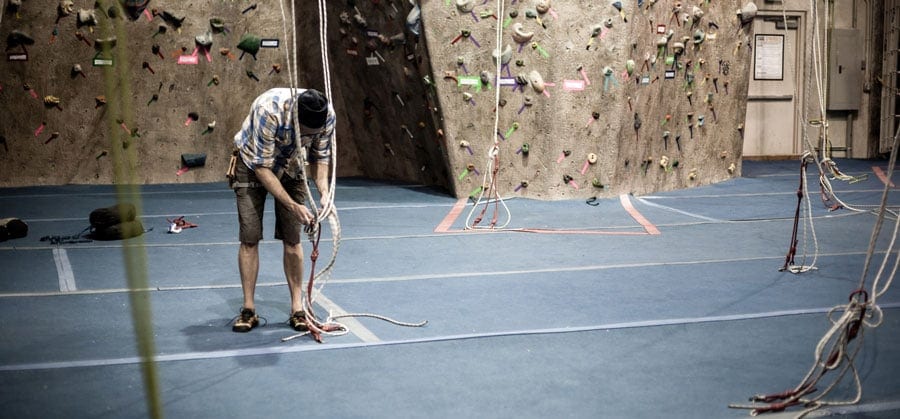
This is where a novice enters the world of harness-and-rope climbing. When you're top roping, the rope is secured to an overhead anchor in the gym. You tie into one end of the rope; the other end of the rope is held by a belayer, who manages the rope to catch you in case of a fall. The belayer might be a trained staff person, a friend with belay certification or an auto belay device.
Lead Climbing
Once you've become a skilled top-rope climber, your next step is lead climbing. When lead climbing, you'll tie into one end of the rope and clip it into a series of quickdraws that are already attached to bolts on the gym's wall. Again, you'll have a belayer.
Lead climbing indoors is very much like sport climbing outside, except that indoors the quickdraws are already in place.
The challenge with lead climbing is that if you slip or miss the next quickdraw, you'll fall a short distance back to the previous clipped-in point. That's a farther, harder fall than you'd have when top-roping.
First-Time Climber Tips
- Your goal is not to reach the top of a route; your goal is to overcome challenges and to enjoy each success as you progress.
- Remember that your legs are stronger than your arms, so focus on ways to improve foot friction and leg placement.
- Taking time to learn the reasons you do things helps you find success more quickly.
- Watch more experienced climbers to learn their techniques, but don't expect to be able to replicate them right away.
- When you're ready to start on your own, take time to pick a good partner/mentor—that's one of your most important climbing decisions.
Route Difficulty in Gyms
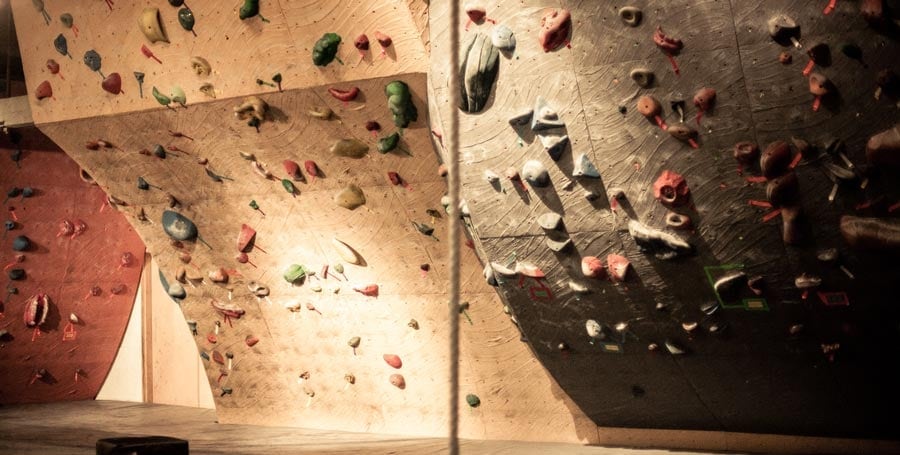
The Yosemite Decimal Rating System, with its famed 5.0 through 5.15 scale, is used in gyms as well as the outdoors. Hand- and footholds are biggest in the 5.0 to 5.5 range. Where you begin depends on your comfort level and natural ability, but many novices start in the 5.3 to 5.5 range.
Bouldering ratings follow the V Scale — VB (beginner), then progress from V0 through V16. Your gym might also use terms like "recreational" for its beginner-level routes.
To learn more, read Climbing and Bouldering Rating Systems.
Clothing and Gear for Gym Climbing
Clothing: Wear clothes that offer comfort and mobility (stretch). You want a loose fit, but not so baggy that your clothes get caught on holds or gear. Yoga clothing works well. Wear something you don't mind getting chalk on, and something that can withstand abrasion from the textured surfaces on walls and climbing holds.
Shop women's climbing clothing
As for gear, find out what your gym provides and rents, especially for your first few visits. Eventually you'll want to buy your own gear:
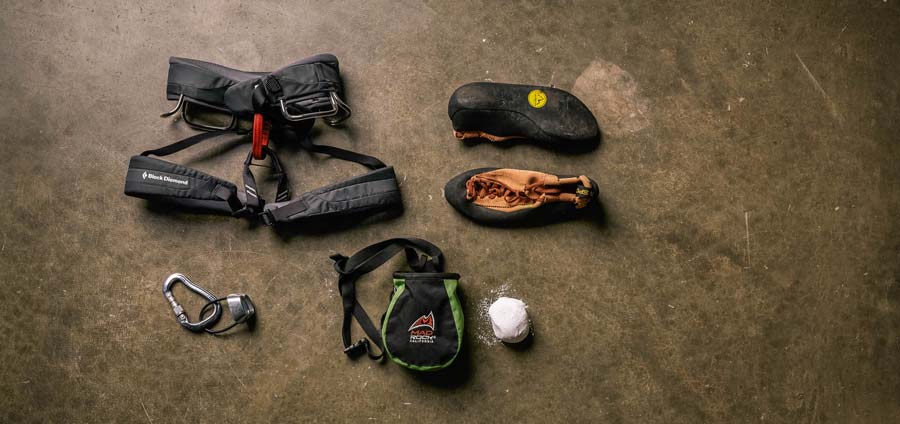
Harness: This is a must for climbing and typically the most versatile piece of gear for both indoor and outdoor climbing. Learn more by reading our article, Climbing Harnesses: How to Choose.
Locking carabiner: This is required to attach your belay device to your harness. Learn more by reading our article, Carabiners: How to Choose.
Chalk bag and chalk: Chalk is used to keep fingers and palms dry, which helps you avoid slipping. Learn more by reading our article about how to choose Chalk and Chalk Bags.
Rock climbing shoes: These flexible shoes with grippy soles should fit snugly without hurting your feet. An REI sales specialist can help you choose a shoe that fits properly and meets your needs. Learn more by reading our article, Rock Climbing Shoes: How to Choose.
Climbing ropes: For liability reasons, many climbing gyms provide ropes. A few gyms require you to bring your own rope to do lead climbing, though. If you do need to buy your own rope, you can learn more by reading our article, Climbing Ropes: How to Choose.
Kids in Climbing Gyms
Kids are natural climbers. Climbing gyms typically have classes and programs for children as young as 6 years old. After your child has taken a few classes, then you can all go to the gym together and enjoy some family climbing time.
Climbing builds muscle, endurance and physical skills. Planning and anticipating moves is also a mental workout. Climbing is also a healthy option for children who are not interested in traditional team sports. It can also be an alternative team sport if you're lucky enough to have school that fields a climbing team.
Climbing Competitions
Some gyms offer climbing competitions for members, or they might host regional events. Bigger gyms around the country host professional climbing competitions. To learn more about competitive climbing, see USA climbing, the national governing body for the sport.
Other Places to Climb
Climbing at Home
If you want to make practice time more convenient, you can get a home training board or even build your own climbing wall. REI sells both climbing holds and books that teach you how to mount them.
Climbing in the Outdoors
Outdoor climbing is quite different from indoor climbing. To make that transition, you absolutely need to go with a certified guide or instructor. Many gyms also offer classes to help you go from gym to crag.
Note: As always, your safety is your responsibility. No article or video can replace proper instruction and experience. Make sure you're practiced in proper techniques and safety requirements before you climb.