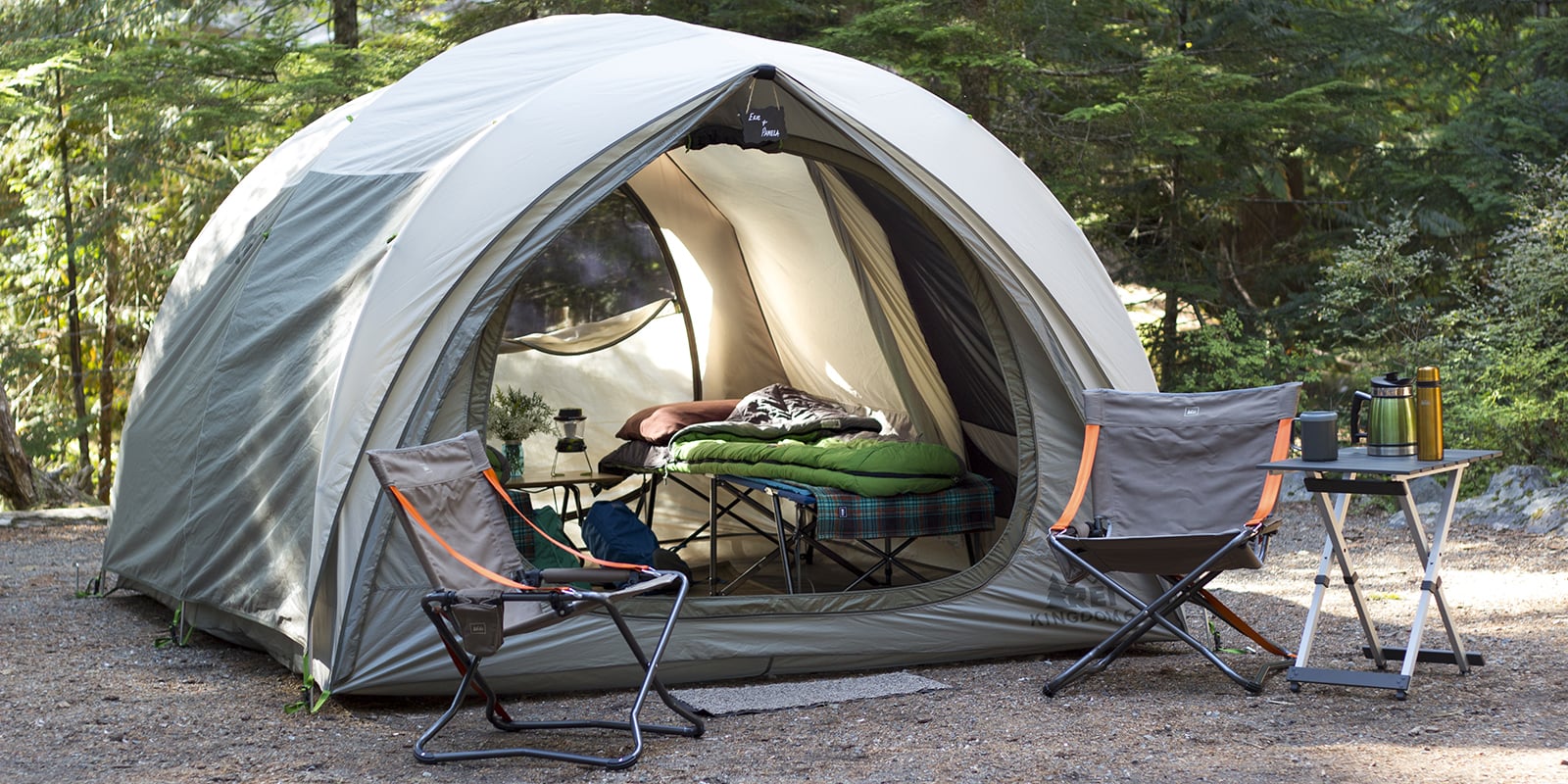
Your campsite can just be a place to catch some zzz's, or it can be a cozy basecamp that brings some of the comforts—and organizational tricks—of home to the outdoors. The right gear, a little extra planning and some conscientious camp habits can make all the difference. Whether you're setting up a tent outdoors for the first time or looking to improve your current approach, it's worth learning the essentials of a well-arranged basecamp and adding smart, simple touches to make it more comfortable. Here are some of our favorite ways to zhuzh up a homey spot in the woods and make camp life a little easier along the way.
Organizing Camp Gear at Home
Use a gear checklist from the REI Expert Advice library to make sure you leave nothing vital behind and to get started gathering essentials if this is your first camping trip. These will help you prepare:
Travel Preparation Checklist (for extended trips)
Examine gear that's been sitting in storage. If you have a camping setup already, it's better to discover any missing pieces while you're still home. Example: Look inside the tent stuff sack; are the stakes inside? Is your utensil assortment complete? Did you restock first-aid items used on your last trip?
Have kids? Involve them in prep work. To keep them from packing too much stuff, give 'em each one duffel (in a different color per child). Create a checklist for your kids, present it to them with their duffel and ask them to collect and pack their things a day or more ahead of your departure day. Set a motivational example by doing some advance work yourself at the same time.
Learn additional kid-oriented tips in the REI Expert Advice article Tips for Camping with Kids.
Create a trip-ready gear tote. The key to one REI staffer's camping organization is a well-stocked "camp box." They repurposed a multiple-compartment plastic toolbox and every camping season, they fill it with plates, pans, towels, utensils, flashlights, matches, scrub pads and other items. Then they just grab it for each trip.
Organize gear by "rooms": For instance, create a camp box just for the kitchen. For the bedroom, take that big storage sack that comes with most sleeping bags and use it to carry your sleeping bag (after you put it in a stuff sack), a pillow, your pad or mattress and, if there's room, your clothes. Bring some dry storage items, like plastic bags, for things that get wet. They can be useful for the trip home.
Pack strategically: Light sources (headlamps and flashlights), the tent, rainwear, insulation and insect repellent should not be packed too deeply inside your rig. Packing these items where you can access them quickly keeps you prepared in case of surprises.
Carry plenty of water. It's a good policy to travel with a gallon in your rig. In case your site is far from a water faucet or pump, it's handy to have a multi-gallon storage container, ideally one with a spigot.
Planning Your Basecamp with Care
Your campsite is part gear storage, part activity launchpad, part watering hole. You can get the most out of it when you design it with all those functions in mind. No architectural degree required: This video breaks down the most important elements (shelter, furniture and lighting) and how to keep things manageable.
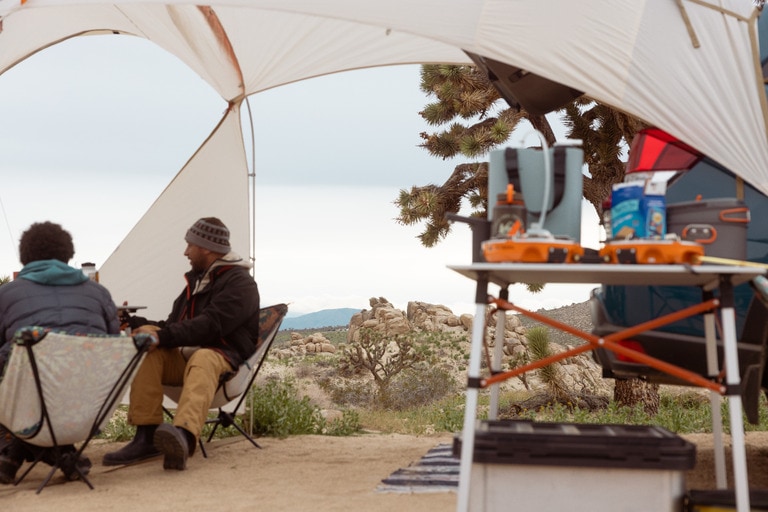
Layout and shelter: Laying out a smart campsite isn't all practicality—it also means maximizing enjoyment of social time and your beautiful surroundings. Some key steps: Plan a common area, anticipate the weather and orient your tent so you can take in the best views. Where you set up will also depend on where you can find the flattest ground without vegetation. Consider bringing along a portable shelter like a sunshade to make your common area more pleasant even in heat and rain. And a tent footprint or tarp can keep your belongings dry (from weather or just condensation).
Camp furniture: Don't underestimate the value of good seating options to make your common area the perfect lounging spot. (Upgrade from sitting on sleeping pads and blankets by checking out how to choose a camp chair.) Tables are a good idea too, for meals and game time. And whether for lounging all day or subbing in for a tent, a good hammock is clutch at any campsite.
Lighting: Packing a variety of lighting is practical and adds ambience to the campsite. At least one lantern and headlamps or flashlights for all campers are good ideas. When it comes to adding mood lighting in common areas, variety is your friend here too. A string of LED twinkly lights is good, but string lights with solar-powered lanterns and faux candles are great. And one REI staffer puts a glowing light stick in their hammock just before sunset: It guides the group back to the tent after dark and serves as a night light. See camp lighting options here.
Improvisation: For car camping, one REI staffer likes to bring big plastic laundry detergent buckets with handles. "They're great for toting around, making sandcastles at the beach, as containers for food waste. Turn them over and they transform into chairs! They stack nicely, too, to save room." Other clever improvised suggestions: Use a wire coat hanger for hanging a roll of paper towels and tablecloth clips to keep the tablecloth from blowing away in the wind.
How to Set Up Camp
Select a good tent site. Shelter comes first. Prioritize setting up your tent first, and in an area that is flat, vegetation-free, shaded and wind-buffered, with good drainage. Make sure there's a good spot to keep food in an airtight container away from your sleeping area and safe from wildlife.
Keep essentials handy. Place a headlamp or flashlight in a pocket soon after you arrive in camp. If you need them in a hurry, you'll want to know where to find them pronto. Establish fixed locations for important items like utensils, rainwear and insect repellent. Remind campmates to always return items to their established locations so others can find them.
Designate a key-keeper. To avoid lost keys or accidentally getting locked out of your vehicle, one adult should take responsibility for always holding the vehicle keys. If more than one adult is along, bring an extra set so each adult has access to the vehicle. Keep keys in a secure pocket so they don't get lost in the tent or sink to the bottom of a pack.
Distribute plenty of practical lights. Make sure every person in camp gets a headlamp—bonus if they're different colors. Kids feel more in control if they have their own light source, and one REI staffer has found that kids are less likely to lose headlamps if they wear it like a necklace when not in use. "Just establish the rules before it gets dark: No shining the light in someone else's eyes," they say.
Suds up. If the site does not have showers, one staffer rigs a sun shower in a tree and puts a tarp around it to create an outdoor shower. They've even lined the floor with beach rocks they packed to keep their feet off the dirt.
How to Keep a Campsite Organized and Enjoyable
Stay tidy. Sweep debris out of your tent whenever the opportunity arises. Start clean, stay clean, feel clean. Doing so also minimizes abrasion on your tent floor.
Make eating more convenient. Use separate coolers for beverages and food since one will likely get opened more often. Keep coolers away from anything absorbent, too. You just never know when that spigot on the cooler will twist open, or "old trusty" will blow a leak.
Add homey touches: Set a piece of artificial grass or indoor-outdoor mat in front of the tent door. Ask people to remove shoes before entering the tent to keep dirt out. At night, one REI staffer likes to keep a pair of flip-flops for each camper by the tent door for late-night restroom breaks. Don't forget to tuck a flashlight into the pocket closest to the tent door, too.
Keep everyone oriented. Make sure your crew—particularly kids—remember your campsite's location. Help everyone memorize the site number or point out landmarks ("We're four sites from the amphitheater") to help them recall its location. Write the number down on cards and hand them to everyone.
Adapt cheerfully. Your surroundings are new and your routines are scrambled: The bathroom is no longer just a few steps away like it is at home; it's six campsites down on Loop A. Hey, it gets cold fast at night. It's sure dark out here. Stay positive: Living life on nature's terms is part of the allure of camping. Everything gets easier after the first night. Know that your advance preparation will pay dividends.