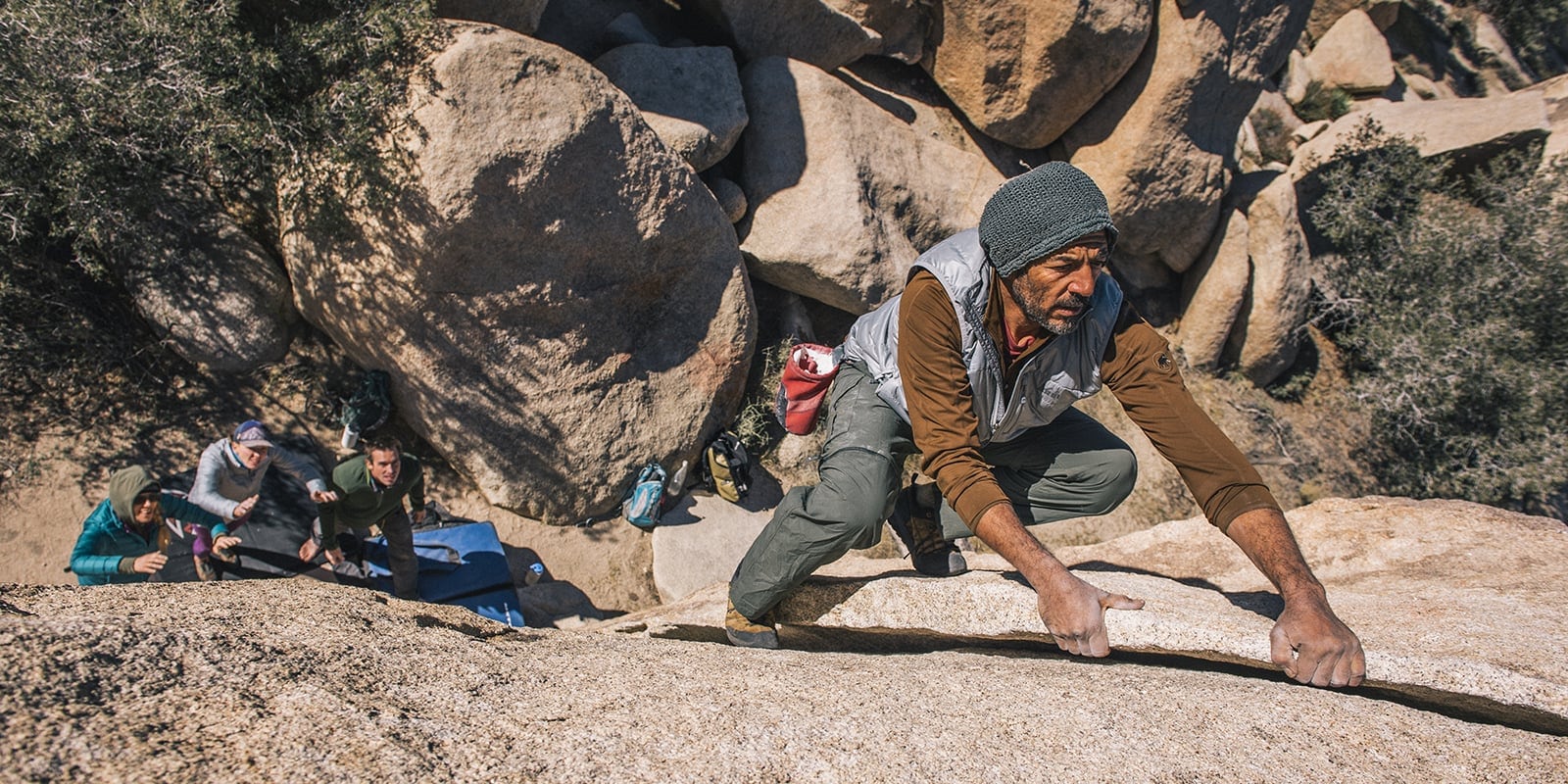
Bouldering is climbing in its simplest form, sans ropes, harnesses and hardware on rock faces that are shorter than the walls at cragging areas. It's easy to see why so many people are drawn to this type of climbing and why bouldering is great for beginners: It's relatively affordable, accessible and it's social—unlike climbing, it's easy to do with large groups of friends.
At a bouldering area or in a gym, you'll see complete newcomers to the climbing world, as well as experienced sport and trad climbers working on their craft. You'll also see climbers who focus exclusively on bouldering.
What You Need to Start Bouldering
Get the Gear
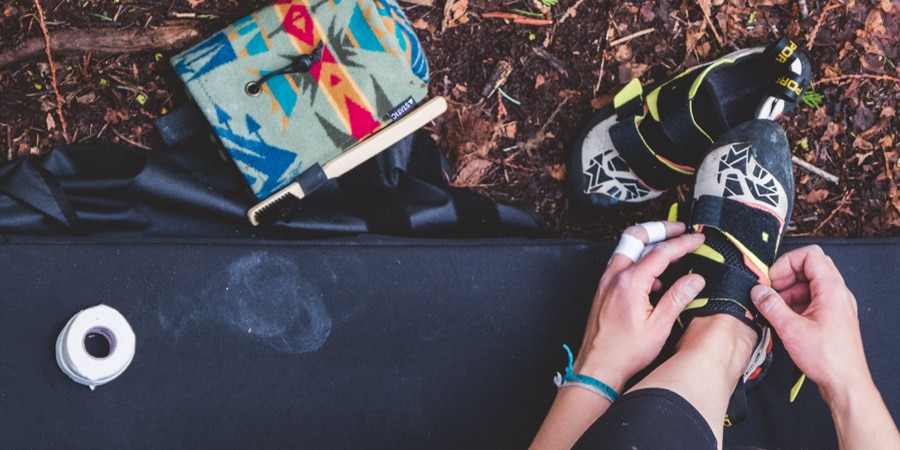
Bouldering requires significantly less gear than other forms of rock climbing. In fact, if you plan to boulder indoors at a gym, all you really need is a pair of climbing shoes, which you can usually rent at the gym. If you're headed outdoors, you'll also need a crash pad to cushion your falls. Though it's not common, some outdoor boulderers choose to wear a climbing helmet for extra protection. Extras that may come in handy indoors and out include chalk, a brush for cleaning off dirty, greasy holds and a roll of white athletic tape for protecting your fingers.
Decide Where to Go
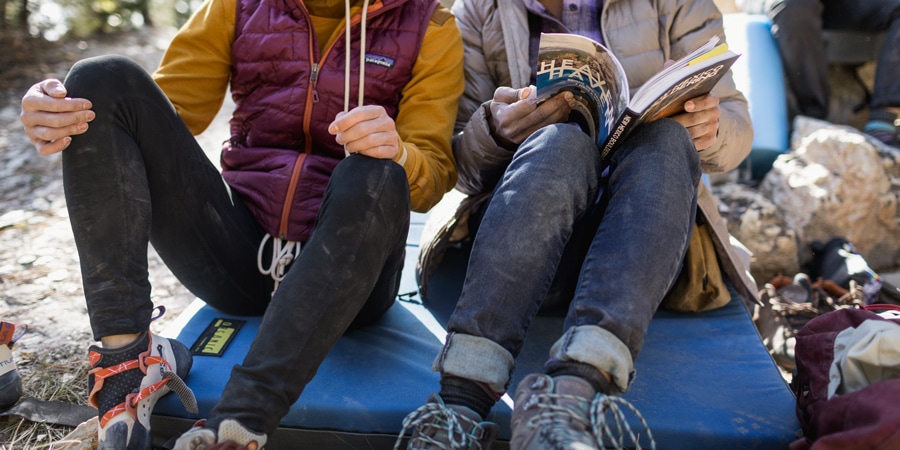
A climbing gym is a great place to go bouldering for the first time—with so many route options available in one place, climbers of all abilities can have a good time in any type of weather. If getting outside is more your style, do some research to find out what's nearby. Friends, climbing shops and clubs can all offer local intel on good places to boulder, while guidebooks allow you to do more in-depth planning and research.
Go with Friends or Sign Up for a Class
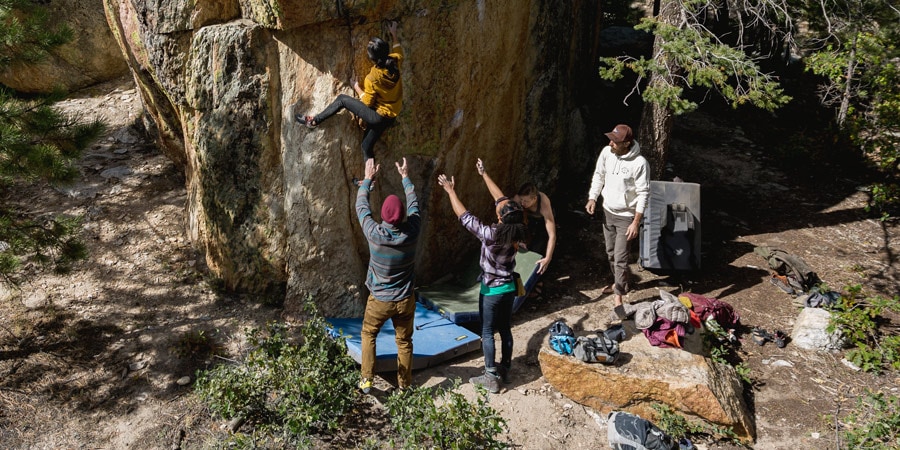
Bouldering doesn't require a belay partner like roped climbing does, but having one or more people along to spot you while you're on the rock in case you fall is a good idea. And it can be a lot of fun to hang out, share tips and push each other to climb harder while trying the same boulder problems. If you don't have a group to go with, consider signing up for a class where you'll learn technique and meet other people interested in bouldering.
Common Bouldering Problems
Bouldering involves many of the same challenges as other forms of climbing, though some are encountered more often in bouldering:
Faces and slabs: A face is a flat vertical surface and a slab is a flat angled surface. Both problems test technical skill and require delicate footwork.
Overhangs: Also called "roofs," these are rock surfaces that are relatively horizontal to the ground and directly over your head. Overhangs demand strength and power.
Traverses: Often an endurance test for boulderers, these problems involve moving sideways along a feature in the rock before topping out.
Compression problems: Requiring good endurance and solid technique, these problems frequently require the climber to "hug" a feature on the rock in order to ascend the boulder.
Highballs: A term unique to bouldering, a highball is any problem that tops out high off the ground. It might put a climber 20 feet or more off the ground, though it's really about the degree of exposure and risk presented. This is the realm of experienced boulderers.
Topping out: The final part of most bouldering problems, this refers to the final series of moves required to get you standing on the top.
Read more about how to practice climbing techniques and moves. And if you need help learning climbing lingo, check out our Rock Climbing Glossary.
Bouldering Injury Prevention

In bouldering, peeling off the rock is a constant. Rather than using a rope for protection, you use partners and padding:
Spotters: Rather than catching you, their job is to ensure your head and shoulders don't hit the ground. Having more spotters is always better.
Crash pads: These thick mats are used to cushion your fall. They must be brought to the boulders and strategically placed in your fall zone. Often more than one pad is needed to ensure ample coverage. Many gyms have permanent wall-to-wall matted flooring in their bouldering areas.
Even with adequate padding and proper spotting, injuries happen. Experienced boulderers hurt ankles and strain arms, shoulders and finger tendons. Bouldering is particularly hard on skin.
Here are some tips to help mitigate the chance of bouldering injuries:
- Use ample padding and attentive spotters.
- Warm up beforehand.
- Chalk up, tape cuts immediately and use lotion after sessions.
- Learn how to tape fingers for added support.
Bouldering Ratings and Choosing a Route
The system used most widely in the U.S. to rate bouldering routes is the V-Scale. It gives you a sense for how difficult a boulder problem is: the higher the number, the harder the problem.
The V-Scale goes from V0 (easiest) to V17 (hardest—only a couple boulder problems with this grade exist). The scale is open ended, which means numbers higher than 17 could be added in the future as climbers complete harder problems. There's also a VB rating for beginner bouldering problems.
Though the ratings are somewhat subjective and can vary from location to location, you can use the V-Scale to help you choose challenging, not overwhelmingly difficult problems. If you're already climbing hard grades on rope, be aware that the V-Scale can be discouraging. There's no shame in trying VB routes at first. From there, you'll progress faster than a true beginner.
Most boulderers work on a single move over and over again, dedicating hours, months or even years to a single problem. This is called working on your "project."
Learn more about ratings in our article Climbing and Bouldering Rating Systems.
Bouldering Ethics
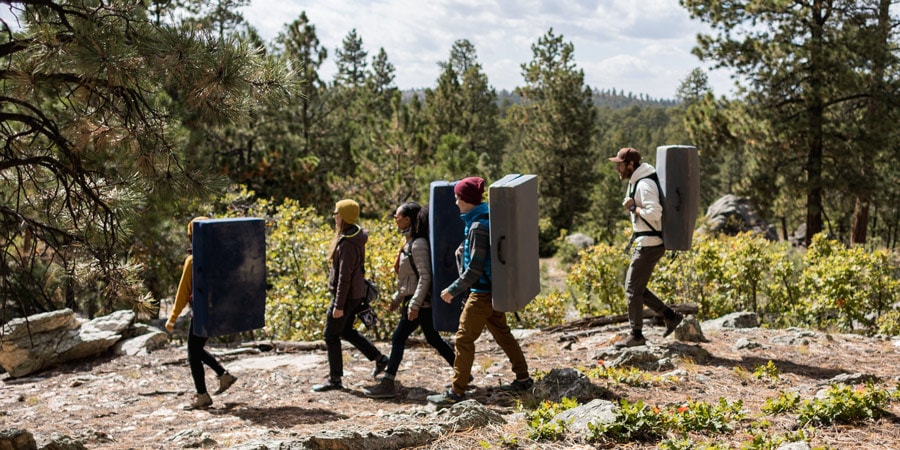
With the popularity of bouldering on the rise, the potential for negative impacts on natural places and other outdoor users rises too. To preserve access to outdoor climbing spots, it's important that we all be responsible users. You can do this by familiarizing yourself with the Leave No Trace Seven Principles (©1999 by the Leave No Trace Center for Outdoor Ethics: www.LNT.org). The following six principles are particularly relevant to boulderers and climbers:
- Plan ahead and prepare: Check with local land management agencies about permits, group-size limits, closed areas and any rules or restrictions. Avoid crowded areas and bring appropriate gear to minimize your impact.
- Travel and camp on durable surfaces: To avoid destruction, use established trails to access boulders. If trails aren't available, travel on durable surfaces like rock, gravel and sand. Think about where you put your crash pad to avoid disturbing or trampling vegetation.
- Dispose of waste properly: Pack it in, pack it out. Don't leave any litter, food scraps or climbing tape behind. Be sure to familiarize yourself with local rules about disposing of human waste.
- Leave what you find: Leave rocks, trees, shrubs and other plants where and how you found them. Don't cut or break branches to improve access.
- Respect wildlife: Check for seasonal closures and respect them. If you bring a dog, don't let it chase wildlife or disturb other climbers. Never feed wildlife and keep your food secure.
- Be considerate of other visitors: Avoid loud noises and don't spend all day on a climb if others want to get on it.
You can learn more about climbing ethics in our article Leave No Trace Climbing Ethics. The Access Fund, which advocates for bouldering and climbing worldwide, is also an excellent resource; they developed The Pact, a special pledge embraced by responsible users.
Safety is your responsibility. No article or video can replace proper instruction and experience. Make sure you practice proper techniques and safety guidelines before you climb.