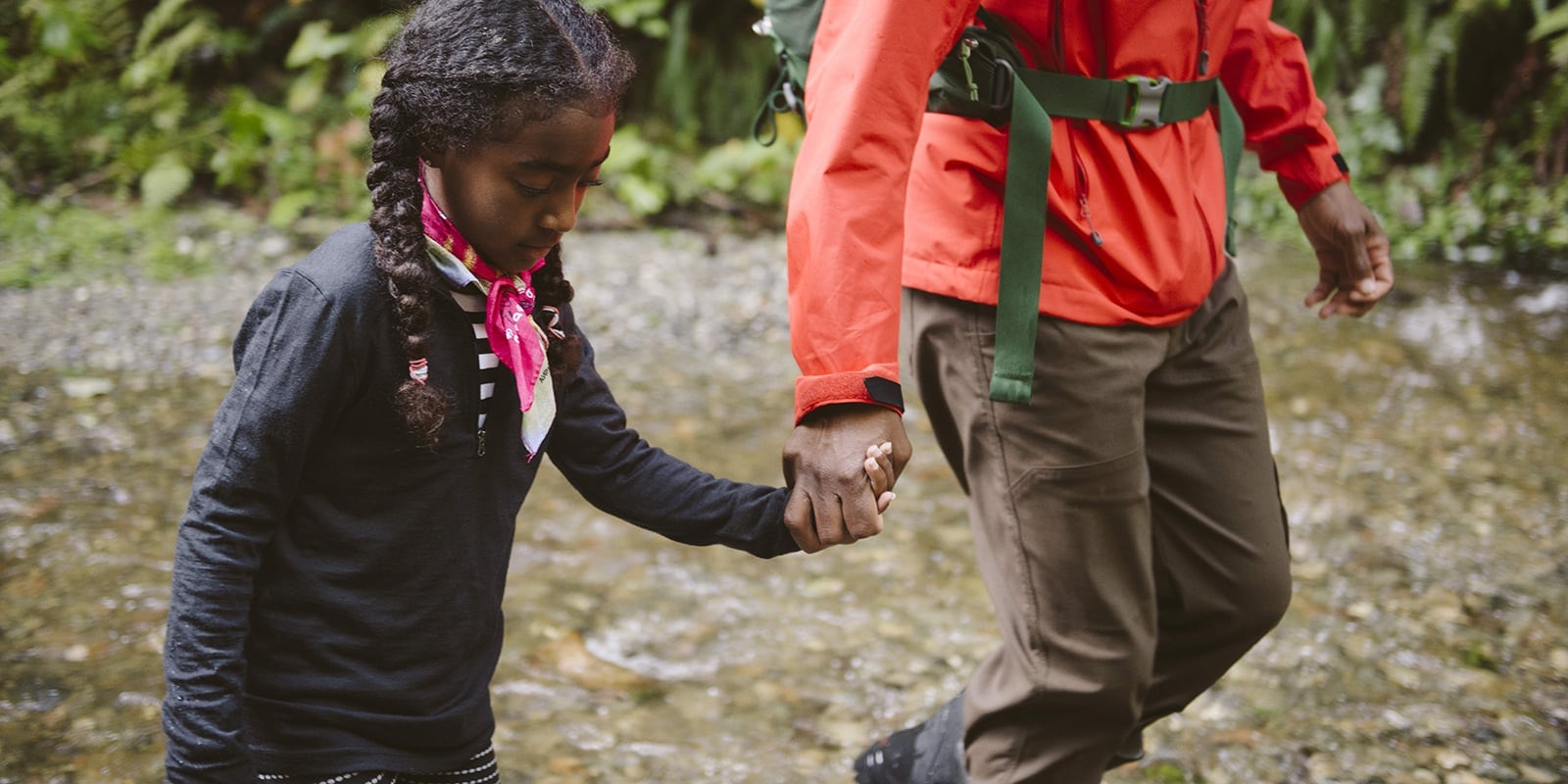
Love hiking? Got kids? So how do you persuade kids to enjoy hiking and the outdoors as much as you do?
The following is a selective collection of the top tips we heard. We invite you to join the dialogue and share your advice in the comments section at the end of this article.
Planning a Hike
Keep it close to home. You can most easily manage naps, feedings, and an all-out bad experience if you are within a short distance of home the first few times you head out. Matt Johnson, REI
It doesn't have to be in the woods. You can take a hike in a city and see historical sites as you go, or take a hike from site to site and teach them as you go. Kenneth Morrow, Facebook fan
My son is 6, and his interest varies from one hike to the next. His attention span has been challenged by electronics—the same influence we all face. So for each hike I do some preplanning. I figure out if we might be able to find "treasure" (a geocache) along the way, pick a great spot for a picnic, visit a swimming hole, or follow a river to a scenic area. Deanna Delarosa, REI
Our boys are ages 5 and 8. My wife and I take them hiking frequently. Before a hike one thing that I do is a little bit of research. Not on the hike or geography, but into details about a toy/video game/book series/movie that interests the boys. When they reach that point in a hike where one of them "can't go any further," I can ask them a probing question: "Is it level 5 or 6 of that game you play where you get the power to use the magic sword that you take from the dragon and that guy with the red pants?" I can frequently get 15-minute monologues laced with high levels of technical detail, or I'll hear impassioned debates about accuracy. Either one will completely overwhelm their feelings of fatigue and boredom. Wesley Meyer, REI
Choosing a Destination
Always have a fun and really cool objective at the end of the hike—a waterfall, a lake or something equally special. Ivar Chhina, REI
Preparing for a Hike
Don't call it "hiking." The word implies arduous miles of work to a child. Call it "adventuring," as in "Who wants to go on an adventure today?" Ivar Chhina, REI
Get kids involved with the preparation process. Have them look at maps, choose the correct clothing, help with the food and select a favorite nonelectronic toy to bring along. Give them their own daypack and outfit it with an emergency whistle, rain jacket, compass and mini first-aid kit with colorful kid bandages. Show them how to use their gear in case of emergency. Practice on the trail. Go easy on the whistle, though. Suzanne Faith, REI
Have them help prepare snacks and fill the water bottles. Rachelle Stanko, REI
Be diligent about having everything ready to go long before it is time to walk out the door. The day of the trip needs to be just that—the day you go hiking. Little kids' schedules don't have room for running around and trying to pack up right before you leave. Always bring things that go a long way toward keeping kids happy: dry clothes and shoes, warm jackets, full water bottles and their favorite snack food. Matt Johnson, REI
On hot days, bring along a spray bottle filled with water. A nice mist feels so refreshing. Anita Kortbawi, REI
Snacks
The No. 1 tip is to have lots of snacks for kids. Hiking uses a lot of energy and children need to replenish more frequently than adults. Nuts, string cheese, dried fruits, gummy candies, M&M's are all hits with my children. Roberta Miner, REI
I'm ashamed to admit it, but a little family pre-hike snack shopping helps build enthusiasm. Something about knowing you get to munch Cheetos on the lunch break keeps my kids going. Greg Polkinghorn, REI
As children, my siblings and I were reluctant hikers. Before a hike we would stop at a store and my mom would let us each choose a candy bar (a rare treat in those days) that we could eat at the top. Along the way, if we were flagging, she would dole out wild cherry LifeSavers. I did the same thing with my kids, who were also reluctant hikers. I'm glad to say my kids turned into avid outsdoorspeople, much as I did. Not sure if I can attribute that to candy, but a little incentive can do wonders for reaching those amazing views. Ann B., REI
Bring your MSR Super Fly (stove) with you and whip up some hot chocolate on your favorite overlook! Gabe Talaga, Facebook fan
Gabe, that's what I did with my son when he was a lot younger. Brought the MSR stove in my day pack and when we got to a great overlook we sat down and I made hot chocolate. Other hikers passing by always commented what a great idea it was and that they wished they had thought of it. John Rempe, Facebook fan
Pacing
Embrace the pace set by kids. Make frequent stops. You have to be OK with 1) Not making it to the waterfall or other destination, 2) Not getting a workout in (if that's your motivation), and 3) Changing plans at the drop of a hat. Mark Harding, REI
Be prepared to bail. Don't push it, or you'll turn your kids off forever. You need to be highly attuned to your kids during this time and remember they have little legs. A forced death march to an end objective that Dad just has to get to is a guarantee for a bad time. Ivar Chhina, REI
Don't have "summit fever" and don't flinch from bailing. Pick a tree/rock and go to it. Then pick another. Tweeted by chriskruell
It's all about keeping them engaged and interested in the activity. Once they are "bored," you're dead. Be prepared to go with the flow and allow them to be distracted and pursue whatever catches their attention. Let them drive the activity; don't force your agenda of what you expected the day to involve. If the hike lasts 30 minutes, great. If it lasts 10 minutes—make sure it was a fun 10 minutes and don't force the issue. Tad Summerset, REI
We started hiking with our kids when they were small enough that we still carried them a lot. When we went into the woods we explained to them that we were going to go on a "hike," not a "carry." We told them they could stop and rest any time. It made for short hikes in the beginning but they quickly started wanting to go farther. Doug Peterson, REI
Emphasize Fun
Keeping Kids Interested
When hiking with my 4- and 7-year-olds, I've found keeping them entertained is key. So we play games every time we hike. One of their favorites is making a list of items and trying to find them as we hike. It's kind of like a scavenger hunt. Another game we play is to pick a letter then try to find as many things on the hike that start with that letter. You can also do this with animals and try to see how many different animals we can find on the hike. Geocaching is another activity we do on hikes. The kids get really excited about the idea of finding a treasure. Peter Newton, REI
Introduce them to geocaching and they'll be running up the trail looking for treasure. Really. Tweeted by navratil
Kids are the reason I get away with geocaching. I always tell people I do it for the kids. Ha ha. Brian Lightfoot, Facebook fan
I echo the geocaching idea. Kids love treasure hunting. Just don't get too obsessed if you can't find it. Kids get bored more easily than I do. Let them pick out some of their old toys to swap. Rodney A. Buck, Facebook fan
Setting a day hike up as a scavenger hunt for my nieces and nephews (ranging in age from 3 to 10) not only makes it fun but can also be very educational. Have them identify local flora and fauna and get points (or stickers) for it. Rachel Asimakopoulos, REI
Have kids find a twig in the shape of a certain letter. Or find a leaf with 5 fingers. Or find 3 different kinds or colors of berries. Sometimes they can hunt as a team, other times it can be a competition between the kids on who could find something first. Robin Westler, REI
When our daughter was young, we would bring treats in plastic Easter eggs. One of us would run ahead and hide the egg. It kept her motivated to go farther knowing there was a hidden egg for her to find. Anita Kortbawi, REI
On our first hike with our 4 year old, he just wanted to lie down in the middle of the trail and take a nap. So my husband put a leaf on the trail with a berry on it every so often and my son went from berry to berry like a treasure hunt. Popped those berries into his mouth and kept on truckin’ all the way to the car. It gave me a great opportunity to teach him about what to eat or not to eat—or to always ask—at the same time. He had fun and still remembers it to this day (as do we). Brenda Miller, REI
Let Kids Be Kids
Bring props. Pirate hats, patches and spy scopes are great. Wander around, stop and look at bugs or animals, take detours, climb boulders in a King of the Mountain contest. Two-way radios work really well too—anything that makes it more fun, more like play than like taking a walk. Ivar Chhina, REI
Gear That Makes Kids Happy
Even if they are only 3 years old (or younger), give them something to carry. You can find the tiniest of packs and let them carry a sandwich. Or a piece of fruit. Or a jacket—whatever. It makes them feel like they are an important part of the whole trip and important in general—they love it. Brenda Miller, REI
Kids definitely like cool gear and being like mom and dad. Get them their own headlamp, pack, CamelBak or water bottle. Rodney A. Buck, Facebook fan
I agree with everyone else who mentioned CamelBaks (hydration packs), absolutely. My girls will do ANYTHING I want them to if they get to wear their CamelBaks. Emily Poole, Facebook fan
Shop REI's selection of hydration packs and kids' water bottles.
A pair of binoculars, a magnifying glass, and a field book are fun ways to make a hike interactive. Our son started hiking with me in the kid carrier, and by 3 he was doing short hikes on his own. Now at 5 he asks when will our next hike be. David Troutner, REI
Bring an identification book or fold-up identification card for flowers, birds, trees or plants. Give kids a camera and make a game of trying to identify and photograph as many flowers/birds/trees/plants as possible along the trail. The kids are having so much fun identifying things and taking pictures they don't even realize they're also hiking. You could even give out an award for the kid who finds the most by the end of the hike. Heather Gyselman, REI
Tips for Toddlers
During your first few times out on the trail with a toddler, you may only "hike" for 20 minutes—but you might wander around and examine every rock within a 50 foot radius of the trail for 2 hours. Be OK with really doing nothing more than that and everyone will have a great time. Matt Johnson, REI
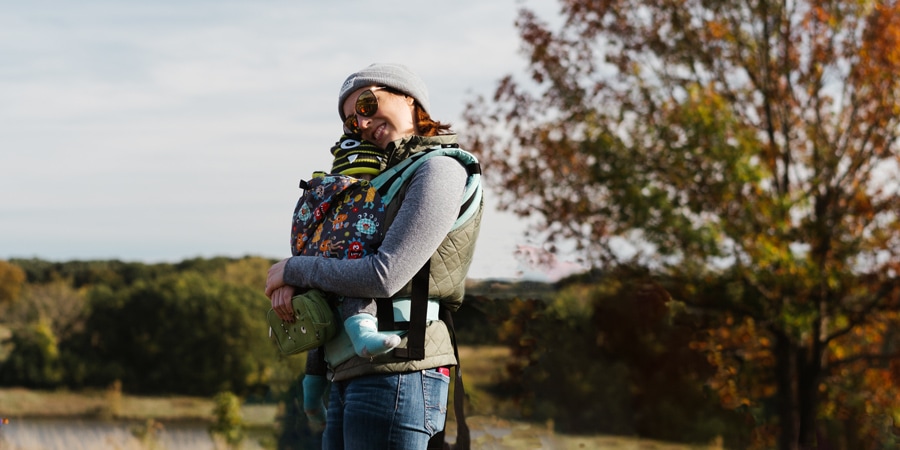
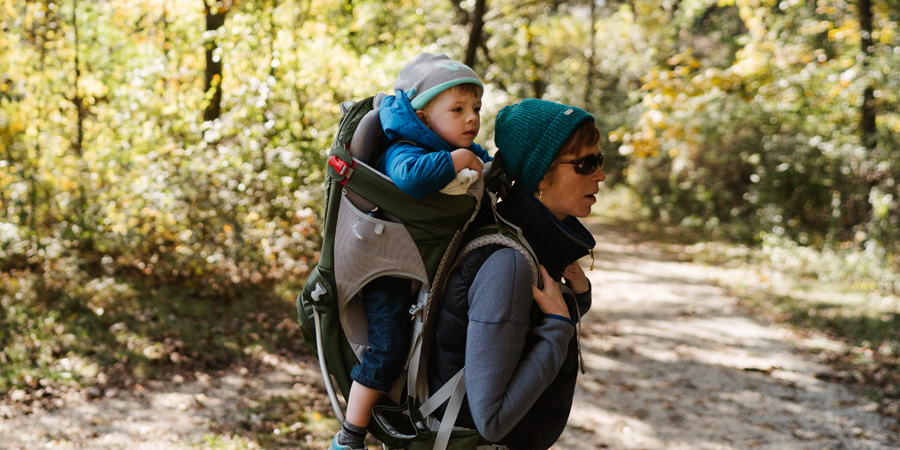
Shop REI's selection of child carriers.
Hiking with Pre-teens
Tips from the REI Outdoor School
How far can an average child be expected to hike? A general rule of thumb: ½ mile per year of a child's age.
Equip each child over 4 with a whistle.
- Three blows means "I'm lost."
- Rehearse with a child what to do when lost. (Stay put, blow whistle.)
- Place the whistle on a small carabiner and clip it to the back of the child's pack or a belt loop. Teach kids not to use it as a plaything.
No open-toed footwear; avoid cotton socks (they're slow to dry and are prone to causing blisters).
Equip kids with sunglasses, a sun hat and generous layer of sunscreen.
Carry ample water.
Carry a basic first-aid kit, plus extra bandages, cleansing wipes and athletic tape. Shop REI's selection of first-aid kits.
REI Outdoor School classes are available regionally across the U.S.
Random Tips
Generate Enthusiasm
Express your own sense of wonder. Take note of the changes that are going on outside and get excited about it. My 2-year-old, for example, got sooo excited about skiing just because I was. When we went out and had fun, it made her even more interested in going again. Every day I point out something in nature: "Look, the tulips are coming out and it's only February!" "Look at the snow on the mountains today!" Rebecca Bear, REI
The Earlier, the Better
Start them young. As they get a little older allow them to bring their friends. Exploring outdoors is a lifestyle that takes getting used to. If a kid is just thrown into it after living their life inside and always close to the comforts of the urban lifestyle, they will initially resist the extremes of outdoor living. Craig Brewer, REI
Share Responsibilities with Kids
Before we start a hike I look at the route options and see if my son, age 6, wants to pick the route we take. One of our favorite hikes is in an area that has 3 different colored trails with blazes of the same color. He is responsible for finding the blazes on the trees to make sure we stick to the right colored path. Deanna Delarosa, REI
In camp, kids love putting up tents. Put them in charge of clearing the ground, laying out the tent and putting the stakes in the ground. Suzanne Faith, REI
Teach them LNT (Leave No Trace principles) from day one. Derek Mogensen, Facebook fan
Berry-picking
If you feel comfortable identifying plants, choose trails that pass by lots of berry bushes. In the Northwest we have a lot of huckleberries along trails. Our kids would literally bound down the trails to get to the next group of bushes or to be the one to find the largest huckleberry. This led them to go farther than they would usually be willing to go. We have great memories of them with purple fingers and purple smiling faces! Of course, this is a good time to teach them about not trampling plants and only picking the huckleberries they can reach from the trail. Robin Westler, REI
One Mom's Strategy for Avoiding Fatigue
I use this equation: Pacing + energy + payoffs = more fun for you and the kids! I was planning my first significant kid-powered hike with my young boys (ages 4 and 5), an overnight backpack trip on a local trail. I'd read how it important it was to rest frequently. That seemed too rigid to me. (Yeah, I can be a little gung-ho.) Still, I wanted the trip to be a success for my boys and the beginning of great relationship with hiking and the outdoors, so I decided to put it to the test.
Our plan was to take about 4 hours to hike what would have been a 1-hour hike for an adult, and camp at our destination. This wasn't about distance—we wanted our kids to be comfortable and have fun with a longer activity span. My kids stayed pumped and full of energy for the entire hike. I got religion! Here's what we did:
Pacing: After 40 minutes of hiking, whether the kids seemed to need it or not, we stopped for about 20 minutes. We'd rest, have a snack and talk about the cool nature we saw around us.
Energy: We snacked on cheese/nuts/fruit/chocolate and lots of water/juice. Even if we didn't feel that hungry or weren't tired, we were religious about taking the break at the appointed time and fueling up. You know how young kids can bonk and crash? Didn't happen once!
Payoff: We planned a route that had a small lake halfway into the hike. This was the mid-hike payoff: "When we get to the pond you can rest and play." That kept them going, and they were completely refreshed and reenergized by the water play. Similarly at the end of the hike, we were camping at a lake site with fun boulders, so there was another great payoff to keep them moving to our destination. True, they were tired and relieved when we got to the lake, but it was a reward that was worthy of the effort. What a success that adventure was. Follow that prescription and yours will be, too! Karen Auletta, REI
On Sustaining a Young Hiker's Interest, from Toddler to Teenager
See the Big Picture
Enjoy the moment. Though it may be years before you spend a night in the tent or go on a long hike to a grand destination, you are planting the seed for a potential future outdoor enthusiast. The hours you spend throwing rocks in the lake at the foot of a mountain you would like to hike, ski or climb may be just the thing to help get you up there with your kids a few years down the line. Matt Johnson, REI
Learn more in our other Expert Advice for Families articles:


Ratings and Comments
Unable to Post Comment
We were unable to post your comment at this time. Your opinion matters, so please try again later.
Close