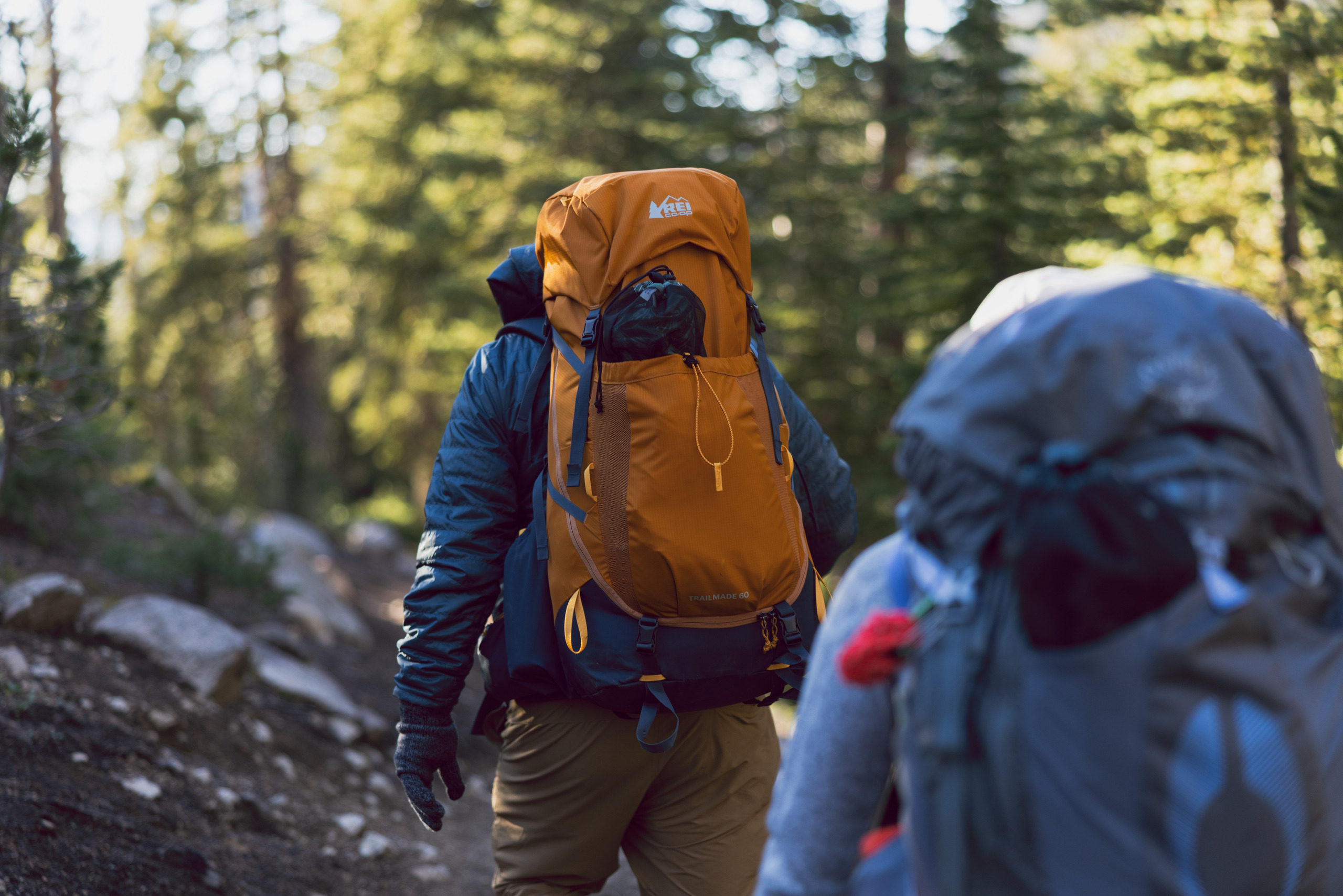
Above all else, the best backpack for you is the one that fits your body the best. One of the keys to finding that right backpack is to get one that is the correct size (e.g., small, medium, large). Your torso length—not your height—is the key measurement.
This article gives steps for measuring at home. Your best resource, though, is a pack-fit expert at your local REI store. Store experts can visually assess your unique fit needs and work through them with you.
This article also covers how to adjust the fit of your new backpack and suggests tweaks to manage comfort as you hike.
For help in deciding which backpack's capacity and features will best serve your needs on the trail, read Backpacks: How to Choose.
Video: How to Fit a Backpacking Pack
Measure Your Torso Length
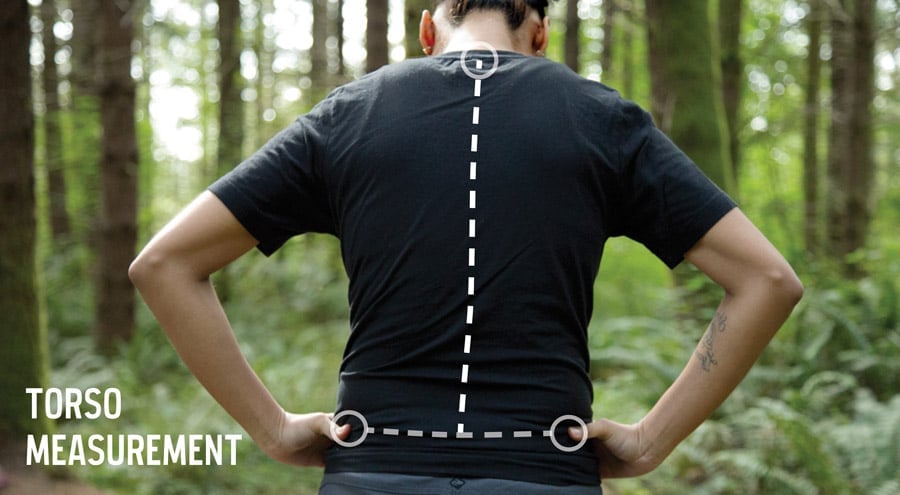
In order to accurately determine this key spec, you'll need a friend and a flexible tape measure.
- Tilt your head forward and feel for the bony bump where the slope of your shoulders meets your neck. This is your 7th cervical (or C7) vertebra—and the top of your torso length.
- On each side of your body, slide your hands down the ribcage to the top of your hip bones (aka the iliac crest). With index fingers pointing forward and thumbs pointing backward, draw an imaginary line between your thumbs. This spot on your lumbar is the bottom of your torso measurement.
- Stand up straight and have your friend measure the distance between the C7 and the imaginary line between your thumbs. That's your torso length.
Use Your Torso Length to Find Your Pack Size
REI.com product pages list torso ranges for each pack size. Torso ranges for pack sizes vary between brands and models, so always check the size chart for any pack you are considering. If you fall between sizes, visit an REI store to try on each size. In addition, because home measurement is rarely perfect, your best fit will always come if you physically try on backpacks.
Measure Your Hip Size
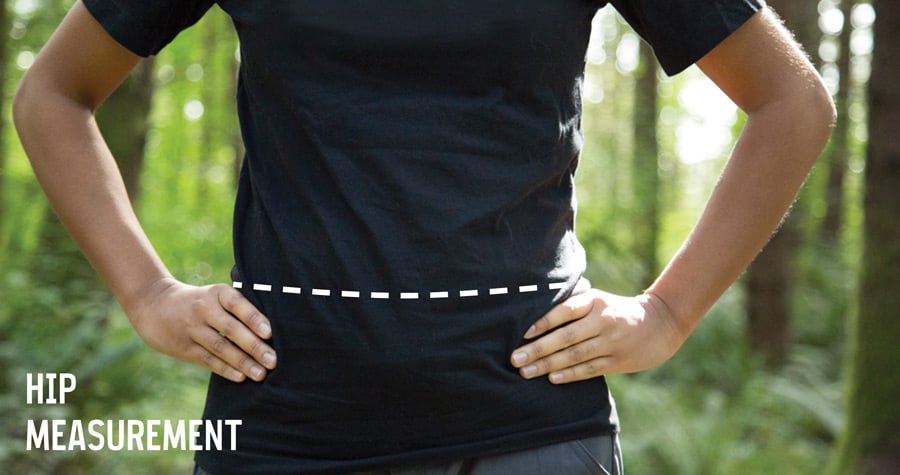
While it's rare for a pack's waist/hips sizing to be off if your pack size is correct for your torso length, it's still important to check your hip measurement. You'll be carrying most of your pack weight on your hips, so good hipbelt fit is critical.
To measure your hip size, wrap your tape measure around the top of your hips, hugging the iliac crest you found when measuring your torso length. This line is slightly higher than your beltline, so hipbelt size differs slightly from pant-waist size.
Double check on REI.com to be sure the waist/hip measurement on your chosen pack size is right for you. If not, call your nearest REI store to find out about interchangeable hipbelt options.
Adjusting Torso Length
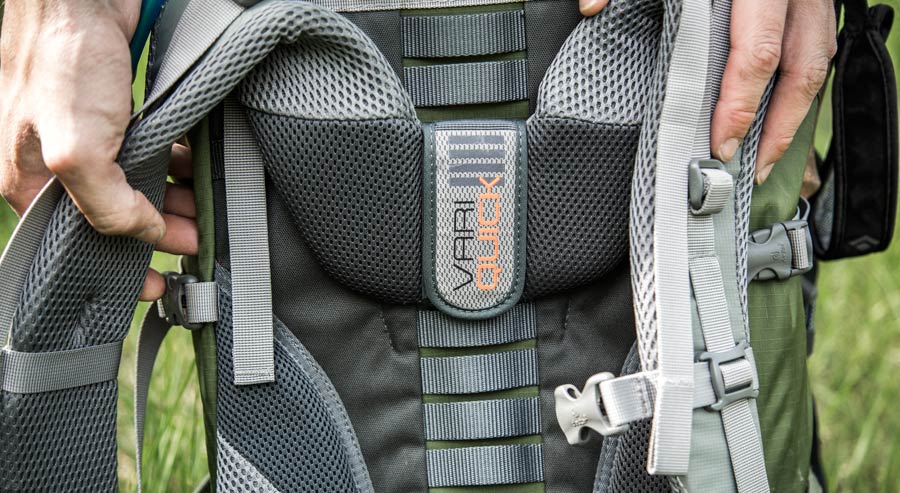
Found on a lot of packs, adjustable suspension enables a pack to fit a wider range of torso lengths and to more precisely fit individual users. Different brands use different systems, but most of them are fairly intuitive. If you buy a pack with this feature, torso length is your first—and most important—fit adjustment.
If your other fit adjustments don't seem to work correctly, re-check and reset the torso length. Adjustment straps can't compensate for an incorrectly set adjustable suspension system. If you're having trouble, bring the pack to an REI store for help.
Fit Adjustment at Home
Your new backpack has several straps to adjust your load for greater comfort. Your legs have some of the strongest muscles in your body, so the goal is to adjust your straps so that the majority of the load rests on your hips.
You have four primary adjustment straps:
- Hipbelt
- Shoulder straps
- Load-lifter straps
- Sternum strap
Start with about 15 pounds of weight in the pack to simulate a load. You'll also need your friend or a mirror to help you check the fit after each adjustment step. Loosen all of the adjustment straps slightly before you start.
Adjustments happen in two primary phases:
The Main Event: shoulder straps/hipbelt
The Finale: load-lifters/sternum strap
In addition, because fit adjustment is a dynamic process, experienced hikers continuously work to relieve pressure points by fiddling with the tension in their straps (the encore).
Step 1: Hipbelt
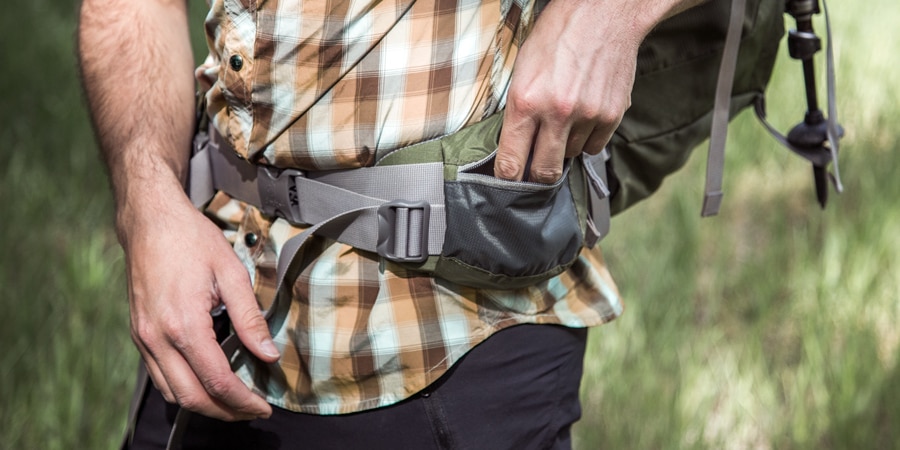
- Put the pack on. Move the hipbelt until the padding hugs the top of your hip bones (your iliac crest). If it sits too low or too high, tighten or loosen the shoulder straps to raise or lower the hipbelt.
- Fasten the hipbelt buckle and tighten it. Be careful not to overtighten the belt: It should be snug and secure without uncomfortably pinching your hips.
- Check the padded sections of the hipbelt to make sure they sit on the top of your hips; if not, readjust your shoulder straps and hipbelt. Try different tensions until you find the sweet spot.
- Belt padding should extend slightly beyond the front point of your hipbones. You also need at least one inch of clearance on either side of the center buckle: If you have less, call REI to see if a smaller belt is available.
Step 2: Shoulder Straps
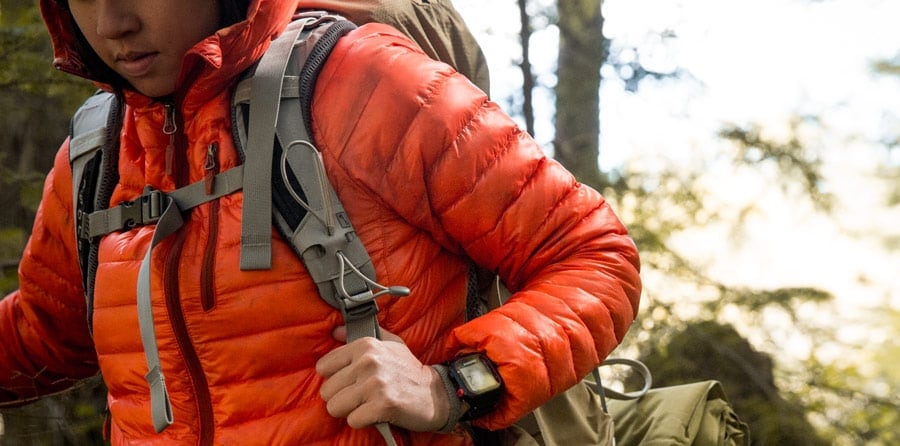
- Pull down and back on the ends of the shoulder straps to tighten them.
- Shoulder straps should wrap closely around your shoulders, but they should NOT be carrying significant weight. If they are, you'll be putting undue stress on shoulder, neck and upper-back muscles.
- Check to see that the shoulder strap anchor points on your pack are 1 to 2 inches below the top of your shoulders, roughly at the top of your shoulder blades. If not, then either your hipbelt is at the wrong level or your pack's torso length is incorrect.
- Vary shoulder-strap tension by tightening and loosening the straps. Learn how to adjust the straps in small increments so you can relieve any pressure points or pain during your hike.
Step 3: Load Lifters
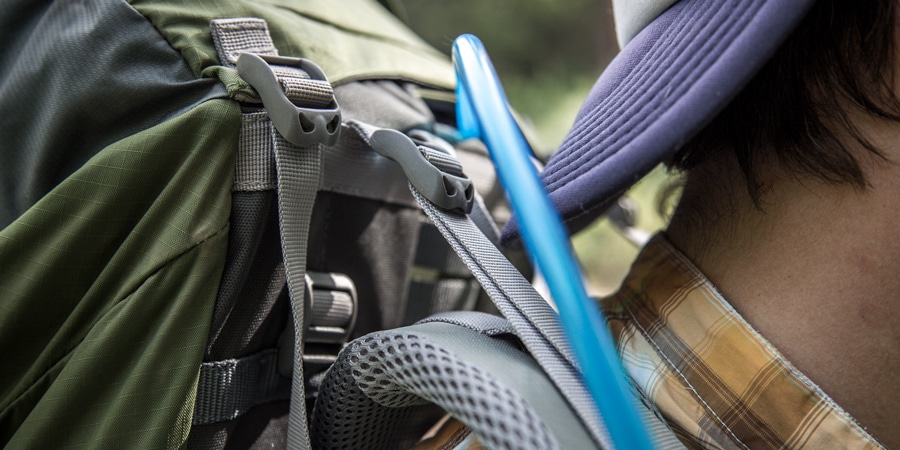
- Load-lifter straps connect the top of the shoulder harness to an anchor point near the top of the back panel. When tensioned, they should angle back toward the pack body at roughly a 45-degree angle.
- Don't overtighten the load lifters! Excess tension that feels great initially can pinch shoulder joints and create discomfort. Strive for snug—not stiff—tension. If you notice a space at the top of your shoulder harness, loosen the load lifters and try again.
Step 4: Sternum Strap
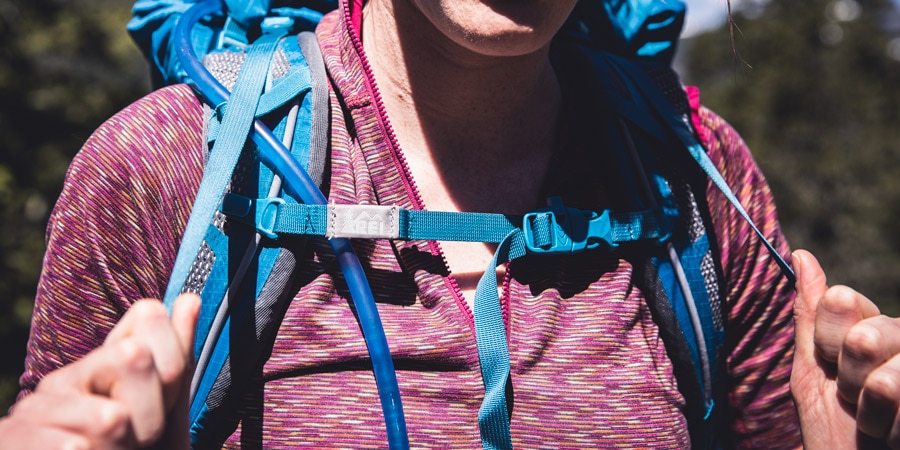
- Slide the sternum strap until it's at a comfortable height across your chest: roughly an inch below your collarbones.
- Buckle and tighten the sternum strap to set the shoulder straps at a width that allows your arms to move freely.
- Avoid the common mistake of overtightening the sternum strap. This can distort the overall fit of your harness, constrict your chest muscles and restrict your breathing.
Fit Adjustment on the Trail
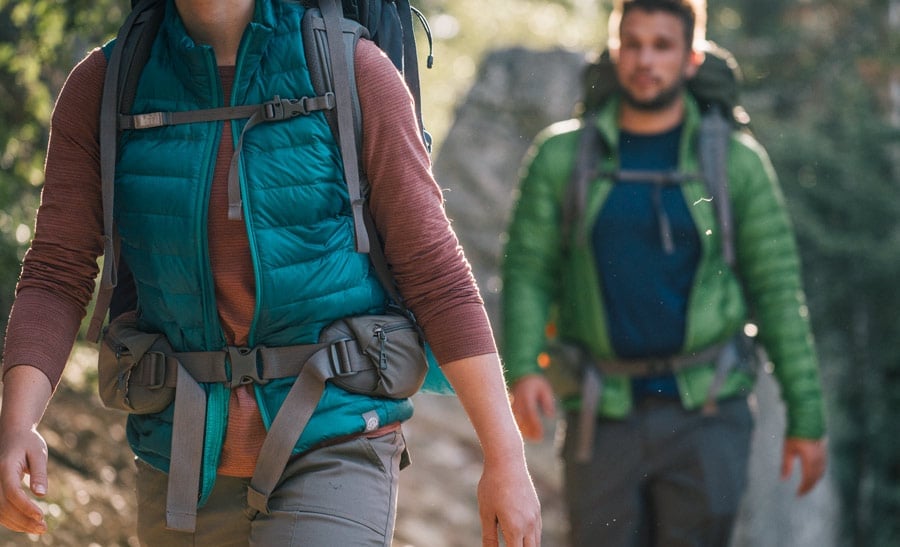
After mile 10, your near-perfect fit can seem like a distant memory. Good fit, though, requires continuous attention on the trail.
- Master how things adjust by playing with all of your straps extensively when you first get your pack.
- Ensure you can always return to your preferred fit by memorizing what that looks like at home.
- Tweak adjustment straps as you hike to alleviate aches, pains and pressure points. Trial and error will tell you what works best for your pack and your body.
- A common tactic to manage load fatigue is to tighten the shoulder straps and loosen the hipbelt, then reverse those steps later.
- Be aware of body position: Leaning slightly forward will make the load feel more in balance.
- Take your pack off whenever you stop for a break. That gives your hard-working back a chance to rest and breathe while you stretch out overworked muscles.