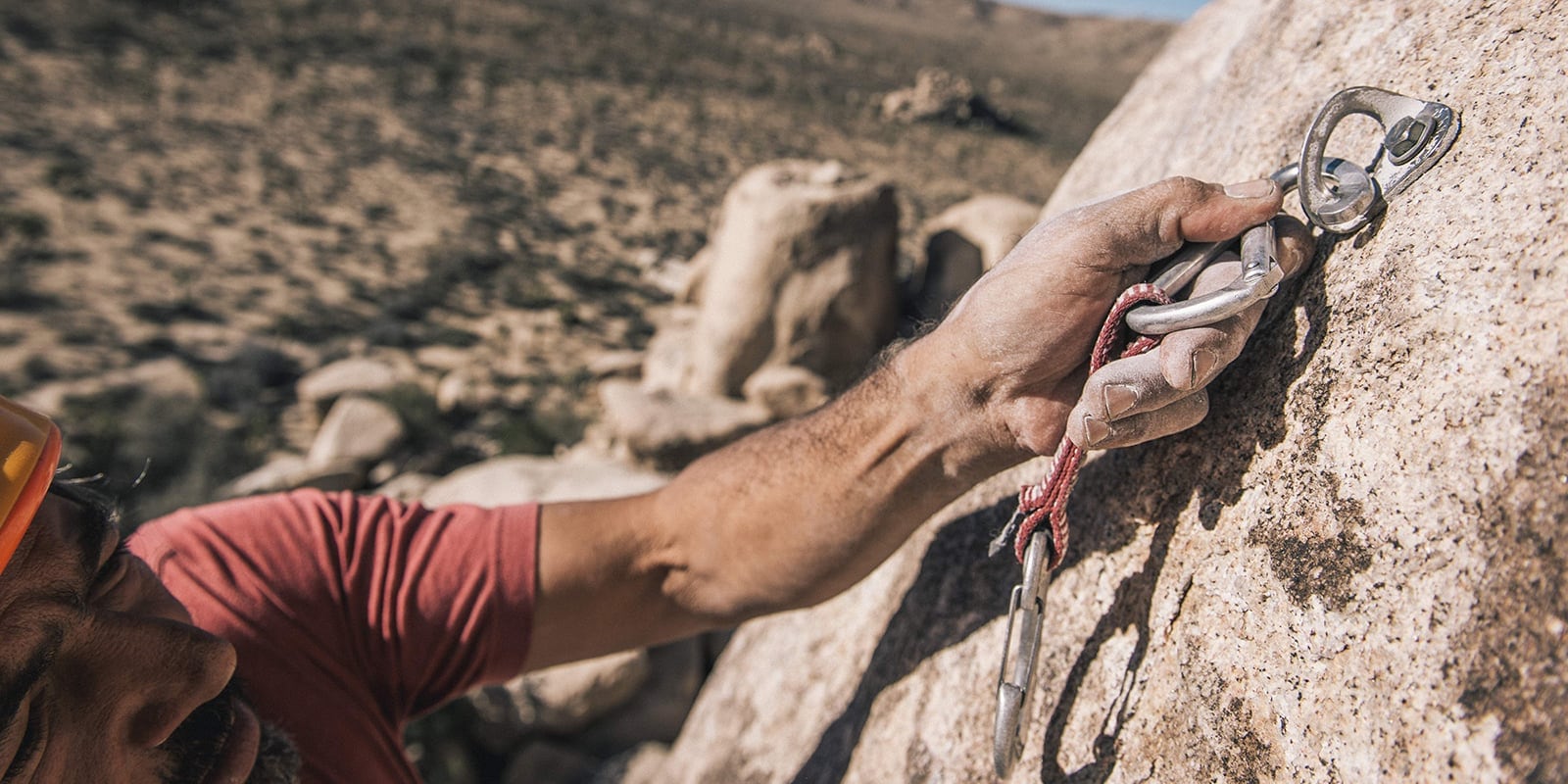
Sport climbing is more accessible than traditional rock climbing, both in terms of location and in cost of outfitting. Its fun and often-competitive atmosphere, combined with the immediate gratification of completing many difficult routes in a single outing, draws newcomers to the sport and is a natural progression for gym climbers who want to take their skills to the outdoors.
What is Sport Climbing?
Sport climbing involves high-intensity climbing on relatively short routes. Its distinguishing characteristics include preplaced bolts and an emphasis on the physical aspect of the climb rather than the destination or summit.
Sport vs. Trad Climbing
Less gear required: Because the emphasis is on the moves, sport climbers don't place their own protection, but clip into preplaced bolts with metal hangers. This allows the lead climber to progress upward without the worry and hassle of carrying a full rack of gear and placing protection like you would with trad climbing.
Accessibility: Sport routes can be found indoors or out, on nearby, accessible rock crags or on artificial walls at a gym or a competition arena. Climbers can enjoy being on the "sharp end" of the rope—that is, leading the climb—without knowing how to place chocks or camming devices.
Falling: When sport climbing, it's normal and expected that you'll fall, often repeatedly, as you work out a difficult move. In trad climbing, you would typically take care not to fall and stress the anchors you are placing.
Sport Climbing Route Ratings
In the U.S., the Yosemite Decimal Rating System is most commonly used to classify climbing difficulty on sport climbs. All sport climbs range from an easy rating of 5.0 to a very difficult rating of 5.15.
Just like with other styles of climbing, sport routes are rated by the hardest move on the route, so when a climb is rated 5.7 that does not mean every move is 5.7.
Class 5 climbing sub-categories | ||
5.0-5.4 | Easy | A steep section that has large handholds and footholds. Suitable for beginners. |
5.5-5.8 | Intermediate | Small footholds and handholds. Low-angle to vertical terrain. Beginner to intermediate rock climbing skills required. |
5.9-5.10 | Hard | Technical and vertical, and may have overhangs. These hard climbs require specific climbing skills that most weekend climbers can attain. |
5.11-5.12 | Hard to Difficult | Technical and vertical, and may have overhangs with small holds. Dedicated climbers may reach this level with lots of practice. |
5.13-5.15 | Very Difficult | Strenuous climbing that's technical and vertical, and may have overhangs with small holds. These routes are for expert climbers who train regularly and have lots of natural ability. |
To further define a route's difficulty, a subclassification system of letters (a, b, c or d) is used for climbs 5.10 and higher. For instance, a route rated 5.10a is easier than one rated 5.10d. Some guidebooks use a plus (+) or minus (-) rating instead of the letters.
Sport Climbing Gear
Gear for sport climbing is light, streamlined and aimed at speed and efficiency. A bolted climb requires a rope, harness, shoes, quickdraws, helmet, chalk and a chalk bag.
Climbing Rope
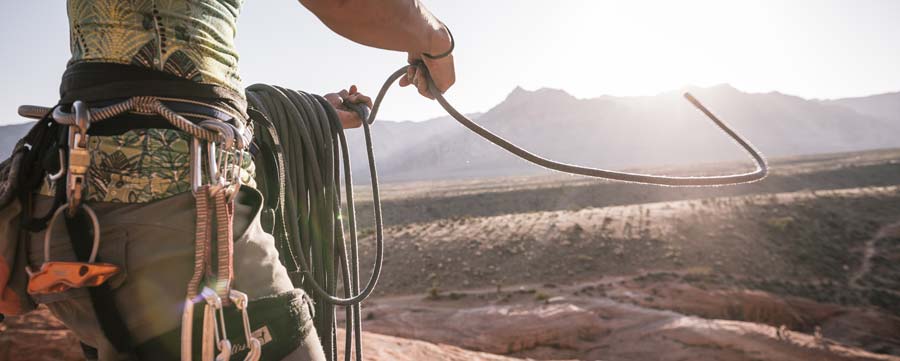
Most sport climbers use a single dynamic climbing rope. For length, a 60m rope is usually sufficient, however, some modern sport-climbing routes require a 70m rope. It can be helpful to ask other climbers or consult a guidebook if you're unsure what length rope you need.
Climbing ropes are sold as dry-treated or non-dry. The more expensive dry-treated ropes resist water absorption, keeping them supple and strong if you're caught in a rainstorm or traveling on snow. Most sport climbers will pull their ropes and go home when it rains, so if you primarily sport climb, you can save some money and go with a non-dry rope.
Learn more about climbing ropes in our article, Climbing Ropes: How to Choose.
Climbing Harness
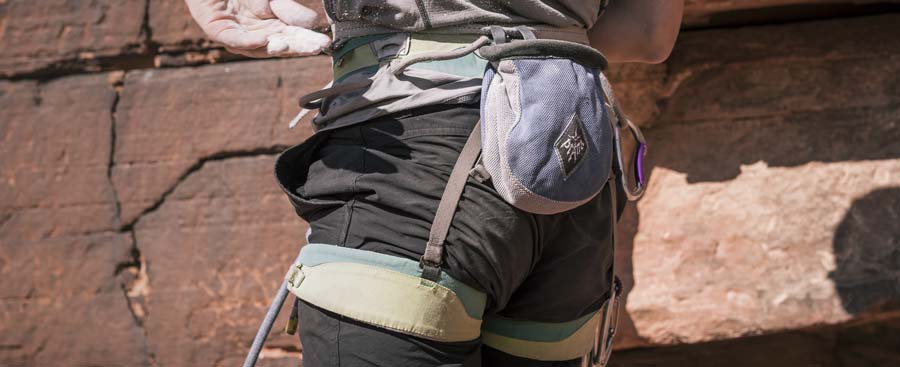
Harnesses designed specifically for sport climbing are generally lightweight and streamlined but have padding to cushion repeated falls. The design is thinner, often with fewer gear loops to shave weight and maximize mobility.
Climbing Shoes
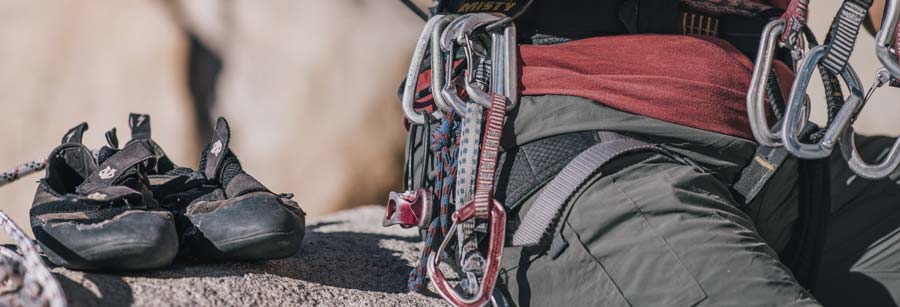
Since sport climbs tend to be short and challenging, climbers often choose moderate to aggressive shoes that have a downturned shape and thin, sticky soles that provide an excellent feel of the rock. The downturned shape puts your feet in a strong and powerful position for stepping on small holds but sacrifices some comfort. If you're a beginner climber, you might prefer a neutral shoe that's comfortable to wear while you develop your technique.
Sport climbers often choose shoes that slip on or have hook-and-loop straps for easy on and off before and after a climb.
Learn more about climbing shoes in our article, Climbing Shoes: How to Choose.
Quickdraws
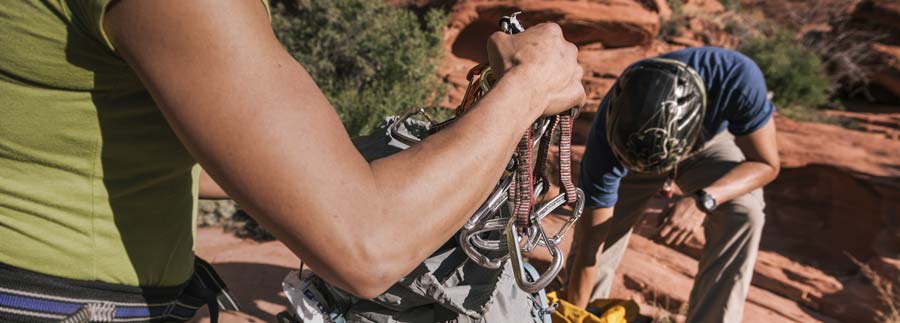
Most sport climbers use quickdraws (pre-attached carabiner and sling sets). Quickdraws are typically sold with one straight-gate and one bent-gate carabiner each. The straight-gate carabiner is used for clipping the bolt, while the bent-gate carabiner is shaped to make clipping the rope easier.
Rather than buying pre-made quickdraws, you can make your own if you prefer different combinations of carabiners. Simply buy individual quickdraw runners (sometimes called dogbones) and the straight-gate and bent-gate carabiners that you like.
Climbing Helmet
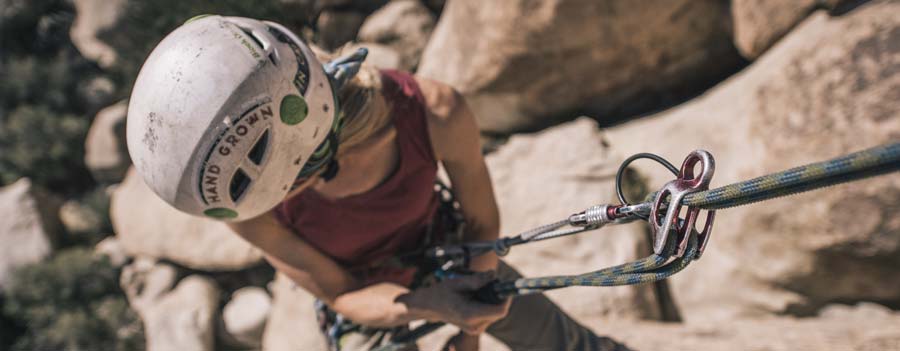
When climbing outdoors, you should always wear a helmet made specifically for climbing. Climbing helmets are designed to cushion your head from falling rock and debris, as well as provide protection in the case of a fall. They are generally not worn in a climbing gym since it's a controlled environment.
A helmet should feel comfortable, fit snugly but not too tight and sit flat on your head. Helmets have a hard, durable protective shell and an internal strapping system that consists of the harness, headband and chin strap.
All climbing helmets must meet the UIAA (Union Internationale des Associations d'Alpinisme) and CE (European Committee for Standardization) standards to protect your head from top and side impacts. See the REI Expert Advice article, How to Choose a Climbing Helmet, for more detail.
Chalk and Chalk Bag
Chalk is a necessity to keep hands dry for dicey moves with tenuous holds.
Sport Climbing Terms
If you hang around a climbing gym or crag long enough, you're sure to hear some jargon being thrown around. Here are some key terms to know:
- On-sight Flash —This describes the "preferred" (and most difficult) way to complete a sport route. It signifies that the climber has completed the entire route on the first attempt without falling or "hang-dogging" on the rope, and without any prior knowledge of the climb.
- Flash —A flash is to climb a route on the first try without falling or hanging on the rope, except that the climber has been given information about how to do the climb.
- Redpoint —Redpoints are the successful climb of a route that the climber has practiced many times. He or she now completes it without falling, resting or hanging on the rope ("practice makes perfect").
- Pinkpoint —The pinkpoint is the same as a redpoint but with all the quickdraws preplaced. All the climber has to do is clip the rope into the carabiner instead of removing the quickdraw from the harness, clipping it into the bolt and then clipping the rope. Some climbers don't make a distinction between red- and pinkpoint routes.