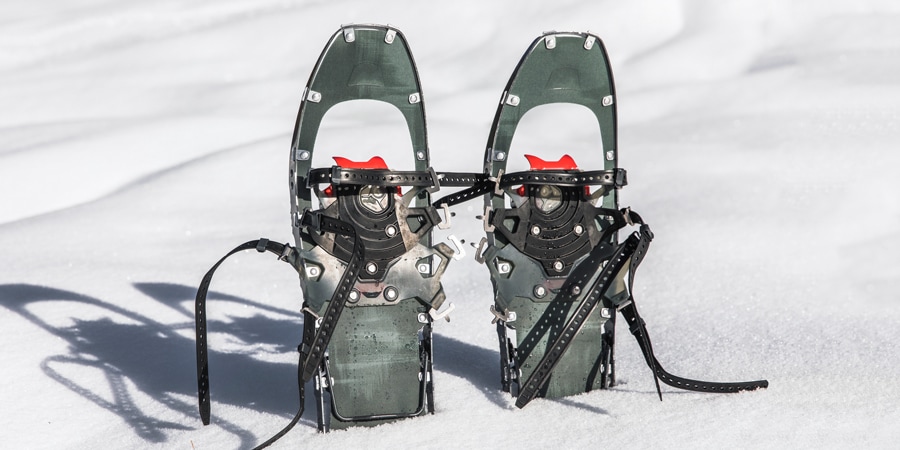
When outdoor landscapes finally succumb to the snows of winter, dear hiker, there's no need to feel like the outdoors are closed for the season. Snowshoes allow you to travel across snow-covered terrain without sinking or struggling. They do this by providing flotation, meaning they spread your weight evenly over a large, flat surface area.
To choose the right snowshoes, you'll want to factor in three simple things:
- Have an idea of where you plan to go: Snowshoes are generally designed for flat, rolling or mountain terrain, so where you go will help determine what you'll buy.
- Have an estimate of how much you (and your gear) weigh: Snowshoe specs should list the overall weight (total load) they can support.
- Try to anticipate the type of snow you'll be moving across: If you have a choice of sizes and will be on dry, fluffy snow (powder), consider a larger size; if you'll be on a hard-packed snowshoe trail, you can go with a smaller size.
If you're looking for REI's recommendations, check out our roundup of the best snowshoes.
Know Where You Plan to Go—Snowshoe Type by Terrain
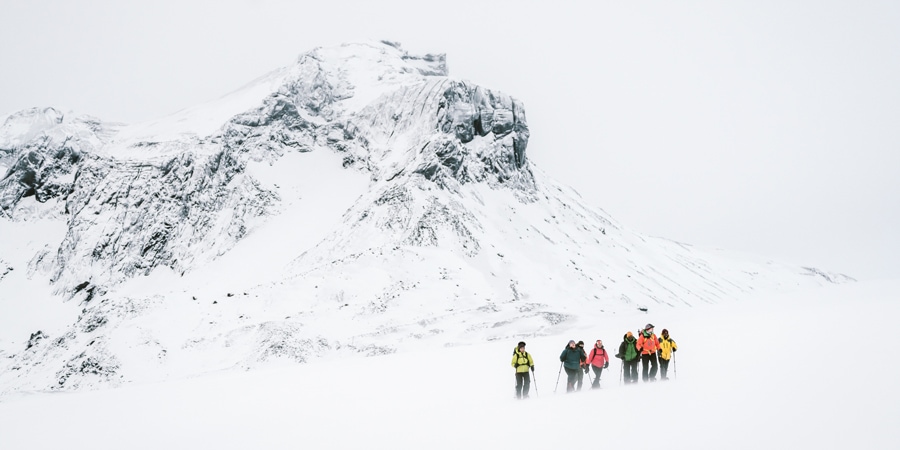
Most snowshoes fall into three categories: flat terrain, rolling terrain and mountain terrain. A few models are designed specifically for trail-running, fitness or climbing.
Flat Terrain Snowshoes
Designed for casual users, this type of snowshoe typically has:
- A lower price
- Simple binding system
- Modest traction features
- No heel lift (for steep slopes)
Rolling Terrain Snowshoes
Designed to handle terrain ranging from flat to moderately sloped—but not steep or icy conditions—this type of snowshoe typically has:
- A moderate price
- Moderately aggressive crampons for traction
- Sturdy, easily adjusted binding system
- A heel lift (for steep slopes) in many (but not all) styles
Mountain Terrain Snowshoes
Designed to handle steep and/or icy terrain, this type of snowshoe typically has:
- A high-end price
- An aggressive crampon system for traction
- A sophisticated binding system that can accept beefier boots
- A heel lift (for steep slopes) in most styles
If you're a backcountry skier or snowboarder who plans to use snowshoes to access higher elevations, then look for binding systems that fold flat so that they can be more easily stowed on or in a pack. (This is easiest to evaluate in a store.)
Running Snowshoes
This niche category is indeed for people who plan to move fast and get a more intense aerobic workout. They're designed to be lightweight and allow feet to have a full range of motion.
Snowshoe Sizing
Snowshoe Sizing by Load
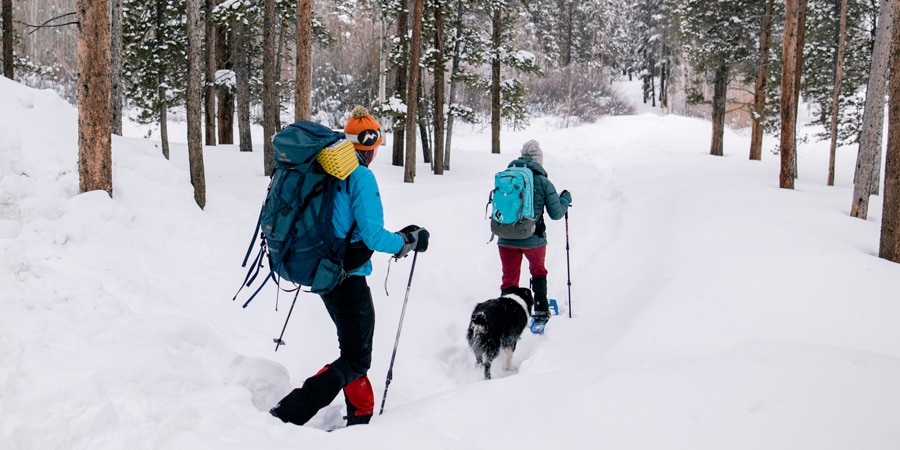
A heavier person (include your pack weight) requires more snowshoe surface area, which means a larger (longer) size, in order to have the right amount of flotation.
Each snowshoe should list a recommended load. Some models come in one size, in which case you simply need to verify that your maximum load is below that one size's maximum load. Many snowshoe models, though, come in more than one size so that you can more closely match the maximum load to your situation.
Snowshoe Sizing by Conditions
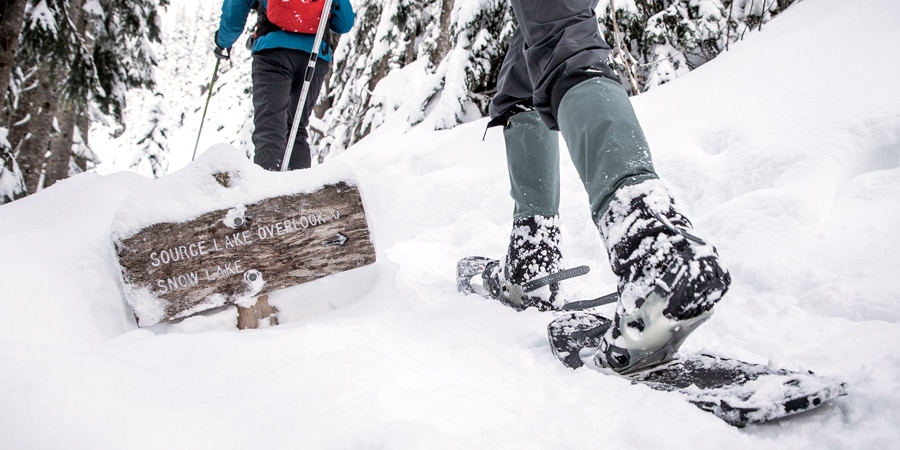
If your choice of snowshoes is between different models, or between different sizes of the same model, consider going with the larger or smaller one (greater or lesser maximum load) based on the following types of snow conditions:
- Powder snow calls for bigger (longer) snowshoes to stay afloat than you would need on dense snow.
- Compact, wet snow and packed trails can be traveled over while wearing smaller snowshoes; smaller snowshoes make it easier to travel on brushy or narrow trails.
- Steep (but not powdery) slopes and icy terrain are easier to negotiate if you're wearing smaller snowshoes.
When in doubt get the smallest size that will support your weight. As long as you have adequate flotation, smaller snowshoes will be much easier to handle.
Snowshoe tails: This innovative MSR accessory allows you to attach a 5- to 6-inch extension onto certain MSR snowshoe models in order to have more flotation in dry snow conditions.
Snowshoes for Women, Men and Kids
Many, but not all, snowshoes are unisex. Women's snowshoes are narrower than unisex or men's models (based on general population data) and available in size ranges that include smaller sizes. The bindings might also fit smaller boot sizes. Other than that, though, you'll find no significant differences based on gender.
Kids' snowshoes: Models for young ages are intended for casual snow play, while older kids' models offer similar technical features to adult snowshoes. Like adult snowshoes, those for kids also have weight ranges that allow you to choose the correct size for your child.
Understanding Snowshoe Materials
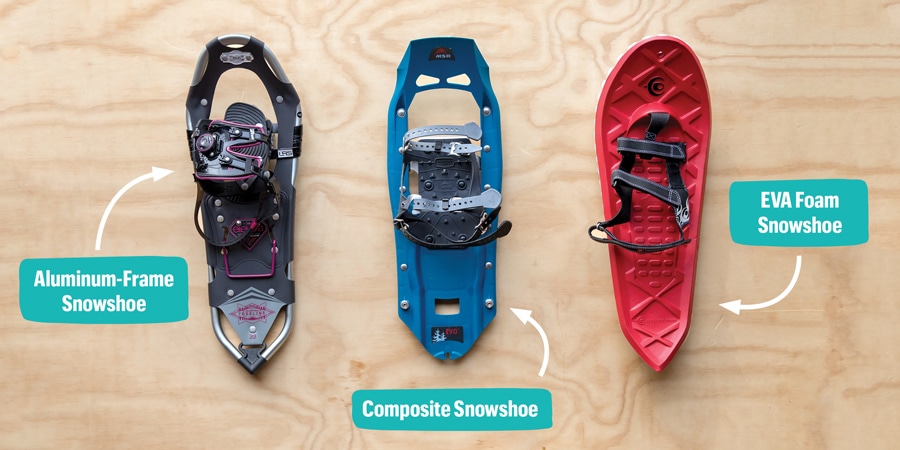
Aluminum-frame snowshoes are light and strong, and typically feature supportive decking material attached to the frame. The decking can be made of plastic, coated nylon, urethane, PVC-coated polyester or synthetic rubber.
Composite snowshoes feature a hard decking material that also forms the outer frame. On hard-packed snow, they are a little "noisier" than other materials.
EVA foam snowshoes are a recent innovation. Walking in them is super quiet; the foam helps keep your feet warm and it flexes as you stride. The integrated grip area on the bottom doesn't provide as much traction as integrated crampons on other snowshoes. If you're a dog owner, though, consider that foam snowshoes aren't likely to elicit a yelp if you accidentally step on the tail of your furry trail companion.
Understanding Snowshoe Bindings
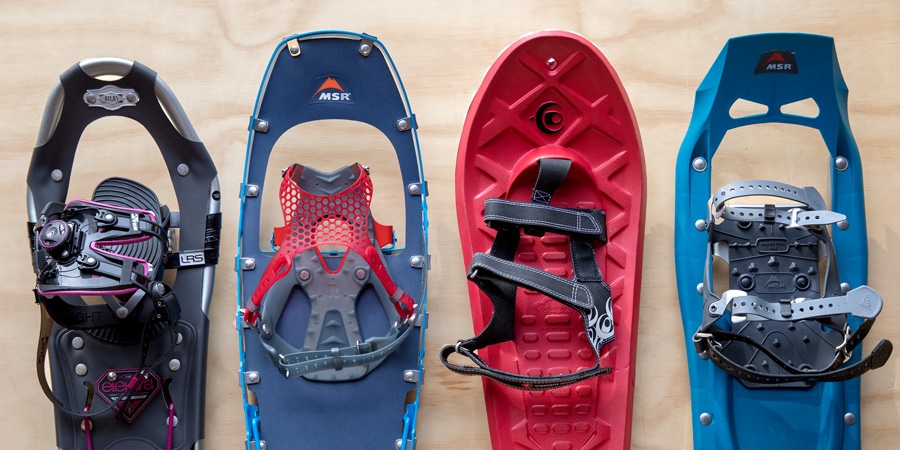
Snowshoes secure to your boots with bindings, which typically consist of a platform and straps that go over the boot and around its heel. More advanced (expensive) snowshoes will have more sophisticated binding systems.
Rotating (or floating) bindings on many models pivot at the point near the balls of your feet. Models that pivot well reduce leg fatigue when climbing, shed powdery snow well and allow you to kick steps on steep slopes
Fixed bindings on some snowshoes attach the full length of your foot to the deck, which typically flexes a little to make up for the lack of a pivot. For climbing and deep powder travel, they are less efficient than snowshoes with pivoting bindings. On flat and hard-packed terrain, though, fixed bindings allow a more natural walking movement.
Binding closures range from basic nylon straps to ratcheting cable systems. Any closure can work; more advanced systems adjust and tighten quickly and easily.
Understanding Snowshoe Traction and Climbing Features
Snowshoes for flat terrain offer moderate amounts of traction, while models made for icy, mountainous terrain have more aggressive crampons and cleats. As snowshoe designs evolve, the placement and shape of traction features is becoming more varied:
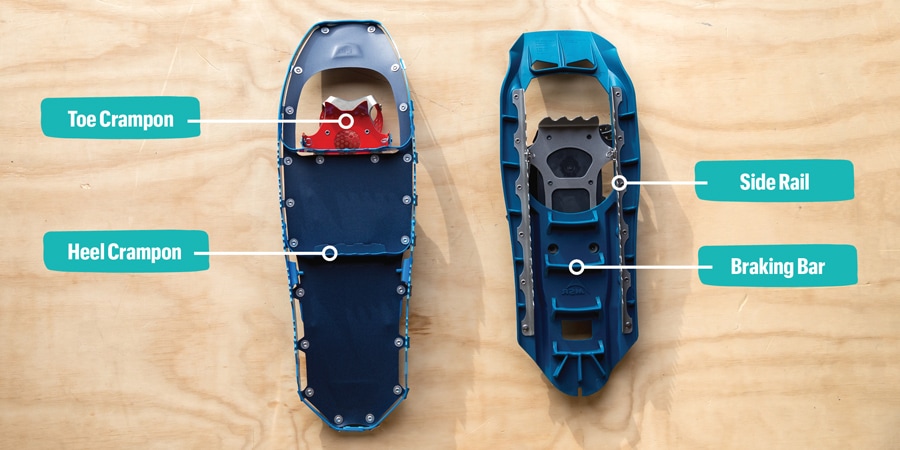
Toe or instep crampons are on the undersides of the bindings, so they pivot with your feet and dig in as you climb. This is the primary source of traction on most snowshoes.
Heel crampons would be roughly as far back as the heel of your boots, located on the underside of the decking.
Snowshoes are not an alternative to crampons you attach to mountaineering boots—mountaineering crampons offer much greater traction.
Side rails (also called traction bars) under the decking provide lateral stability and reduce side-slipping as you cross slopes.
Braking bars under composite-deck snowshoes help prevent backsliding on slopes.
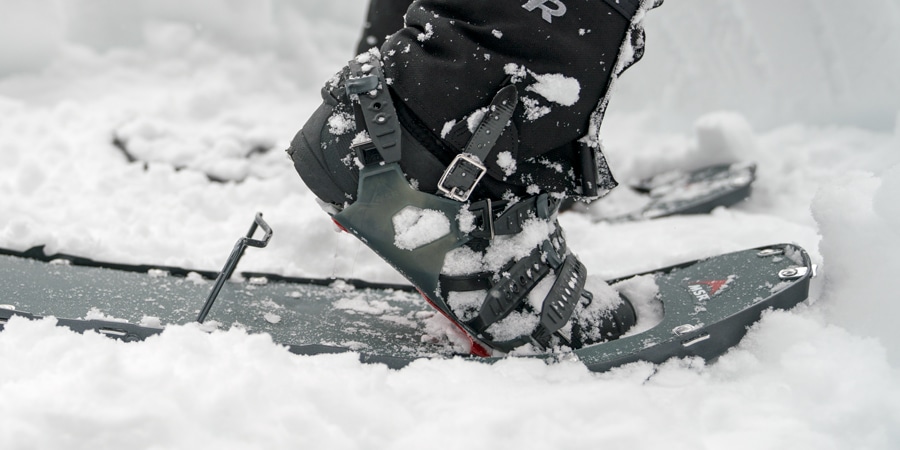
Heel lifts: Also known as climbing bars (or Televators on some brands), these wire bails can be flipped up under your heels to relieve calf strain and save energy on steep uphill sections. They can be flipped down and out of the way when not being used.
Snowshoeing Footwear
Snowshoe bindings accept a variety of footwear, from hiking boots to snowboard boots. Generally, any winter boot can work, but the key is having one that is comfortable for walking, mile after mile. Waterproof boots are a wise choice. Really warm boots might feel a little too toasty, though, on a long, hard snowshoe tour.
Gaiters are a smart accessory to wear because they help keep snow out of your boot tops. (Even snowshoeing on a packed trail can involve moments when you have to step off the trail.)