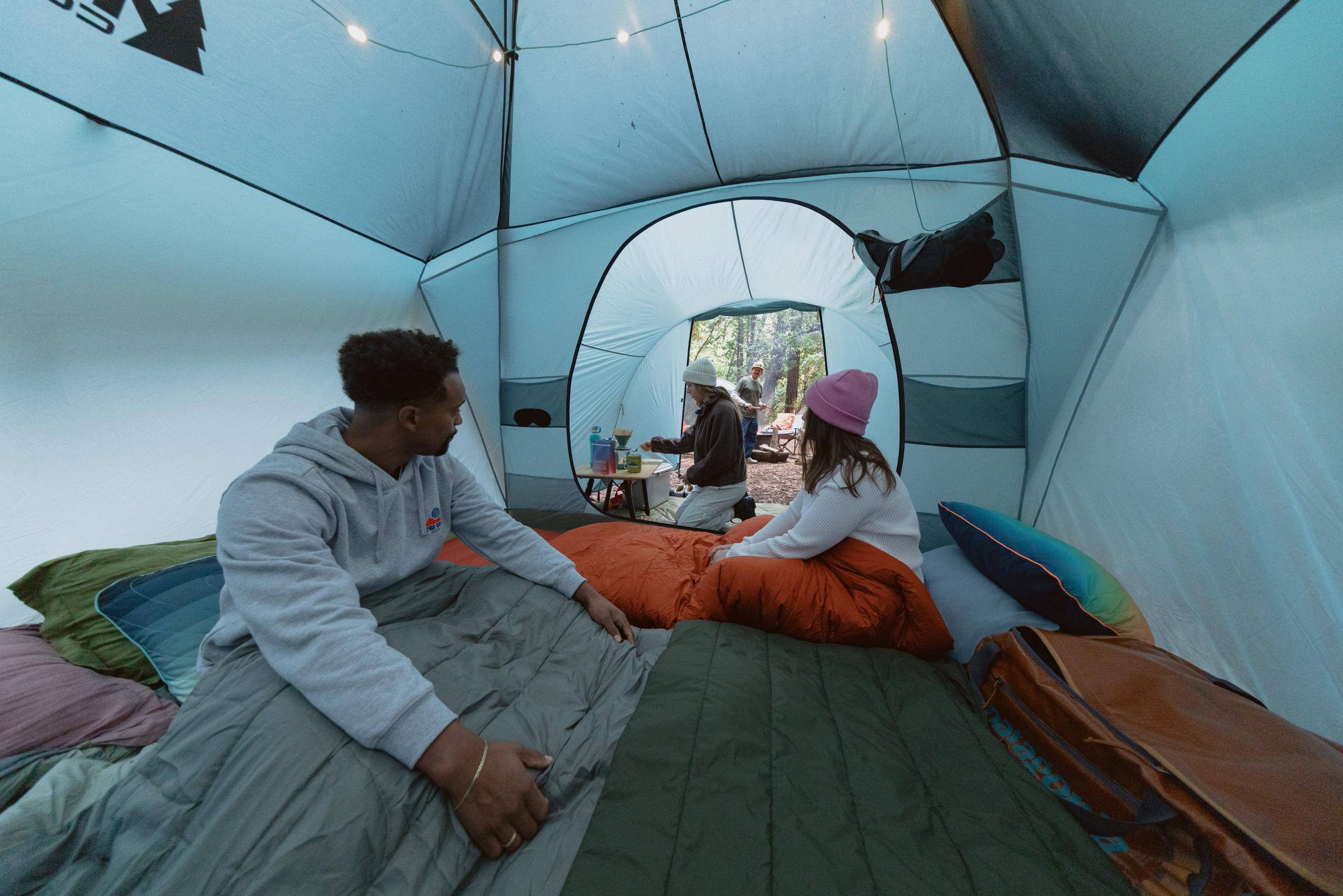
Snuggling into a comfy sleeping bag can feel like the best part about camping, so it pays to choose the right one. However, there’s no “best” model on the market. Instead, finding a sleeping bag you’ll love means following your personal preferences about size, warmth and features.
In this guide, we will be discussing everything there is to know about sleeping bags designed primarily for car camping, which are often heavier but more feature-rich and inexpensive than those designed for backpacking. (More on that below.) If you plan to pack your sleeping bag and hike it into the backcountry, read How to Choose Sleeping Bags for Backpacking.
Jump ahead to specific sections using the links below, or read on to learn about types of car-camping sleeping bags and how to choose the right one.
Editor’s note: We significantly updated this article on July 24, 2025, to include new and current subject matter expertise on sleeping bags, as well as new links.
Camping vs. Backpacking Sleeping Bags
First, ask yourself how you’ll use the sleeping bag: will it primarily be for car camping, or do you plan to take it on backpacking trips as well? Sleeping bags designed for campground scenarios emphasize comfort over weight-savings or packability, since they’ll generally be transported in a car, not carried on your back. Some models may not pack down small enough to fit into a backpack, and they may weigh more than you’d prefer to carry.
Bags designed for backpacking feature lightweight fabrics and insulations that typically cost more than heavier, bulkier options. They also provide a more body-hugging fit than car-camping bags, both for weight savings (the smaller the bag’s dimensions, the less it weighs overall) and heat efficiency (more about that below).
If you’ll be using one bag for both activities, choose a backpacking model that’s small and light enough for your pack. Such a bag will also work for car camping, though it may lack some of the indulgences offered among the plushest constructions.
Feature | ||
|---|---|---|
Best use | Campgrounds, vehicle-assisted dispersed camping, sleepovers, cabin stays | Backpacking, bikepacking, multi-day overnights |
Weight & Packability | Heavier and bulkier, don't compress to fit into a backpack | Small, lightweight enough to fit into your backpack |
Comfort | Emphasize comfort and plushness | Snug fit for warmth and weight savings |
Cost | Typically more affordable than backpacking bags | Often more expensive due to lightweight, technical materials |
How to Choose a Sleeping Bag Insulation Type
Now that you've decided you need a car-camping sleeping bag, consider what type of insulation you want.
Sleeping bags are insulated with goose down, synthetic insulation (usually polyester that’s spun into fibers), or a combination of the two. (REI Co-op’s Radiant 20 bag, for example, uses synthetic insulation in the footbox and draft collar, two areas prone to moisture from sweat and exhalation respectively, but down everywhere else.)
Synthetic sleeping bags
Benefits: Choosing a synthetic bag will save you money, because polyester fill typically costs less than down. Synthetics also insulate better than down when wet and dry faster (handy in scenarios involving a leaky tent or spilled coffee). And polyester sleeping bags are becoming more easily recyclable compared to down: NEMO, for example, redesigned its popular Forte sleeping bag to be made entirely of polyester for easier recycling.
Drawbacks: But there are also tradeoffs to synthetic: It weighs more than down for similar insulation power and is bulkier when packed. And its warmth diminishes over time: Over years of being compressed into a stuff sack, synthetic fibers break down and lose some heat-trapping power.
Down sleeping bags
Benefits: Down sleeping bags lighter weight and pack down smaller than synthetic options, all without losing their warmth. They're great for chillier temps in dry weather or for campers who may want one bag for both camping and backpacking (lightness and compressibility are key when trekking long miles).
Drawbacks: Though light and compressible, down bags will lose insulating abilities should the plumes get wet. Developments in hydrophobic (water-repellant) down have made this material more resistant to water and humidity. The REI Co-op HunkerDown 20, for instance, has this feature. However, bags with moisture-resistant down are typically more expensive, says Luca Stewart, senior sales specialist for the REI Co-op store in Sandy, Utah.
Tip: “If you’re just car-camping and you don’t have to worry about the bag’s packed size, a synthetic bag is a great option,” Stewart concludes.
Read more: Down vs. Synthetic Insulation: Which is Right for You?
Insulation Type | Key Benefits |
|---|---|
| |
|
How to Find the Right Sleeping Bag Fit
Finding a sleeping bag that fits is easier than ever these days, as more brands like REI Co-op offer a range of unisex sizes to suit different body types.
“The industry is trending away from men’s and women’s models of sleeping bags,” explains Ed Zebrowski, product information specialist for REI Co-op who helps people find the right gear. Instead, brands are increasingly offering genderless bags in a variety of lengths and widths. The REI Co-op Siesta Hooded 20 Sleeping Bag, for example, comes in four sizes: medium, medium wide, long, and long wide.
No matter which model you choose, it’s best to avoid a too-roomy fit. It may be tempting to grab a larger size to avoid feeling confined while you sleep, but that extra space will reduce warmth. “You have to generate the heat that warms the air inside the bag,” explains Zebrowski. Excess air pockets at the foot of the bag, or around the head and shoulders, require more body heat to feel cozy. Consequently, says Zebrowski, “You may feel cold throughout the night.”
Zebrowski recommends using the bags’ listed interior dimensions as a guide. The most heat-efficient should feel like a loose wrap around your body—look for bag dimensions that are several inches bigger than you are. If you’re 6 feet tall, for example, choose a bag that’s at least 6 feet, 2 inches inside. The extra space prevents your feet from pushing against the end, which can compress the insulation and create a cold spot from a lack of warmth-trapping loft. Also, ensure that the girth (the bag’s circumference, not its width) accommodates your widest point—whether that's your shoulders, hips or abdomen.
Next, consider your sleeping habits, suggests Stewart, senior sales specialist for REI Co-op. Side sleepers and people who move a lot throughout the night might benefit from a few more inches of wiggle room in their sleeping bag.
How to Choose the Right Sleeping Bag Shape
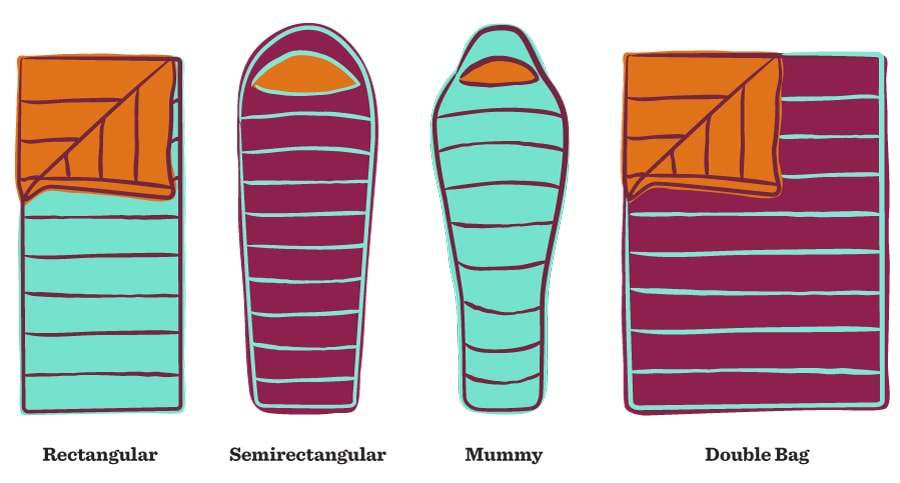
Sleeping style can also dictate the best bag shape.
Mummy bags: These tapered bags include a hood (to prevent heat loss through the head) and a narrowing shape through the foot (to reduce surplus air pockets). “If you like feeling tucked in at night and you sleep on your back, this is the shape for you,” says Stewart.
Semi-rectangular bags: If you toss and turn at night, you might find mummy shapes to feel restrictive. Such campers might try the “spoon” shape that NEMO pioneered to create space for a side-sleeper’s bent knees. “People love them, and they’re very heat-efficient,” notes Stewart.
Rectangular bags: These bags feel the least confining, but they typically sacrifice the most warmth. The extra air space at the feet and shoulders takes more body heat to feel cozy, and some of that heat is lost through the large opening. These bags often are best for warm-weather conditions: If you only camp during summer’s hottest days, a rectangular bag could meet your needs. That said, some brands make rectangular styles that could work for cooler conditions. The REI Co-op HunkerDown 20, for instance, is a rectangular bag that offers three-season warmth. Always check the temperature rating (more on that below) when making a decision.
Double bags: Couples who want to share a sleeping bag might consider a double bag, or zipping two compatible bags from the same brand together. (One should have a right-hand zip, the other a left-hand zip.) If you’re looking at double bags, consider whether the top quilt detaches from the bottom, so you can use it more as a blanket. “Some couples prefer that configuration in hot weather,” Zebrowski says.
When deciding on bag fit and shape, Stewart boils it all down to one simple maxim: “Look for the smallest bag you can fit in and still feel truly comfortable.”
How to Choose the Right Temperature Rating
When shopping for a sleeping bag, one key factor to consider is the bag's temperature rating. This rating helps provide an apples-to-apples comparison of warmth among sleeping bags from different brands, though it's important to note that real-world comfort probably won't match lab-tested temperature ratings because of all the variables a lab can't simulate—like whether a person sleeps warm or cold, metabolism, sleeping pad and more.
A bag’s temperature rating is determined in lab tests using standards that are accepted across the outdoor industry. Read Understanding Sleeping Bag Temperature Ratings to learn more about test methods and comfort ranges.
Standardized laboratory tests produce a rating range for each sleeping bag, with two temperature ratings within that range often called out in a bag's specs:
- Comfort rating indicates the temperature at which a cold sleeper might feel comfortable.
- Lower limit rating (which is always lower than the comfort rating) indicates the temperature at which a warm sleeper might still feel comfortable.
For car camping, think about the coldest temperatures you’re likely to experience—then add a 10- to 15-degree buffer to find the temperature rating you should look for. For example, if you’re camping in the Rocky Mountains, where summertime overnight low temperatures can approach 30°F, you’ll probably feel most comfortable in a 15- or 20-degree sleeping bag. You can always unzip the bag for extra venting and airflow in warmer conditions, but on cold nights, you’ll appreciate the insulation.
Other Sleeping Bag Features and Accessories
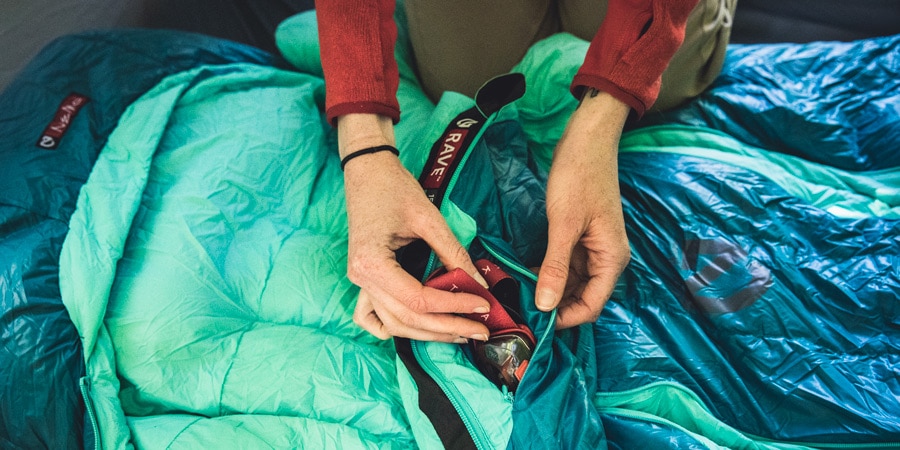
Because weight is (almost) no object for car camping, bags designed for the activity often include an appealing array of (potentially bulk-adding) features aimed at making your night outdoors feel as comfy as home.
Zippers: Some bags include two zippers at the head—one on each side of the bag—to let the top fold down like a quilt. That’s handy if you enjoy reading, playing cards, or other activities that involve extending your arms outside the bag. Other zippers provide ventilation to the footbox. “Two-way zippers let you open the bag from the bottom for increased airflow,” explains Zebrowski. Pro tip: Pay attention to the zipper placement on the bag you're considering. Some have a zipper on the left side while others have it on the right side (many bags even provide the option to choose your zippered side). Placement can add functionality and ease depending on your handedness and the location of your tent's door.
Wearable sleeping bags: Some sleeping bags are categorized as wearable, which often means they have openings for arms and legs or are shaped like a onesie. These might appeal to anyone who has a hard time leaving their sleeping bag on cold mornings.
Stash pockets: Bags may also feature a dedicated pocket for a smartphone or headlamp. These can be especially helpful for keeping items handy in the dark.
Pillow pocket: Some sleeping bags have space to secure a pillow. Small, inflatable camping pillows generally snug into the hood of a mummy bag, but if you plan to bring a larger pillow from home, a broader pocket (such as the one on the Siesta Hooded 20) will help keep it in place. To adequately support the neck, side-sleepers will want a thicker pillow than back-sleepers, says Stewart.
Sleeping bag liner: Stewart’s favorite sleeping bag accessory is an uninsulated sleeping bag liner. Offered in a range of fabric types, from silk to synthetics to Merino wool, liners are “the best add-on purchase you can make to a bag,” says Stewart. Not only does a liner extend the comfort range of your sleeping bag (you can sleep in the liner alone on hot nights or use it inside the bag to add a smidge of insulation), but it also protects the bag from your body’s dirt, body oils, residual sweat and sunscreen. “Liners are easy to launder when you get home, but sleeping bags are a pain in the butt to clean,” Stewart notes.
How to Clean and Store Your Sleeping Bag
When you need to machine-wash your bag, use mild detergent and a large-capacity front-loading washer. Then, dry the bag thoroughly in a large-capacity dryer. Stewart recommends putting a few tennis balls in with the bag so their movement can break up clumps of wet insulation. For more tips, read How to Wash a Sleeping Bag and How to Store a Sleeping Bag.
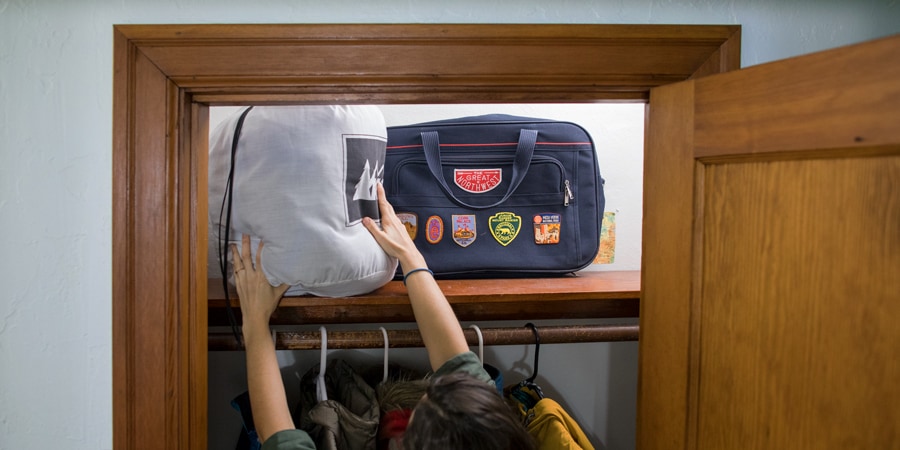
After your trip, consider storing your bag in a large mesh or cotton sack that lets the insulation expand, ensuring the bag’s long life of reliable service. Another option, if you have the space, is to drape it from a hanger in your closet.
Related Articles