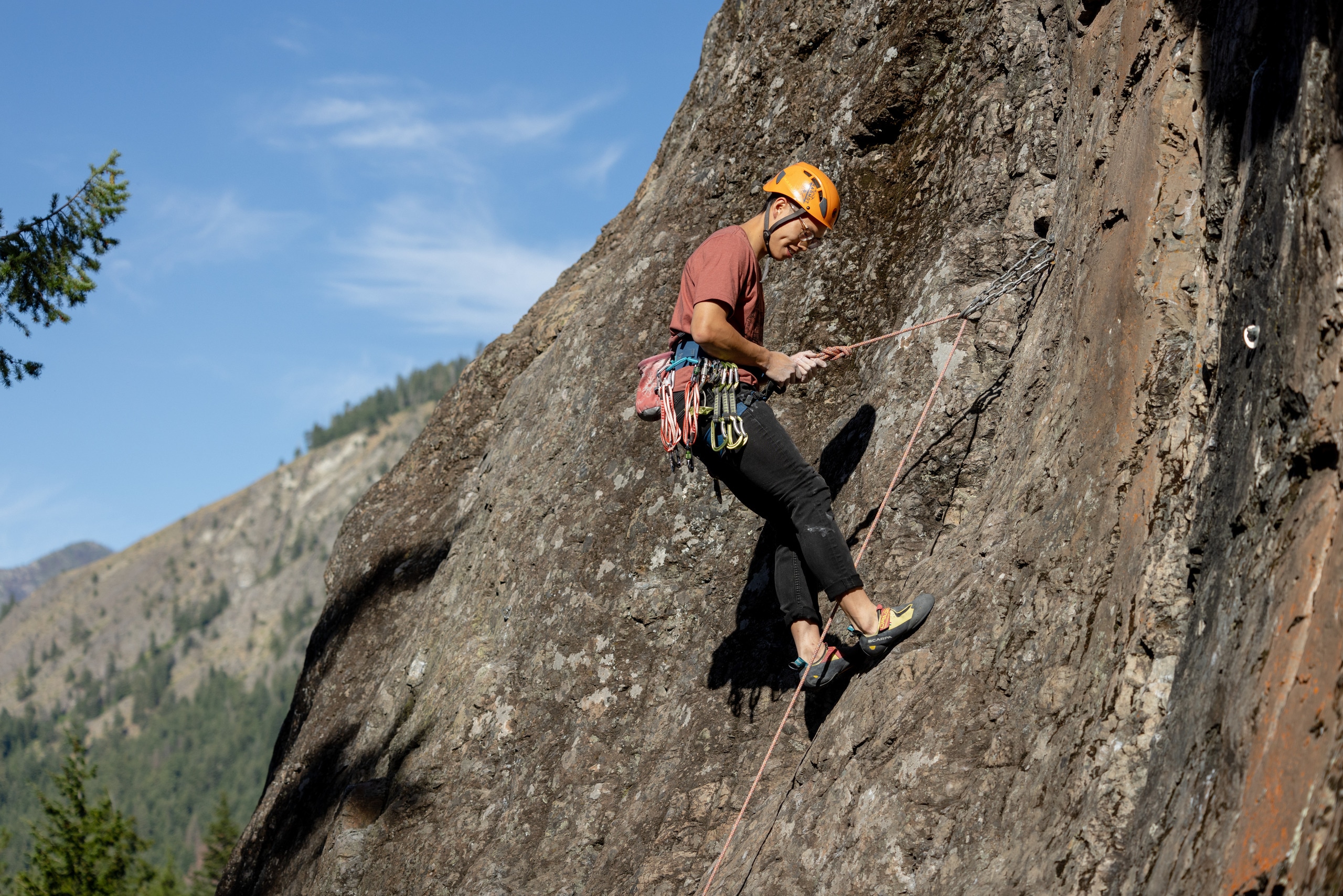
Rock climbing shoes are the interface between you and the rock. They're designed to optimize a climber’s ability to use small footholds effectively. When choosing climbing shoes, there are three primary considerations:
Climbing shoe type: Choose between neutral, moderate and aggressive shoes depending on what kind of climbing you intend to do.
Climbing shoe features: Features like laces, straps, linings and rubber affect the performance of a shoe.
Climbing shoe fit: For the best performance, climbing shoes should fit snug but not painfully. Getting the right fit will help you climb harder and longer.
Climbing Shoe Type
Neutral
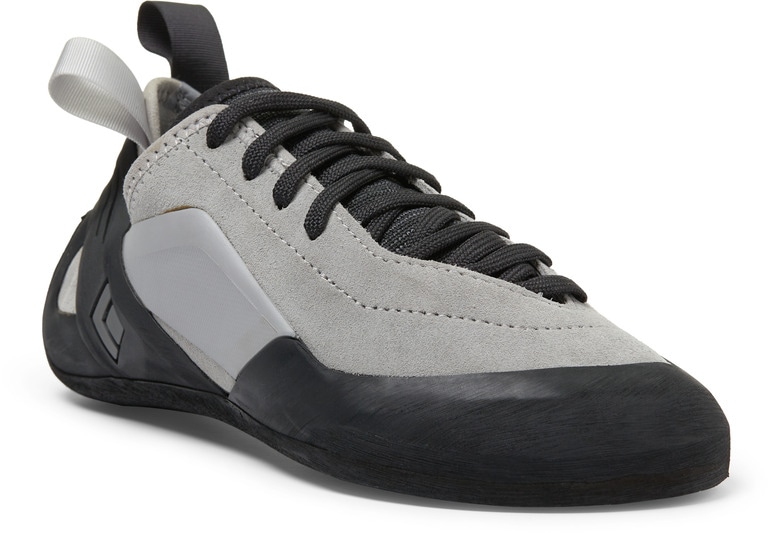
Neutral (flat) climbing shoes offer a relaxed fit for all-day comfort. They allow your toes to lie flat inside the shoes and are designed to fit comfortably out of the box. Because they tend to be more comfortable, neutral shoes are a popular choice for novice to intermediate climbers, but they're also good for experienced climbers who want comfortable, all-day shoes for long multi-pitch climbs.
Pros:
- Provide all-day comfort for long days climbing outside
- Often feature medium-to-stiff midsoles and thick rubber soles for good support
- Relatively flat profile makes them good for slotting into cracks
Cons:
- Thicker, stiffer soles are less sensitive than the thinner soles on moderate and aggressive shoes
- Relaxed, comfortable fit is not designed for difficult overhanging routes
Shop Neutral Rock Climbing Shoes
Moderate
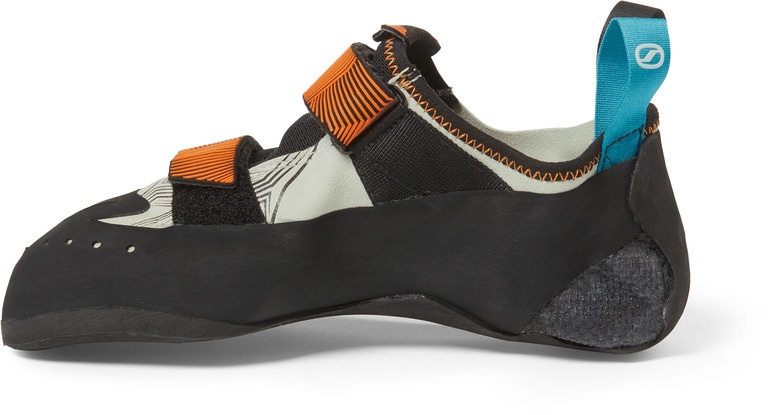
Moderate climbing shoes are distinguished by their slightly downturned shape (also called camber) that makes them good for sport or gym climbing, some bouldering and trad routes. These all-purpose shoes can handle slab routes, crack climbs, long multi-pitch climbs and slightly overhung sport routes.
Pros:
- Downturned shape puts your feet into a stronger, more powerful position than neutral shoes, helping you climb more challenging routes
- Typically have stickier rubber and thinner soles than neutral shoes for better grip and feel
- More comfortable than aggressive shoes
Cons:
- Not as performance-oriented as aggressive shoes, making them less suited for very overhung routes and challenging boulder problems
- Less comfortable than neutral shoes
- Stickier rubber and thinner soles wear faster than rubber on neutral shoes
Shop Moderate Rock Climbing Shoes
Aggressive
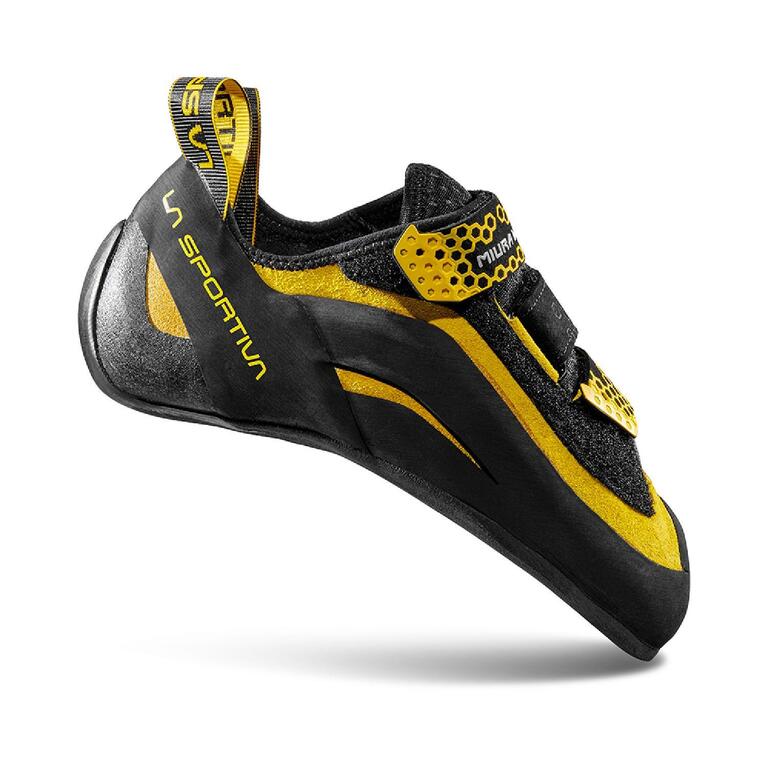
Aggressive shoes have very downturned toes and lots of heel tension to put your feet in a strong and powerful position for challenging overhanging climbs. Most aggressive shoes have an asymmetric shape that curves toward the big toe, focusing power over the toe for precise placements on small holds. Because of the snug fit and downturned shape, climbers typically wear aggressive shoes for single-pitch sport climbs and routes at the gym rather than all-day multi-pitch climbs.
Pros:
- Very downturned shape puts your feet in a strong, powerful position for overhanging sport climbs, routes at the gym and boulder problems
- Typically have stickier rubber and thinner soles than neutral shoes for better grip and feel
Cons:
- Less comfortable than moderate and neutral shoes
- Downturn shape doesn't fit into cracks as well or smear as well as neutral and moderate shoes
- Stickier rubber and thinner soles wear faster than rubber on neutral shoes
Shop Aggressive Rock Climbing Shoes
Climbing Shoe Features
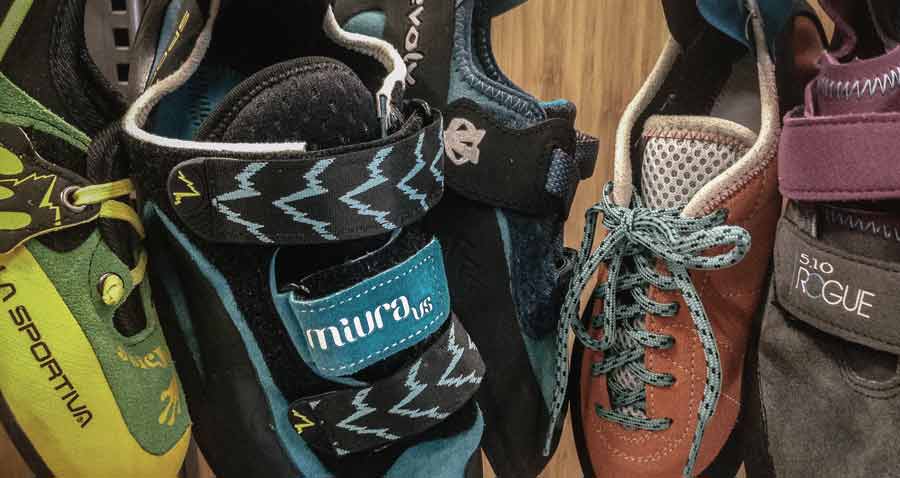
Footwear Closure
Lace-up: This gives you the most customizable fit. When your feet get hot and swell up, or for walk-off routes, you can loosen the laces. But for a difficult pitch or climb, crank down at the toe and instep to bump up the shoe's performance.
Strap: These closures (also known as "hook-and-loop") offer superior on/off convenience. They are great for bouldering and gym climbing when you want to slip the shoes off between climbs to rest your feet.
Slip-on: Often called slippers, slip-on shoes have elastic closure systems and offer the greatest sensitivity and lowest profile of any shoe. Slippers are fun for training—without a traditionally stiff sole and midsole, your feet will get stronger, faster. Because they don't have straps or laces, they have a low profile that makes them good for slotting into very thin cracks.
Climbing Shoe Materials
Shoe uppers are either leather or synthetic. Leather shoes (lined and unlined) offer the easiest care, including deodorizing. Many high-performance shoes are synthetic, and many vegetarians and vegans prefer synthetic shoes.
Unlined leather: Unlined leather shoes can stretch up to a full size. Size them so that your toes just touch the end of the shoe, so you can feel (but not see) your toe knuckles pushing against the leather. Be aware that an all-leather shoe tends to bleed shoe colors to your foot.
Lined leather: When a leather upper is lined, stretch is reduced to a half size or less. Sometimes manufacturers line only the toes to keep the cost down and to reduce stretch where it tends to occur the most.
Synthetic materials: Synthetic shoes don't stretch much and soften up slightly with use, but there is little give so don't expect the fit to change much. Perforated synthetic uppers have a bit more give than solid fabric. Some materials allow feet to breathe and wick away sweat.
Climbing Shoe Last
A "last" is the foot-shaped model around which a shoe is built. It gives shoes their instep height and volume, heel and toe dimensions and width. Most rock climbing shoes are slip-lasted, while a handful are board-lasted.
Slip-lasted: Slip-lasted rock climbing shoes tend to be sensitive and less stiff than board-lasted shoes. Slip-lasted shoes normally do not have an insole and get their "stiffness" from the midsole, which is located just above the outsole.
Board-lasted: Board-lasted shoes tend to be stiffer than slip-lasted shoes. They sacrifice a bit of sensitivity, but they are usually more comfortable, making them great for all-day wear.
The last also determines the shape of the climbing shoe. There are three primary last shapes: straight, asymmetric and downturned.
Straight: Shoes built around a straight last (also sometimes called a flat last) offer a relaxed fit for greater comfort. They're ideal for long days of climbing and crack climbing. Most shoes built on a straight last are considered neutral shoes.
Asymmetric: This shape places the longest point over the big toe to increase power on the inside edge of the shoe and give you a single point of contact on the rock. Most shoes built on an asymmetric last are either moderate or aggressive shoes, depending on the amount of downturn.
Downturned: Also called "cambered," this last shape bends downward toward the toes. It is found in moderate and aggressive shoes designed for toe and heel hooking on overhanging rock. Downturned shoes usually have an asymmetric shape. They are most appropriate for difficult routes when you need maximum performance and control.
Climbing Shoe Outsole
Often simply called the sole, the outsole is the rubber part of the shoe that touches the rock. The type of rubber and its thickness affect climbing performance.
Outsole rubber: There are many different types of rubber used on the outsoles of rock shoes. While all climbing shoes provide good grip, some rubbers are softer and stickier than others.
Generally, firmer rubbers provide better edging and support for your foot, while stickier rubbers provide better grip for smearing on slabs. Stickier rubbers are less durable though, so they won't stand up as well to abrasion.
Outsole thickness: The thickness of the outsole can also affect performance and feel of a shoe.
Thicker soles range from about 4 - 5.5mm. They provide good support for edging and are very durable. However, you won't have the same sensitivity and feel for the rock as with a thinner sole. If you're a beginner climber, look for a shoe with a thicker sole. It will last longer as you work on your footwork technique and it will also provide more support so your feet won't tire as quickly.
Thinner soles are usually about 3 - 4mm thick. They're generally best for smearing on slab routes. Once you've honed your technique, you might prefer a shoe with a thinner sole for a better feel of the rock.
Women's (Low-volume) Climbing Shoes
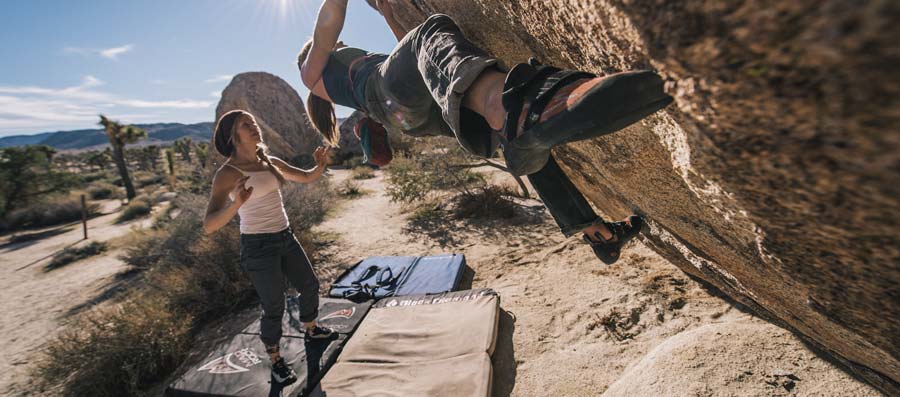
Many brands categorize climbing shoes by gender, but finding the right shoe for you is more a matter of getting the right fit and feel. Climbing shoes marketed as women-specific are generally cut lower around the ankle and have a smaller heel cup. They also may have a slightly longer toe bed and lower volume forefoot compared to shoes marketed for men or "unisex" shoes. Some brands are using volume—low or high—to categorize climbing shoes.
Kids' Climbing Shoes
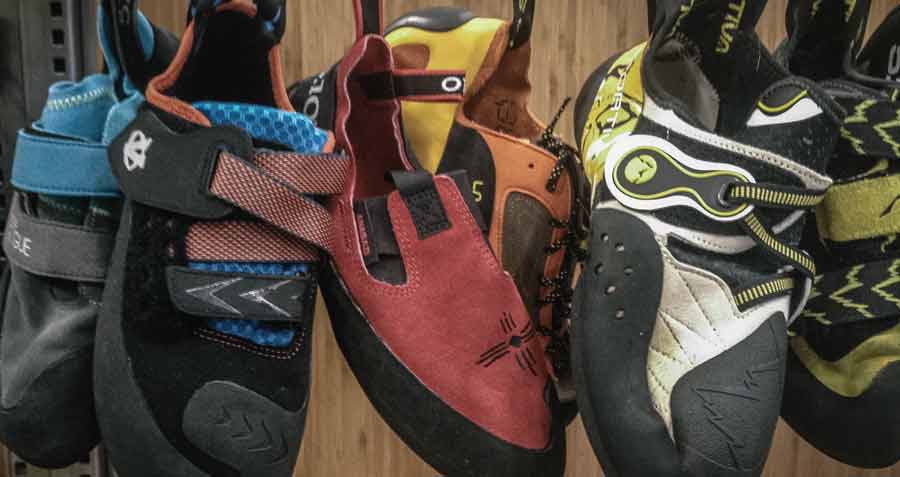
While you can rent children's rock shoes at your local climbing gym, it's more efficient for your kids to have their own gear, especially if they also climb outdoors. Kids' feet grow quickly, but their shoes are stiff enough that they can wear them bigger than can an adult. Fit them about a size too big—children usually prefer a relaxed fit. As their skill level increases, so will the size of their feet. Stick with rip-and-stick closures until children can tie their own laces.
Climbing Shoe Fit Tips
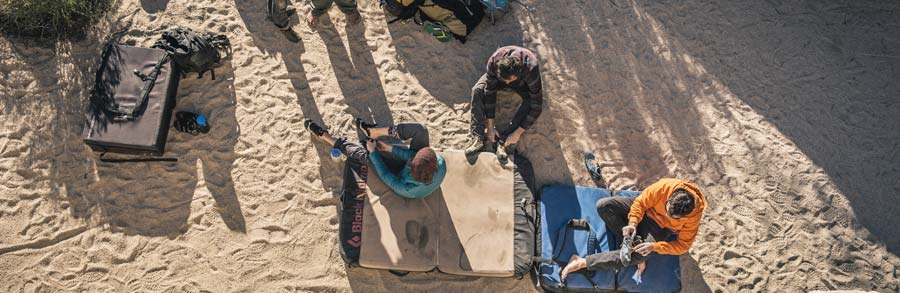
Fit is a very important factor in finding a good pair of rock shoes. If possible, compare and try on a variety of models. Here are some fit tips to help you find the right shoes:
Shop in the afternoon: Your feet can swell up to a full size during the day. Go for a walk, run or, better yet, climb before you shop. Keep in mind that you'll most likely be sockless, since the inside of shoes are designed to work with skin to reduce slippage. For cold, alpine conditions that require a sock, buy a comfortable shoe that's about a half-size too big.
The only sure way is to try them on: Ideally, you should shop in person so you can easily try on multiple sizes. If you are buying online, order more than one size and return what doesn't fit. Try on shoes at home to make sure there are no hotspots.
Be flexible when it comes to size: There is no rock-shoe sizing standard, and everybody's feet are different
Rock shoes come in U.S., European and United Kingdom sizes. Check shoe charts for size translations.
Keep in mind that a size 42 from one brand will fit differently than a size 42 in another. All rock shoe companies have multiple lasts, and every time they change materials or the design, it changes the fit—even with the same last.
When you try on a lace-up shoe, undo the laces completely and then tighten them accordingly from toe to ankle.
Know what fit you want: Rock shoes do not need to fit painfully—in fact, foot pain will prevent you from climbing to your full potential and may cause problems like blisters, bunions and calluses.
You will, however, get more performance out of a shoe in which your toes are slightly bent at the knuckles. As the slingshot heel rand (the rubber that wraps around the heel and connects to the midsole) becomes tighter, the foot is pushed forward in the shoe. This positions the toes more powerfully, but also keeps them in a curved-to-crimped position.
Some general fitting rules:
- Avoid shoes that have dead space between your toes and the inside of the shoe since the shoe will not stay rigid when you place your toes on a foothold.
- Make sure your toes are flat or comfortably curved and that your toe knuckles aren't bunched painfully against the top of the shoe.
- Your heel should have a snug fit. When you are standing on your toe, ensure the back of the shoe doesn't pinch the bottom of your Achilles tendon.
- Everyone's feet bend differently, but if a shoe is difficult to slip on your foot, it is probably too tight.
- In general, the higher performance the shoe, the tighter the fit.