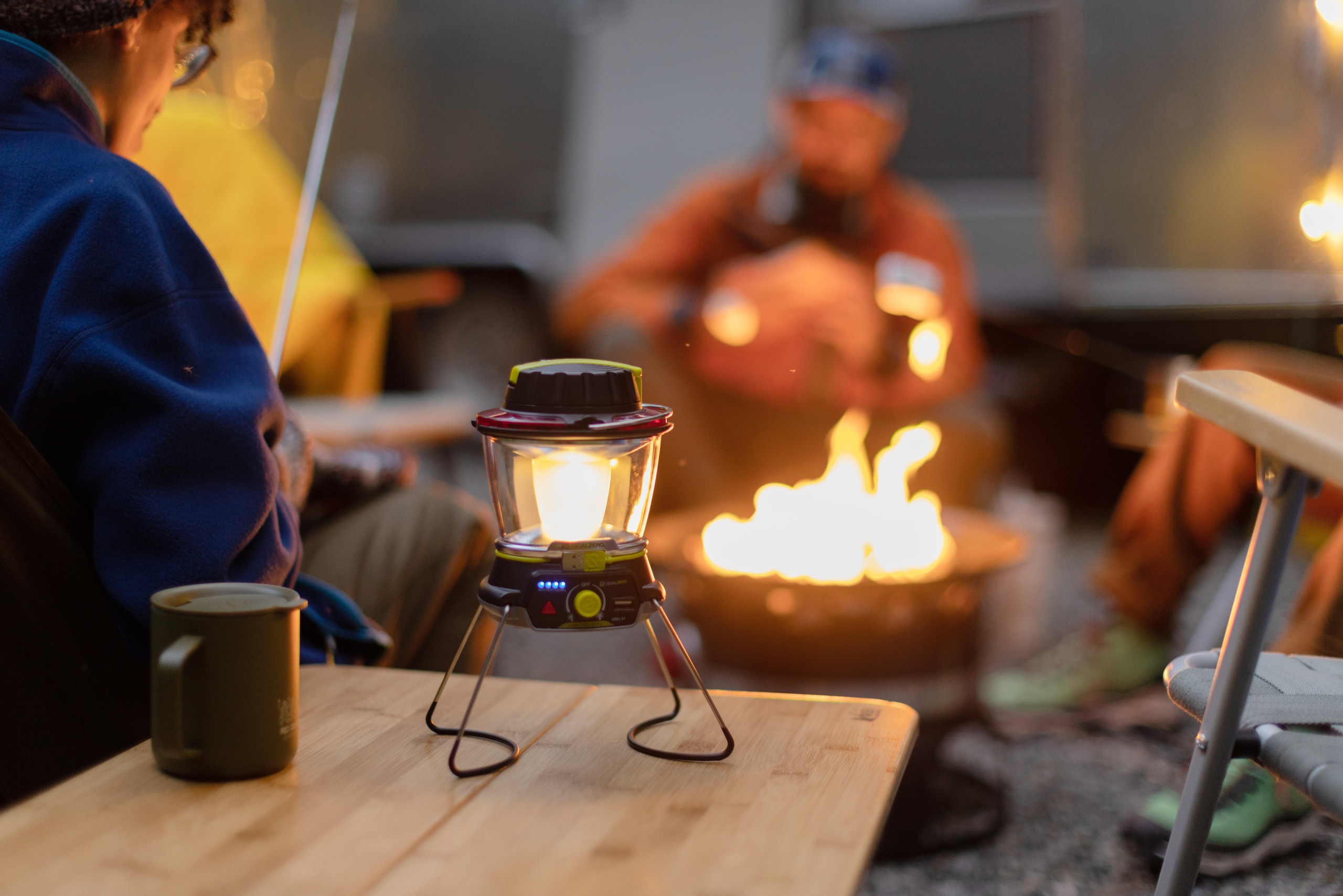
The classic light for campground camping has long been a gas-powered lantern with glass windows. Though bulky, hot to the touch and noisy, it puts out a bright, warm light that seems to last forever.
You can still get these reliable lanterns, but recent advances in LED lighting now provide you many modern lantern choices that are light, bright and compact enough even for backpacking.
This article gives you the basics of lantern selection—from electric lanterns to fuel-powered lanterns.
Shop REI's selection of lanterns.
Types of Lanterns
Electric Lanterns
Virtually all battery-powered lanterns these days use LED (light emitting diode) technology. LED lamps offer numerous advantages:
- Long battery life
- Very good light output
- Can handle rugged use
- Quiet and exhaust-free
- Safe around kids (LEDs generate no heat)
Their only real downsides: battery usage and disposal.
Fuel-Powered Lanterns
Traditional gas-powered lanterns can run on several fuel sources:
- Liquid-fuel: Refillable white-gas/auto-gas tanks; fuel-efficient.
- Propane: Refillable tanks; fuel-efficient.
- Butane: Disposable canisters; compact; easy to use.
These lanterns offer a key advantage: light intensity. When you need to light up the entire campsite, you can't beat the lumens put out by a gas lantern.
Downsides?
- Ample ventilation is needed (do not use in small, enclosed places).
- They generate heat (considerable caution is required when you operate them around children or near flammable materials).
- Relatively noisy.
- Relatively heavy and bulky.
Candle Lanterns
These use 1 or more candles to provide soft, natural light. Optionally, reflectors can be used to maximize the relatively minimal glow.
Pluses:
- Soft light and no noise = pleasant ambiance.
- Adequate for close-up tasks.
Minuses:
- Minimal light output.
- You must keep candle lanterns a safe distance from flammable materials (such as tent fabric).
- They generate heat and can be hot to touch.
Comparing Lantern Performance
Below are performance factors to consider when comparing lanterns. At REI.com, you can find them by clicking on the "specs" tab on individual lantern product pages.
Maximum Light Output
REI's spec charts list lumens for each lantern. The higher a lantern's lumen output, the greater its light intensity (or brightness). Keep in mind that a higher wattage often results in lower energy efficiency, which means a shorter burn time or shorter battery life.
Light Duration
This is expressed either as burn time (for gas lanterns) or average run time (for battery-powered lanterns). It tells you how long can you expect a lantern to provide light on 1 tank of fuel (for fuel-burners) or on 1 set of batteries (for electric models). This specification—data is provided by the manufacturer—gives you a good estimate.
Most models offer a low and a high setting for greater lighting versatility. Run times vary dramatically by setting, so don't plan on achieving the maximum run time while also cranking out the maximum light intensity.
Other Considerations
Batteries
With electric lanterns, or any battery-powered light, do not attempt to use lithium or lithium-ion batteries unless manufacturer instructions state that the specific light is designed to operate with lithium batteries. If not, you run the risk of damaging, even ruining, a light by mismatching it with lithium batteries.
Alkaline batteries lose power quickly in temperatures below 20°F. (Lithium batteries, on the other hand, perform well in the cold.) To extend the life of alkaline batteries in the cold, carry them under clothing during the day and sleep with them inside a sleeping bag at night.
Mantles
Fuel-powered lanterns rely on cloth mantles to provide the glow that makes them function. Once burned, mantles become fragile and require careful handling. It's smart to carry several replacement mantles on any trip.
Size and Weight
For car-camping excursions, size and weight generally are not concerns. For backpacking, however, they are. To flood a campsite or tent interior with light, candle lanterns was long the traditional choice. Yet a bringing a lit candle inside a tent, even within a lantern's casing, is a risky practice. Small, compactable, new-generation LED lanterns make far better choices today. Or, an LED headlamp might also provide all the light backpackers need.