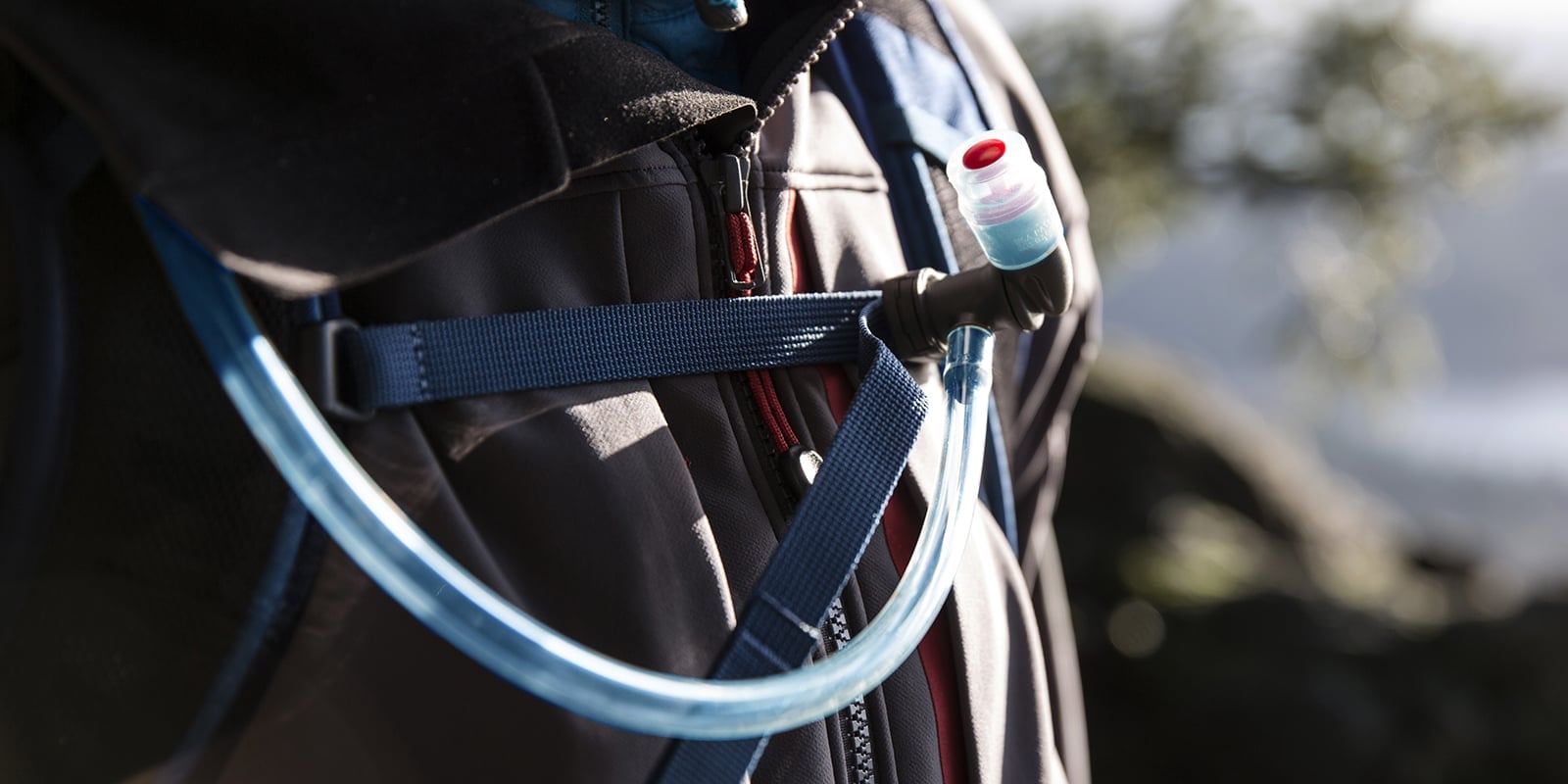
Hydration packs are designed principally to transport water and make drinking convenient and efficient. In fact, with most hydration packs, you don't have to stop, or even slow down, to take a sip of water; you simply grab the drink tube that's connected to the included water reservoir (sometimes called a bladder).
When you're shopping for a hydration pack, you first want to make sure the pack is designed for the activity you intend to use it for, and then consider things like capacity, fit and extra features. This article walks you through the process and covers:
- Types of hydration packs: First find a pack that's designed for the activities you do
- Capacity: Be sure the pack has enough space for your water and gear
- Fit: Make sure the pack fits your torso length and hip size
- Features: Consider additional features, like bite valve on/off switches and quick-disconnect tubing
Keep in mind that nearly all newer daypacks and backpacks that don't come with a hydration reservoir are designed with an interior sleeve that can hold a reservoir. If that describes an existing pack you own or are thinking about purchasing, you can simply add a reservoir to it to make it a hydration pack.
Types of Hydration Packs
There are two general types of hydration packs: hydration backpacks and hydration waistpacks. Within those groups, there are packs made specifically for different outdoor activities, including hiking, running, mountain biking, cycling, skiing and snowboarding. The common feature among nearly all of them is the included hydration reservoir that makes drinking easy. A handful of packs (usually ones designed for running) include water bottles rather than a reservoir.
Hydration Backpacks

Hiking hydration packs: These packs are a lot like standard packs for hiking and usually feature ample cargo space for food, extra layers and the Ten Essentials that you should carry on every outing. They range in size from small packs for short hikes to ones that are big enough for ultralight overnight backpacking.
Learn more about choosing a daypack or backpack.

Cycling hydration packs: These packs are designed specifically for road cycling and mountain biking. Those designed for the road are typically compact and low-profile so they feel light and stable on your back and won't create a ton of wind resistance. Packs designed for mountain biking are often a bit larger to accommodate extra gear, cycling clothing and bike tools. All cycling hydration packs typically have low-profile waistbelts that won't interfere with your pedaling.

Running hydration packs: These are designed specifically for running. While shopping, you'll notice that some are called running vests, while others are running backpacks. The line between the two is sometimes blurry.
- Running vests: As you might expect, these look like a vest and are designed to fit snug to your body. They are similar to a backpack in that they are carried over the shoulders and on your back, but they tend to be a bit lower profile, feature more pockets on the front of the shoulder straps, and don't have a hipbelt like most packs do. Many include dedicated spots for storing water bottles on the front of the shoulder straps. Most vests also accommodate a hydration reservoir (sometimes sold separately) for runners who like to sip from a tube.
- Running backpacks: These are a lot like a backpack that you'd take on a day hike but with running-specific features, such as a low-profile design, a simple hipbelt (a few have no hipbelt at all) and a bunch of pockets that are easy to access while you're running. They sometimes provide more storage than vests (mostly in the back of the pack), making them a good choice for long trail runs that require lots of extra food and clothing. Nearly every running pack accommodates a hydration reservoir for easy sipping on the go (reservoirs are sometimes sold separately). Many also include pockets on the shoulder straps or sides if you prefer to use water bottles.
You can learn more about your pack options for running in our article, How to Pack your Trail-Running Gear.

Snowsports hydration packs: Designed for activities like skiing and snowboarding, snowsports hydration packs are winterized to help keep your water supply from freezing. That means there's usually insulation on the reservoir and drink tube, and sometimes a bite valve cover. Some snowsports-specific packs include lash points or carry straps to allow hands-free transport of a snowboard.
Hydration Waistpacks

As the name implies, hydration waistpacks are carried around your waist. Many of them include water bottles rather than a reservoir, and the cargo space is smaller than most packs provide.
Waistpacks can be nice for light and fast adventures, like a hike, trail run or cross-country ski, where you don't need to carry much gear and you don't want your movement hindered by a bigger pack on your back.
Hydration Pack Capacity
Make sure the hydration pack you choose can carry enough water and gear to meet your needs.
Hydration Pack Reservoir Capacity
Water isn't light (1 liter weighs approximately 2 pounds), so think about how much you really need to carry and whether you'll be able to refill along the way, and then purchase a hydration pack in line with that.
Of course, you don't have to fill the reservoir to the brim on every outing. To keep weight low on shorter trips, carry only the amount of water you anticipate needing. For example, with a 3-liter reservoir, you can fill it halfway for a quick hike or all the way for a longer adventure in a hot climate.
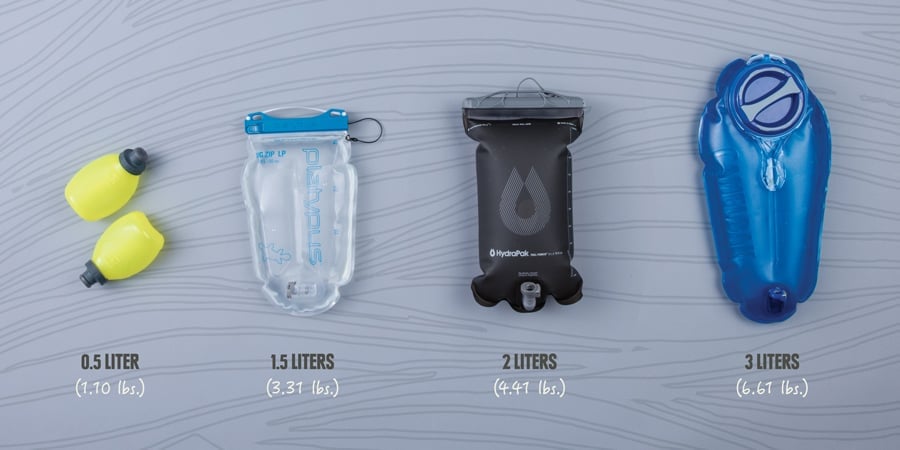
Here are some things to think about related to reservoir capacity:
0.5 liter or less (16 fluid ounces or less): Packs with minimal water capacity are usually waistpacks that include one or two water bottles. They're best for lightweight pursuits like running or walking.
1 liter or 1.5 liters (32 or 50 fluid ounces): A good choice for minimalists, kids, and short-distance bike commuters, hikers and runners.
2 liters or 2.5 liters (70 or 85 fluid ounces): These popular reservoir sizes offer a nice balance of reasonable weight and bulk while providing a sufficient quantity of water that in most situations will require only occasional refilling.
3 liters or more (100 fluid ounces or more): Made for the thirstiest of adventurers or those who don't want to stop to refill. They're also good for anyone exploring terrain where water is scarce.
Hydration Pack Gear Capacity
The gear capacity of hydration packs ranges from less than 5 liters up to about 50 liters. To figure out how much space you need, run through a mental inventory of the gear you carry. Can the pack accommodate your favorite jacket? Does it provide enough snack space for the length of trips you take?
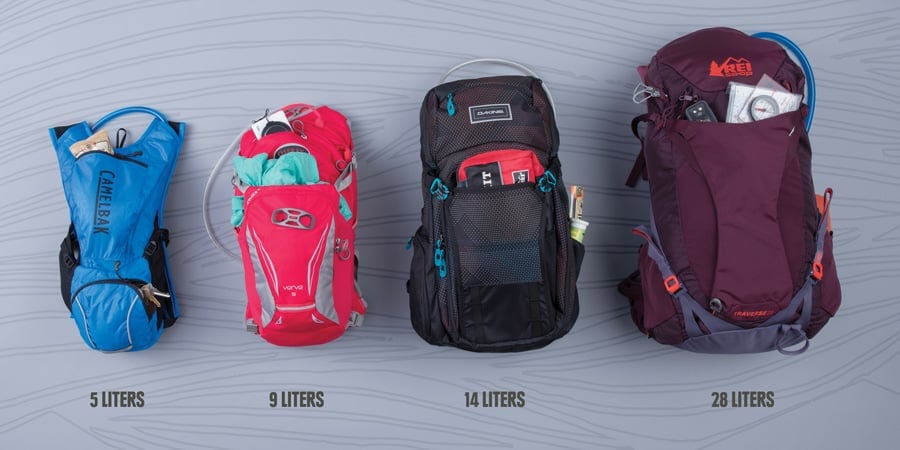
Here are some considerations for gear capacity:
5 liters or less: Most of these small packs are built for lightweight pursuits like running, road biking and ultralight hiking. Their compact and low-profile design provides room for only a handful of essentials, like an extra layer, some energy bars and your keys.
6 liters to 10 liters: Lots of packs in this range are designed for mountain biking or trail running. They have enough space to easily fit an extra layer or two, food for the day and your camera.
11 liters to 20 liters: These midsize packs are often built for hiking, mountain biking or trail running and feature extra pockets for staying organized. Their larger capacity lets you carry enough clothes, food, emergency equipment and extra gear for longer explorations.
21 liters or more: Any hydration pack over about 21 liters is usually designed for hiking. These have enough cargo room and comfort and load-support features to perform well on long hikes. Some are even big enough for light-and-fast overnight adventures.
Hydration Pack Fit
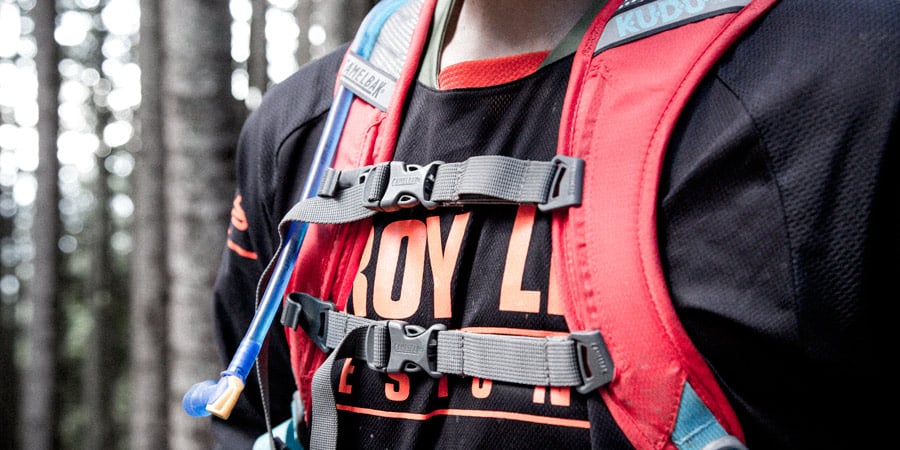
Once you've figured out the type of hydration pack you want and the capacity, it's time to make sure it fits you properly. The right fit offers:
- A size appropriate for your torso length (not your overall height)
- A comfortably snug grip on your hips (if the pack doesn't have a hipbelt, go solely by torso length)
In an REI store, you can work with one of our pack specialists to get the right fit. If you're at home, recruit a friend and follow the directions in our article, Backpacks: Sizing and Fit.
Torso Length
Some packs are available in multiple sizes, from extra small to large, which fit a range of torso lengths. These ranges vary by manufacturer and gender. Check the product specs tab for size details.
Other packs have an adjustable suspension that can be modified to fit your torso. This is helpful if you're often in-between sizes.
Waist Size
Hydration pack hipbelts usually fit a wide range of hip sizes, from the mid-20 inches to the mid-40 inches or bigger. You can find this measurement on the product specs tab.
Women-Specific Hydration Packs
These packs have hipbelts and shoulder straps that are contoured with the female form in mind. Torso dimensions are generally shorter and narrower than men's packs, too. Because they are available in smaller sizes, women's backpacks often work well for young backpackers of either gender.
Youth-Specific Hydration Packs
These often offer smaller capacities and include an adjustable suspension to accommodate a child's growth. You can also try women's backpacks or small sizes of some men's packs.
Hydration Pack Features
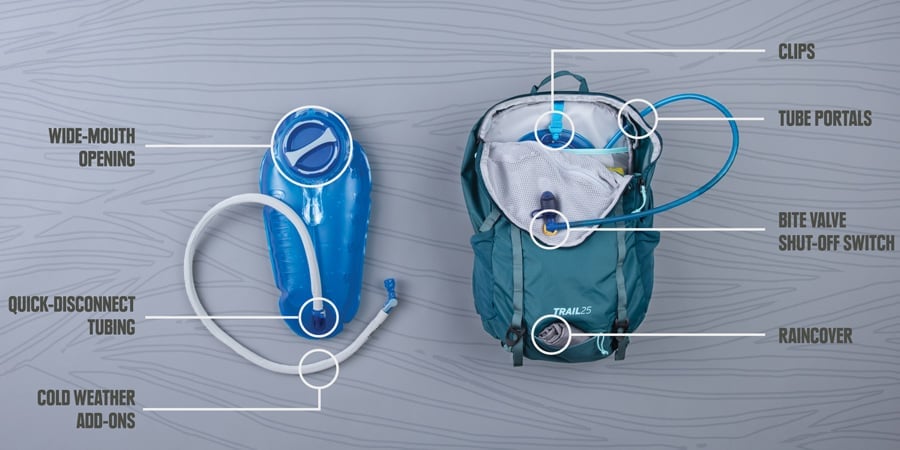
Bite valve shutoff switch: Some bite valves twist to open and close; others have a switch to ensure water doesn't get out when you don't want it to.
Tube portals: This is a slit in the backpack that allows you to thread the sip tube from the reservoir inside the pack to the exterior. Many packs offer two portals so you can position the tube to hang over either shoulder. Some packs offer a single, centered portal.
Clips: Many hydration packs include a clip on a shoulder strap to keep your tube positioned for easy access.
Quick-disconnect tubing: Some reservoirs include a drink tube that easily disconnects from the body of the reservoir, which is nice when it's time to refill the reservoir midhike. You simply disconnect the tube with the press of a button and pull the reservoir from your pack. This allows you to leave the tube in place, which is especially handy if you have it routed through a tube portal.
Wide-mouth opening: Wide-mouth openings usually allow you to fit a hand inside the reservoir, which makes cleaning easy. If you choose a reservoir with a smaller opening, you can purchase reservoir cleaners or a cleaning kit that includes brushes for scrubbing out the inside.
Cold weather add-ons: Assorted winterized add-ons are available, including insulated sip tubes, insulated reservoirs, reservoir covers and bite valve covers. They can be handy, though they add a little bulk and weight to your system.
Raincover: A pack raincover is a nice add-on if you recreate in all types of weather.