
Choosing the right hiking boots is a matchmaking process. Your dream hiking boots need to sync with how and where you hike; they need to support you on the trail, even in the face of obstacles; and you'll want to make sure they last for the long haul.
Before you tie the knot, you also have to be sure you've found the perfect pair—and that's where we come in. We've spoken to hiking footwear experts throughout REI Co-op for their insights into how to shop for your most important piece of hiking gear or apparel. In this guide, we'll consider three main elements to consider when selecting the perfect pair of hiking boots:
- Types: You have a dizzying array of footwear choices for hiking, from ultralight trail shoes to mountaineering boots. We'll break down each one by features, best use case, and pros and cons.
- Components: Understanding what goes into a boot's uppers, midsoles and support, outsoles and more can help you refine your selection, including whether or not you'll need ice traction or crampons.
- Fit: No one ever loved a pair of ill-fitting boots. The difference between blisters and bliss is taking the time to get a great fit. Carlos Rodriguez, long-distance trail runner and department manager at the REI store in Wichita, Kansas, says that whatever footwear you choose should actually be one you're able to forget you're wearing at all. "The mark of a good shoe," he says, "is that I'm not thinking about it when I'm outside."
For a list of our top field-tested hiking boots, visit The Best Hiking Boots: Tested.
Video: Hiking Boot Basics
Types of Hiking Boots and Shoes
While you may see a wide variety of footwear on the trail—including hiking sandals and even sneakers—the two most common are hiking boots and hiking shoes.
- Hiking boots tend to be heavier or burlier, with very durable, stiffer uppers that often extend above the ankle. They are generally waterproof, which also means they can get quite hot and are less breathable.
- Hiking shoes are generally lighter weight and lower-cut (at or below the ankle). They may or may not be waterproof, but tend to be designed to dry quickly, wick moisture and remain breathable.
The type of hiking footwear you choose will depend on a combination of details about the hike itself, such as duration/distance, terrain and the load you plan to carry. Learn more about the differences between a hiking shoe and a hiking boot.
Duration and/or distance: Longer treks require more protection and support underfoot as well as around your ankles. While shorter or more casual outings may not call for shoes that are as burly, many day hikers like footwear that has some cushion and spring.
Terrain: The difficulty of the trail itself can determine how burly, high-cut, waterproof and flexible you want your hiking footwear to be.
- Light terrain generally refers to paved or groomed, mostly flat trails with few switchbacks and obstacles. Hikers on this type of route can dress primarily for comfort, and a lighter hiking or trail-running shoe is suitable for this type of terrain.
- Moderate terrain will be less maintained or groomed; have some obstacles such as roots, rocks or water crossings; and generally feature some gain or loss of elevation. This terrain may change more frequently over the length of the trail, and many hikers opt for slightly more cushion, support, durability and stability for their footwear.
- Rugged terrain is the most challenging, with steep climbs and descents, heavy obstacles and trail debris, multiple directional changes and sometimes unpredictable ground surfaces. Higher-cut boots with more structured collars, firm outsoles and durable construction are best for these environments.
Load: The more gear you're carrying, the burlier or more supportive a boot you'll want under you. Day hiking boots are best for loads under 35 liters. Backpacking boots can support enough gear for multiday treks, generally up to about 70 or 75 liters. Mountaineering boots are designed to stand up to the heaviest loads, 75 to 100 liters.
Here are a few common types of hiking boots and hiking shoes.
Hiking Boots
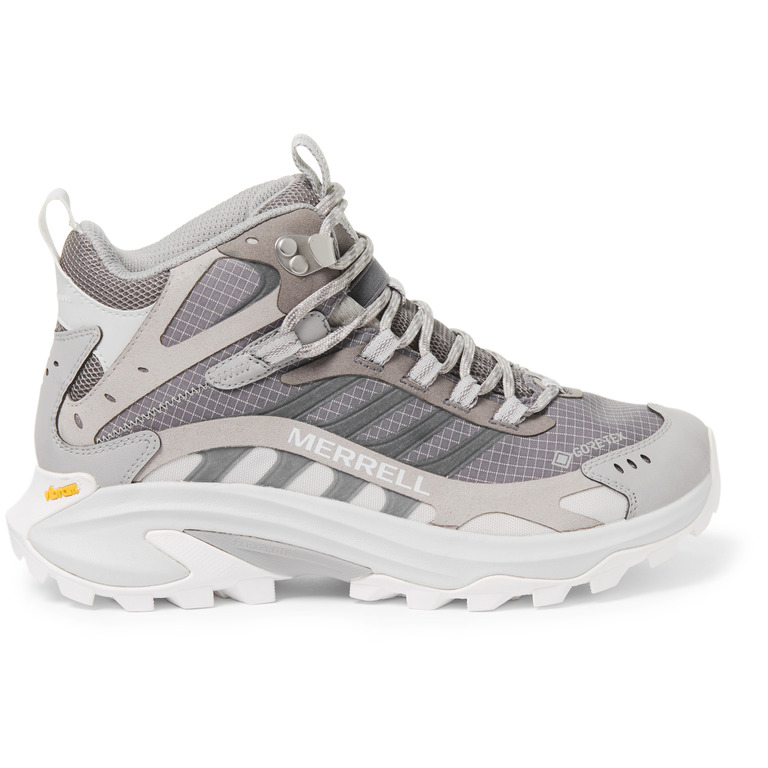 | 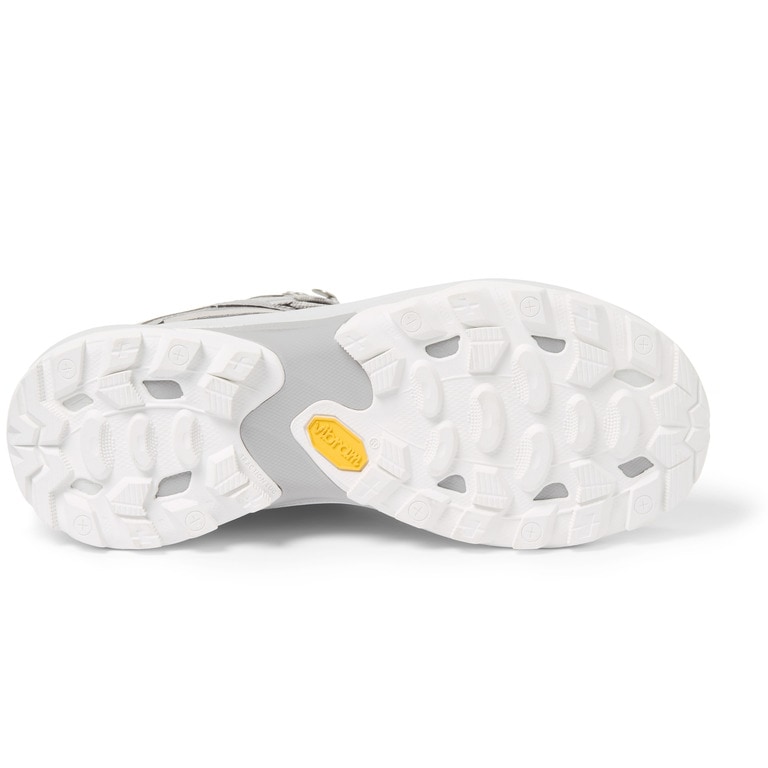 |
Day hiking boots: These range from mid- to high-cut models and are intended for day hikes or short backpacking trips with light loads. They often flex easily and require little break-in time, but they lack the support and durability of stout backpacking boots. These types of boots are best for light or moderate terrain.
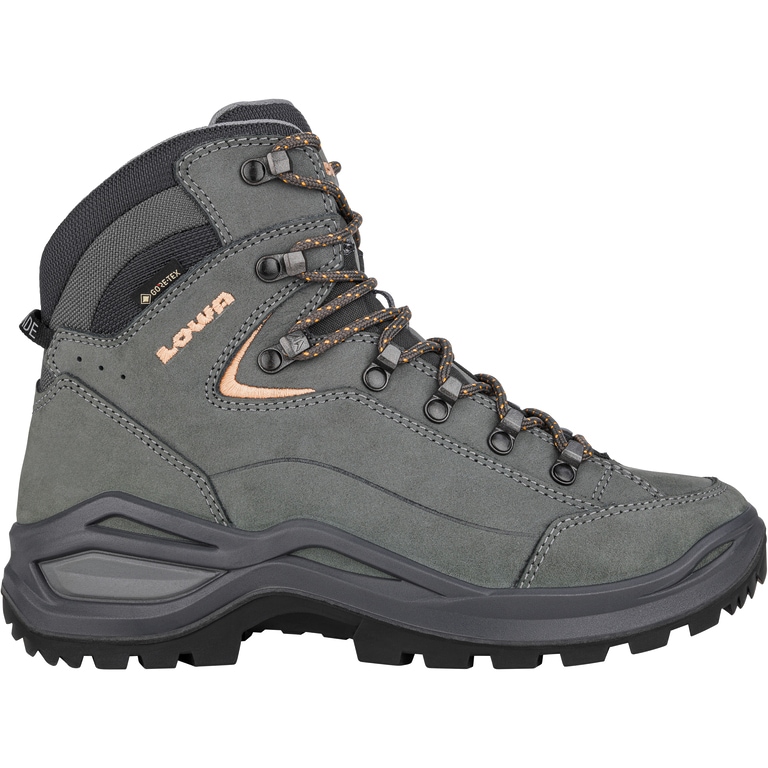 | 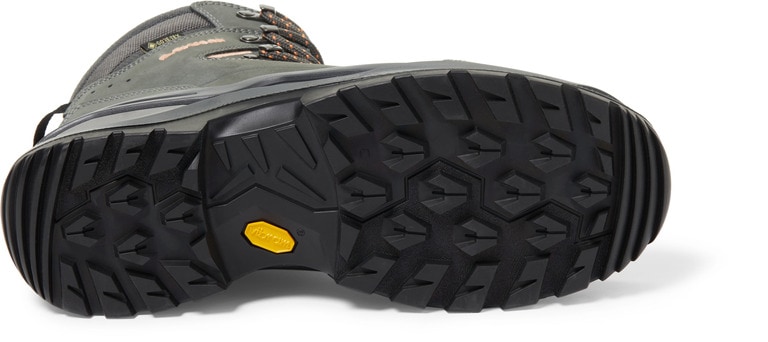 |
Backpacking boots: These are designed to carry heavier loads on multiday trips deep into the backcountry. Most have a high cut that wraps above the ankles for excellent support. Durable and supportive, with stiffer midsoles than lighter footwear, they are suitable for on- or off-trail travel and are built for moderate to rugged terrain.
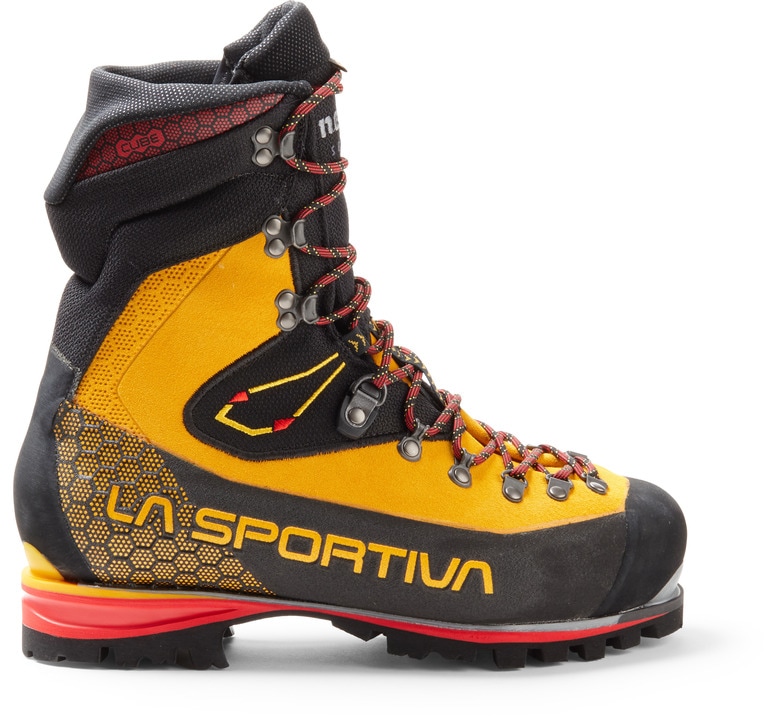 | 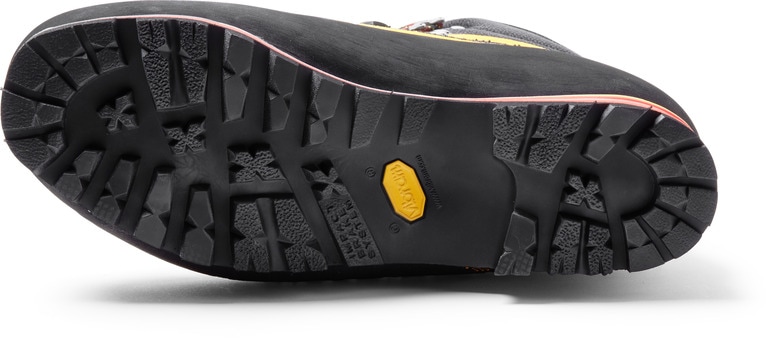 |
Mountaineering boots: Built specifically for tackling snowy peaks and rough terrain, mountaineering boots are considerably stiffer and often higher-cut than other hiking boots. They are typically available in three versions: insulated boots with multilayer construction; lighter, three-season boots with no insulating layer; and hard-shell plastic boots with soft inner boots. These boots are built for the most rugged terrain. Read How to Choose Mountaineering Boots to learn more.
Hiking Shoes
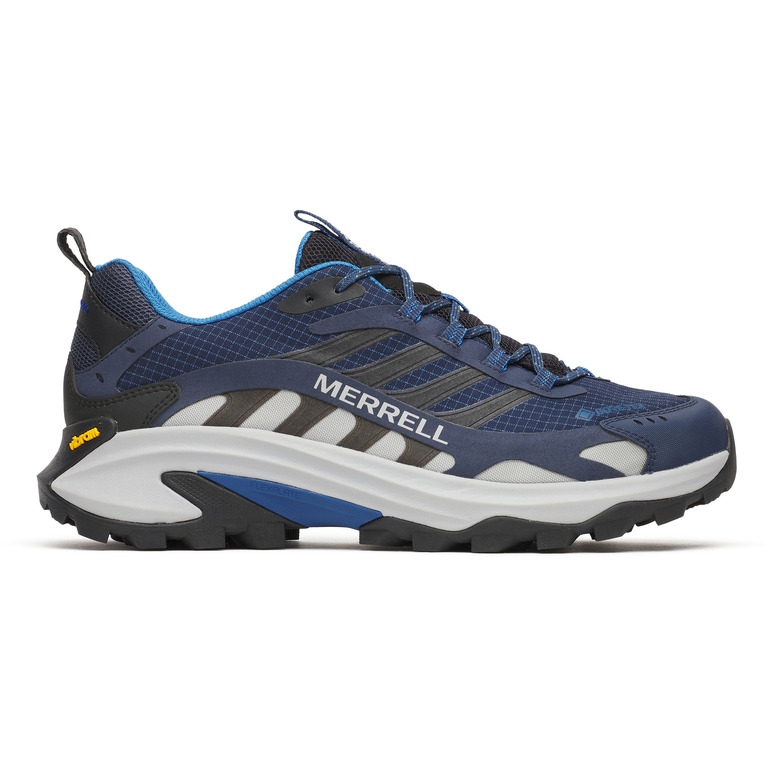 | 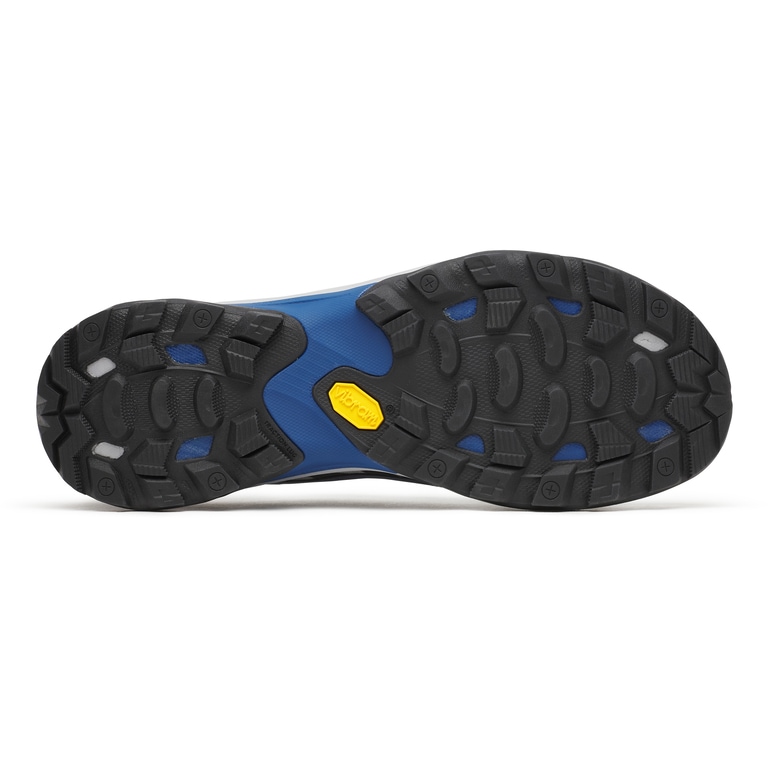 |
Hiking shoes: These shoes are typically lower-cut footwear with durable uppers and moderately flexible midsoles that are generally excellent for day hiking and hiking on groomed, paved or urban trails. These are typically best for light to moderate terrain at a relaxed to moderate pace.
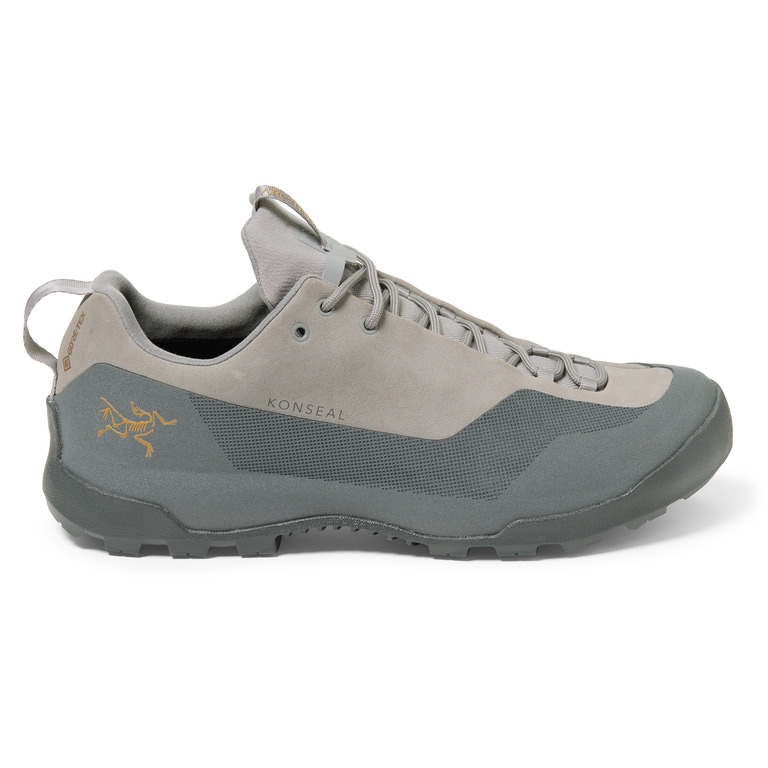 | 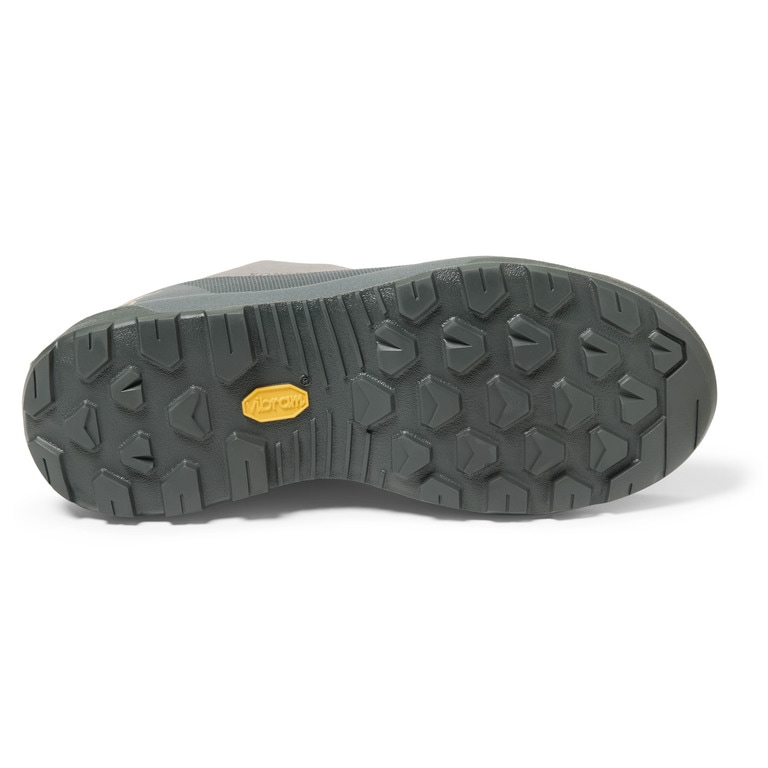 |
Approach shoes: These outdoor footwear are designed for versatility: This hybrid shoe is designed for rock climbers who need to shoulder heavy loads of gear across rocky or varied terrain ("the approach") to reach climbing routes. With a combination of sticky grip, supportive construction and all-day comfort, these are appropriate for climbers, hikers and backpackers tackling light or moderate terrain.
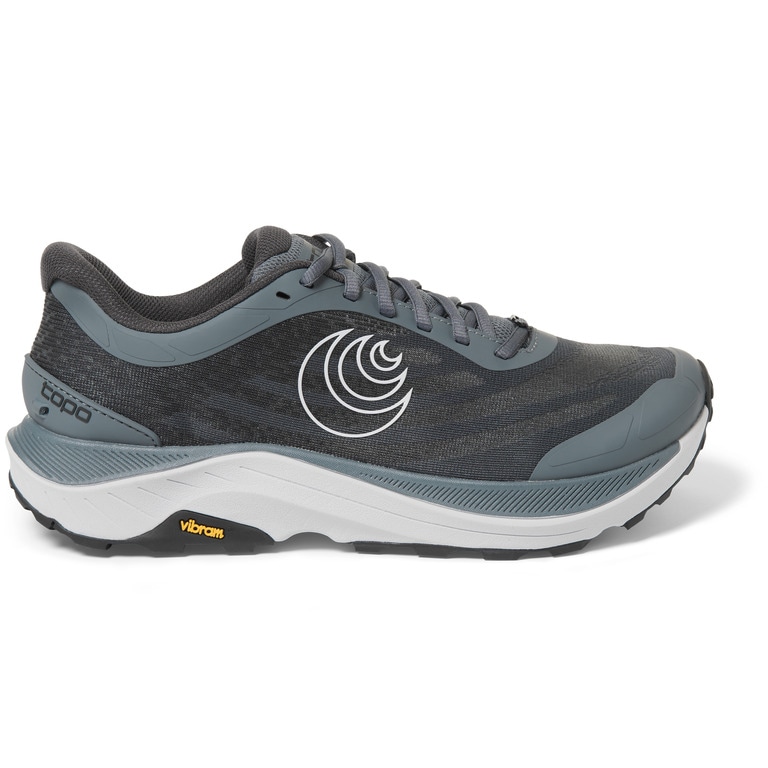 | 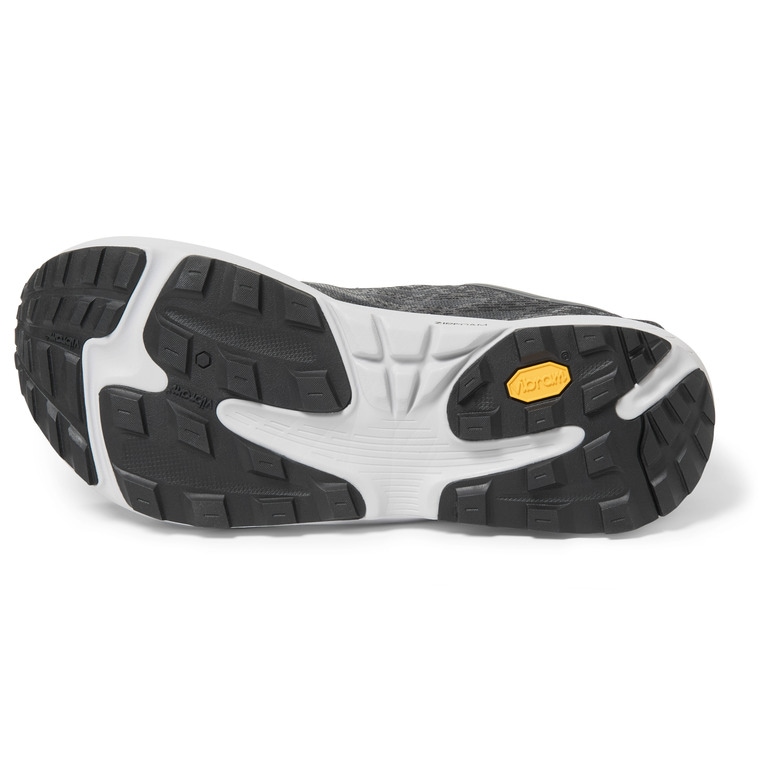 |
Trail-running shoes: These have more flexibility and are lighter weight than hiking shoes, and are designed for navigating around obstacles and on directional changes at a faster pace. Depending on the burliness of the outsole, these are generally best suited for light to moderate terrain. Fastpackers and thru-hikers often prefer trail-running shoes or hiking shoes over heavier, burlier hiking boots.
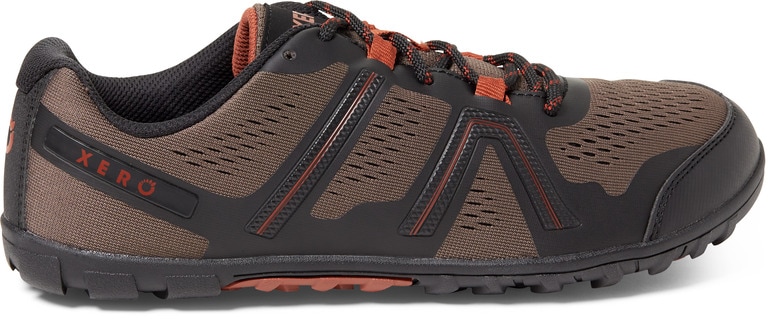 | 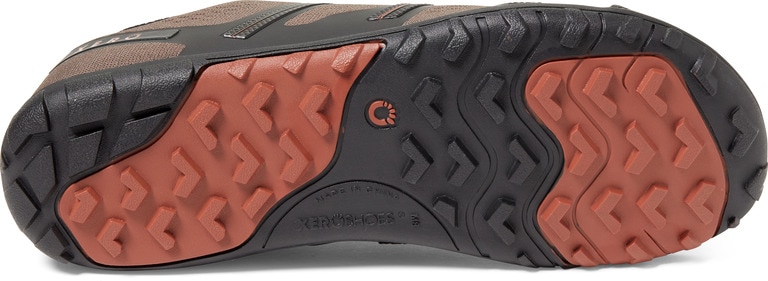 |
Barefoot or minimalist shoes: These "barely there" footwear are loosely defined as shoes that feature a very small amount of cushioning in the midsole and heel, and generally have a lower heel-to-toe drop. The intent is to mimic the way our feet move and splay when barefoot while still providing protection from hazards on the ground.
Footwear style | Best for | Pros | Cons |
|---|---|---|---|
|
|
| |
|
|
| |
|
|
| |
|
|
| |
|
|
| |
|
|
|
Hiking Boot Components
Hiking Footwear Uppers
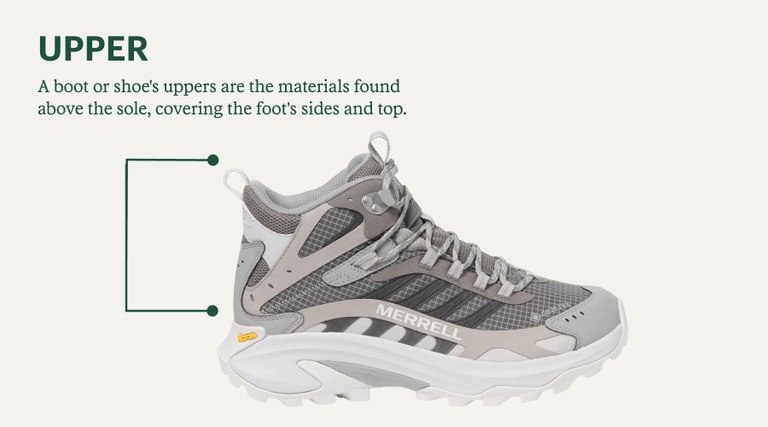
A boot or shoe's uppers are the materials found above the sole, covering the foot's sides and top, and, depending on the footwear style, wrapping around the ankle as a collar. Upper materials directly impact a boot's weight, breathability, durability and water resistance.
- Full-grain leather offers excellent durability and abrasion resistance and very good water resistance. It's most commonly used in backpacking boots built for extended trips, heavy loads and rugged terrain. It is not as light or breathable as nylon/split-grain leather combinations. Ample break-in time is needed before starting an extended trip.
- Nubuck leather is full-grain leather that has been buffed to resemble suede. It is very durable and resists water and abrasion. It's also fairly flexible, yet it too requires ample time to break in before an extended hike.
- Split-grain leather is usually paired with nylon or nylon mesh to create a lightweight boot that offers excellent breathability. Split-grain leather "splits away" the rougher inner part of the cowhide from the smooth exterior. The benefit is lower cost, however, the downside is less resistance to water and abrasion (though many feature waterproof liners).
- Synthetics like polyester, nylon and so-called "synthetic leather" are all commonly found in modern boots. They are lighter than leather, break in more quickly, dry faster and usually cost less. Downside: They may show wear sooner due to more stitching on the outside of the boot.
- Waterproof membranes are found on boots and shoes billed as "waterproof," whose uppers are constructed with waterproof/breathable membranes (such as GORE-TEX or eVent®) to keep feet dry in wet conditions. Downside: The reduced breathability created by a membrane (compared to the ventilating mesh used on some nonwaterproof shoes) may encourage feet to sweat on summer days.
- Vegan hiking boots and shoes are made without any animal ingredients (e.g., leather or suede) or by-products (such as some animal-derived adhesives).
- Insulation is added to some mountaineering boots for warmth when hiking on snow and glaciers.
Upper Material | Pros | Cons |
|---|---|---|
Full-grain leather |
|
|
Nubuck leather |
|
|
Split-grain leather |
|
|
Synthetic leather |
|
|
Hiking Footwear Midsoles
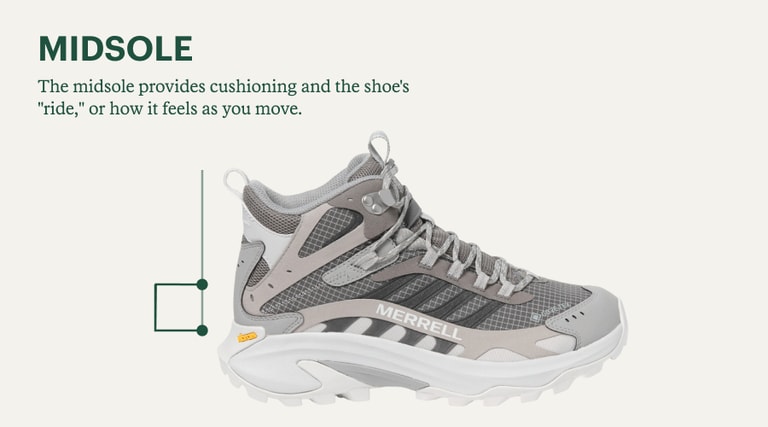
The midsole provides cushioning and the shoe's "ride," or how it feels as you move. This layer buffers feet from shock and largely determines a hiking boot or shoe's stiffness. Stiff footwear might not sound like a good thing, but they provide protection over long hikes on rocky, uneven terrain, they can mean greater comfort and stability. The most common midsole materials are ethylene vinyl acetate and thermoplastic polyurethane.
- Ethylene vinyl acetate (EVA) is a bit cushier, lighter and less expensive. Midsoles use varying densities of EVA to provide firmer support where needed (e.g., around the forefoot).
- Thermoplastic polyurethane (TPU) is generally firmer and more durable, so it's usually found in extended backpacking and mountaineering boots.
- Supercritical foam is a foam, such as EVA, with an added "supercritical" agent such as carbon dioxide or nitrogen that's injected during the molding process, providing more comfort and responsiveness without adding weight.
Hiking Footwear Internal Support
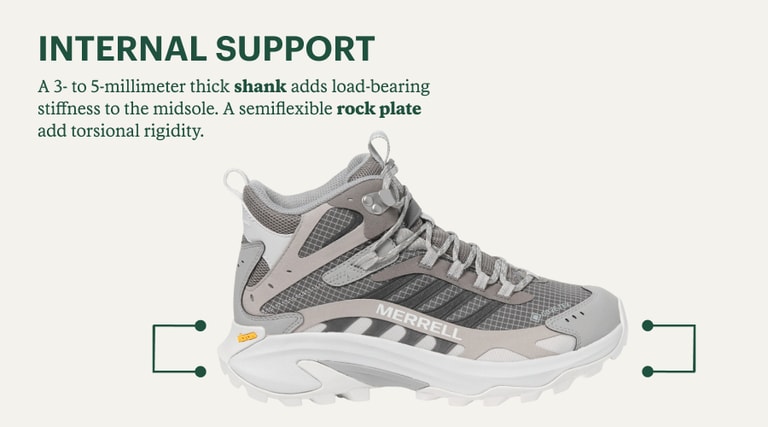
Sandwiched between some boots' midsole and outsole is a 3- to 5-millimeter thick shank that adds load-bearing stiffness to the midsole. They vary in length; some cover the entire length of the midsole, while others only cover part or half.
Some hiking footwear—especially trail-running shoes—feature a semiflexible rock plate made of carbon fiber or plastic that runs between the midsole and the outsole, and below the shank (if included). These stabilizing plates add torsional rigidity that make it harder to twist your foot or ankle if you land on an uneven surface, and they prevent your feet from getting bruised by jagged rocks.
Hiking Footwear Outsoles
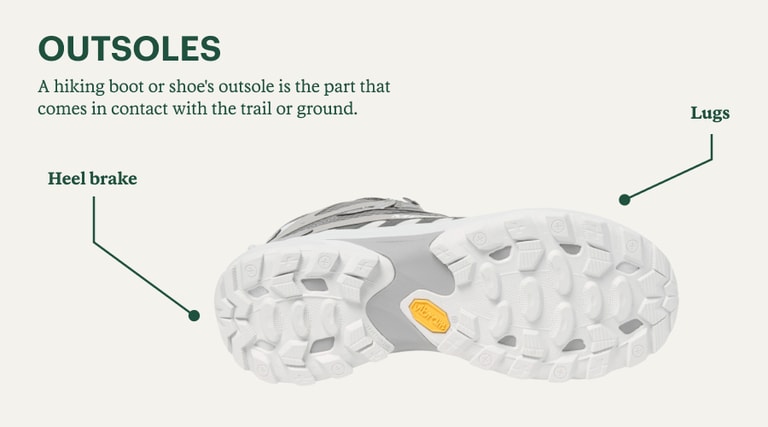
A hiking boot or shoe's outsole is the part that comes in contact with the trail or ground. Rubber is the most common material used for hiking boot outsoles, and sometimes additives such as carbon are used to make the sole harder or stiffer, as in backpacking or mountaineering boots. Harder outsoles are more durable but can feel slick if go you off trail; softer outsoles provide more cushion underfoot but tend to wear down faster.
Many types of hiking footwear feature a heel brake, an extension on the back end of the outsole or an area on the heel where the lugs are more pronounced. This gives you more control on steep descents.
Hiking footwear features traction-giving bumps or teeth on the outsole, called lugs. The shape and pattern of these, along with their spacing on the sole, will determine their best use case in terms of bth terrain and weather conditions. Generally speaking, the deeper the lugs, the better the grip, especially on rocky or uneven surfaces. However, if you're hiking on wet stones, you might opt for shallower lugs to increase the outsole's surface area on the slick rock faces. Lugs that are more widely spaced from each other tend to shed mud and debris easier than more compact lug patterns.
Terrain or conditions | Recommended lugs |
|---|---|
| Moderately deep lugs, not as widely spaced |
| Deep, widely spaced lugs |
| Multidirectional, deep lugs |
| Deep, aggressive lugs |
| Shallower lugs more tightly spaced |
Crampon Compatibility
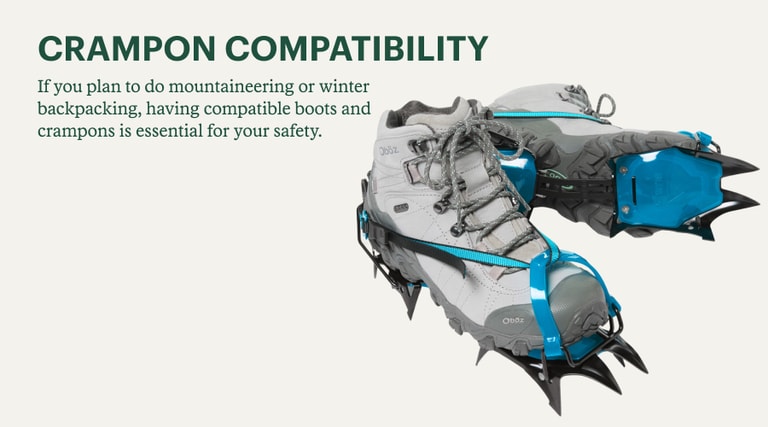
Crampons are traction devices that are attached over hiking and mountaineering footwear and used specifically for stability when navigating icy and snowy conditions at elevation. If you plan to do mountaineering or winter backpacking, having compatible boots and crampons is essential for your safety.
Your boot type ultimately tells you what options you have in binding systems. For example, ultralight strap-on crampons will work on ultralight hiking boots, but they are not suitable for mountaineering or ice climbing. A crampon strapped to a flexible-soled boot will not fit as securely as on a rigid-soled boot. When you shop on REI.com for mountaineering boots, narrow your search by crampon compatibility.
To learn more about crampons, read How to Choose Crampons.
How to Find the Best Hiking Boot Fit
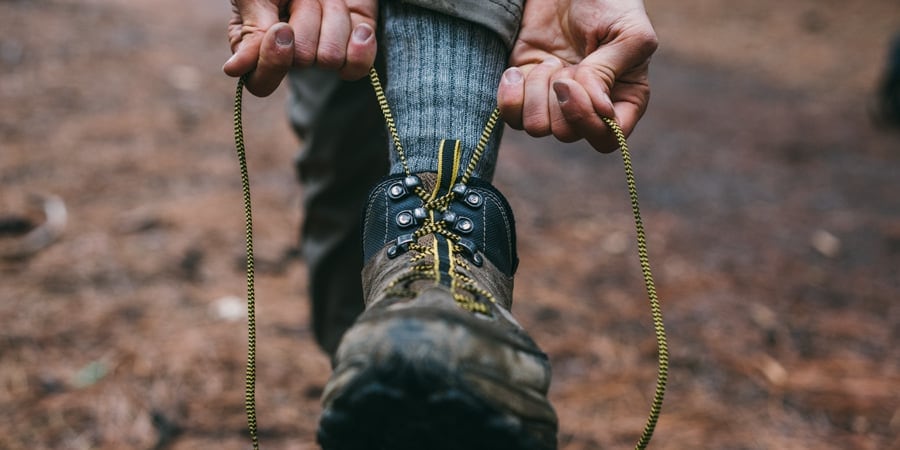
Once you've determined what type of footwear you'll need for the trails and conditions you're heading into, you'll want to make sure you find a pair that's comfortable—not just so you can go farther for longer, but also to prevent common injuries like blisters and sprained ankles, which can be caused or exacerbated by ill-fitting shoes. (Related reading: A Guide to Common Hiking Injuries)
Hiking footwear should fit snug everywhere but tight nowhere, and they should offer room to wiggle your toes. Here are some tips to find the right fit for you.
Know your size. It's best to have your foot's length, width and arch length measured on a specially calibrated fit device at an REI Co-op store. Foot volume, another key to good fit, must be assessed by an in-store specialist. You can also measure your foot length and use REI.com sizing charts to find your size. Double-check length later by pulling the insoles out of the boots and standing on them; you should have a thumb's width of space between your longest toe and the end of the insole.
Try on boots toward the end of the day. Your feet normally swell a bit during the day's activities and will be at their largest then. This helps you avoid buying hiking footwear that feels too small when you're halfway through an adventure.
Consider aftermarket insoles (aka footbeds) to replace the pair included with the footwear. Insoles come in models that can enhance comfort, support or fit—or all three. Read How to Choose Insoles to learn more.
If you wear custom orthotics, bring them along. Not only might they impact the fit of a boot or shoe, but they may be difficult to get into or out of certain footwear. To avoid damaging the orthotics by squeezing them in where they don't fit and wearing them down over time, be sure to take them with you to the store when you're trying footwear on.
Wear appropriate socks for your activity. Familiar hiking socks help you more quickly assess the fit and feel of new hiking footwear. Make sure the socks' thickness matches what you intend to wear with the shoes. Remember that on the trail, synthetic is better than slow-drying cotton socks, which are more likely to give you blisters.
Spend some time in the hiking boots or shoes and move around in them. Don't be shy to wear a pair around the store, and pay attention to how your heel sits in the heel cup, how the tongue and laces feel on the top of your foot, whether you feel cramped or experience any friction at any hotspot in the shoes, etc. Most REI stores have a test rock that can help you get a sense of the shoes' performance on different terrain.
Share these fit issues with your footwear specialist: odd bumps or seams, pinching in the forefoot, or toes hitting the end of the boot when it's on an incline. Additionally, if the boots are laced firmly and you still feel space above the top of your foot, then the boot or shoe's volume is wrong. You won't want to feel any of these things out on the trail, so mention these to the specialist helping you to make sure you choose a better size or model.
When shopping online, consider going with a brand you've worn before. Most hiking footwear companies use a consistent foot model over time, so the fit is likely to be similar, especially within heritage lines like the Merrell Moab or KEEN Targhee collections.
Experiment with different lacing strategies to find a better fit. Certain lacing techniques can help you prevent heel slippage on ascents and descents, can provide more toe box stability, and more. Read How to Lace Hiking Boots to learn more.
Break your hiking boots or shoes in before your first trip. While more flexible hiking shoes and trail-running shoes won't require a break-in period, most burly hiking, backpacking and mountaineering boots will require you to wear and walk in them for a period of time before bringing them out to the backcountry. Neglecting to break in your boots properly could ruin a hike or backpacking trip, and if the result leads to infected blisters or twisted or sprained ankles, the long-lasting effects could be disastrous. Don't skip this important step. Read How to Break in Your Hiking Boots to learn more.