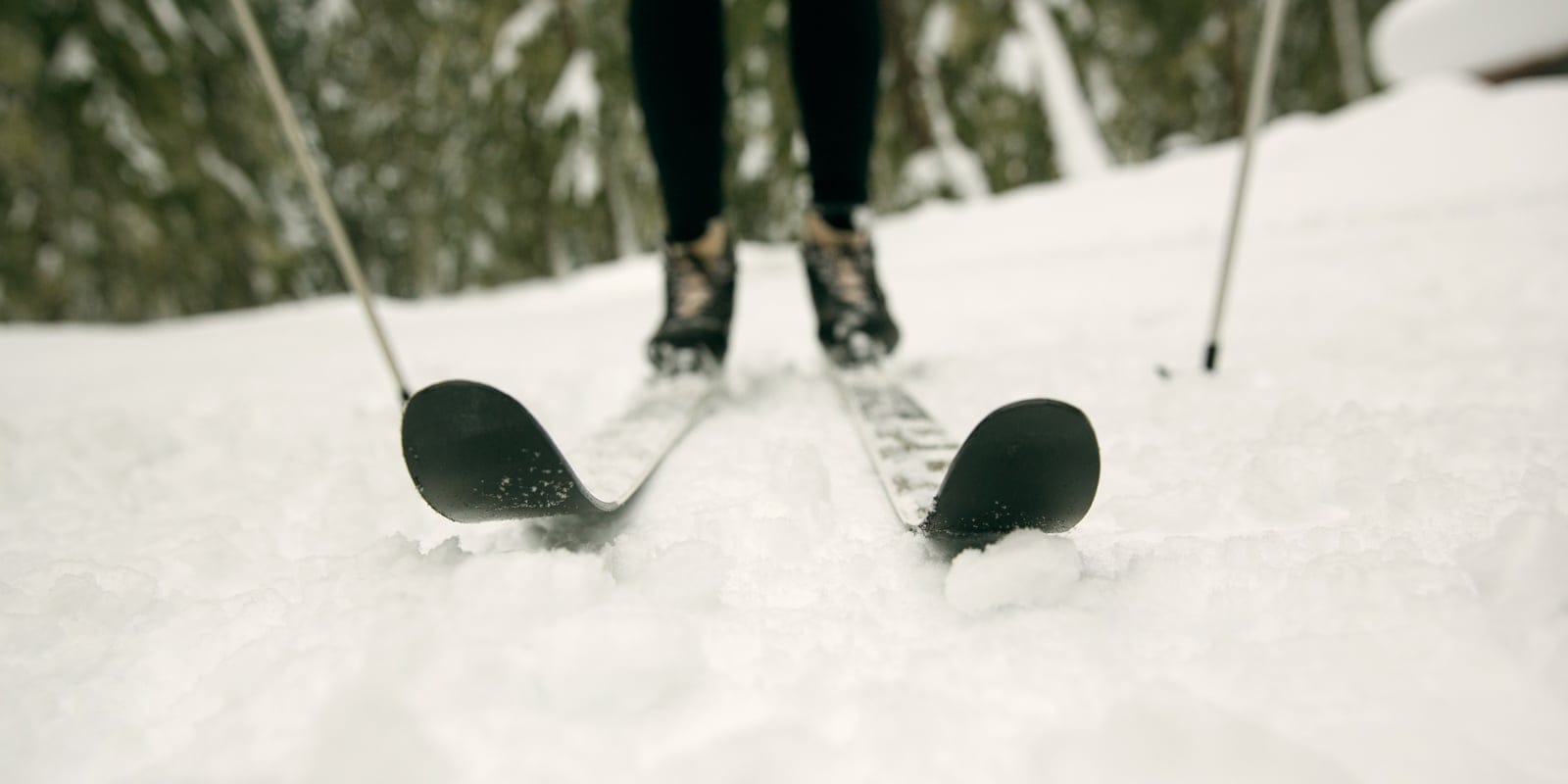
Unless your classic striding skis are "waxless" (embossed to prevent slippage), you'll need to wax the center third for grip.
Waxes are divided into hard waxes for fresh, crystalline snow and klisters for old, rounded snow. Notes Dik Lang, REI Seattle's ski shop master tech, "In Wyoming, they say, 'When it's time to use Klister, it's time to go fishing.' But others maintain that it's the best kind of wax, since you can go lightning fast and bite into sheer ice."
This article describes how to get the job done quickly and easily.
Tools and Supplies
- Masking tape
- Sandpaper
- Waxing iron
- Base cleaner
- Grip wax
- Waxing cork
- Plastic scraper
Choose a Grip Wax
Grip waxes come in several forms: "hard" waxes, which resemble a stubby crayon, and "klister" waxes, which are glue-like and come in tubes. Your choice will largely depend on your estimate of the temperature and snow conditions when you next go skiing.
- Hard waxes are the most popular choice. They work best when temperatures are cold and snow crystals are sharp. Most are color-coded according to their optimal temperature range (from approximately -25°F to +35°F).
- Klister waxes are for warmer conditions and/or on snow that has repeatedly melted and refrozen. Their gelatinous nature and stickiness makes them a bit tougher to work with.
- Spray waxes offer a quick parking-lot fix for your skis.
Prepare the Kick Zone
The kick zone is the middle third of the ski, approximately 70cm from the heel of the binding forward. For a stronger kick, you can increase the length of the zone further forward by a few more centimeters.
- Mark the front and back of your kick zone with a thin strip of masking tape.
- Scrape the area with a plastic scraper and apply a small amount of base cleaner with a cloth to remove dirt and old wax.
- Rub the area in both directions with a very fine grade of sandpaper-wrapped cork.
Apply the Wax
These techniques describe the waxing you'll want to do throughout the ski season. A complete preseason ski overhaul goes beyond the scope of this article.
Binder Wax (optional)
For coarse snow, you can apply a binder wax before the hard wax so your wax won't get scraped off as easily. Rub the binder wax onto the kick zone, moving backwards and forwards on either side of the groove. Heat your waxing iron to 110°F and melt the wax onto the ski. Let it cool (about 30 minutes) then cork.
Hard Wax
Working at room temperature, hold the ski at a 30° angle or prop it up on a bench if you can. Next, rub hard grip wax on the kick zone using short back and forth strokes. Rub a cork over ("cork") the area, apply another coat of wax and buff again. You can apply one or more coats, making sure to buff the surface smooth each time.
Klister Wax
Rub the kick zone with a sandpaper cork. Apply base (green) klister in diagonal strips on either side of the groove. Warm and smooth it onto the ski with a waxing iron at 110°F. Let it cool and cork the area. Next, apply a universal or temperature-specific klister in the same pattern. Spread it out with a plastic scraper or a cork.
Spray Wax
Distribute an even layer from the front to the back of the kick zone. Use one spray stroke. Do not cork.
Test It Out
Go Skiing
Bring your wax and cork. Hit the track for 100 feet or so and evaluate ski performance.
- If you're slipping, the wax is too hard. Scrape it off with a plastic scraper and apply a softer wax.
- If you're gripping too much and snow is building up on the bottom of your ski, scrape off the soft wax and apply a harder wax.
Helpful Tips
- Make sure your ski bases are completely clean and dry before waxing.
- Waxing is easiest at room temperature. If you're just coming in from outside, give them a chance to warm before waxing.
- Choose 2 or 3 grip waxes that cover the range of temperatures you're likely to ski, and stick with them until you're familiar with each.
- Optionally, for performance across a range of temperatures, consider a universal wax.