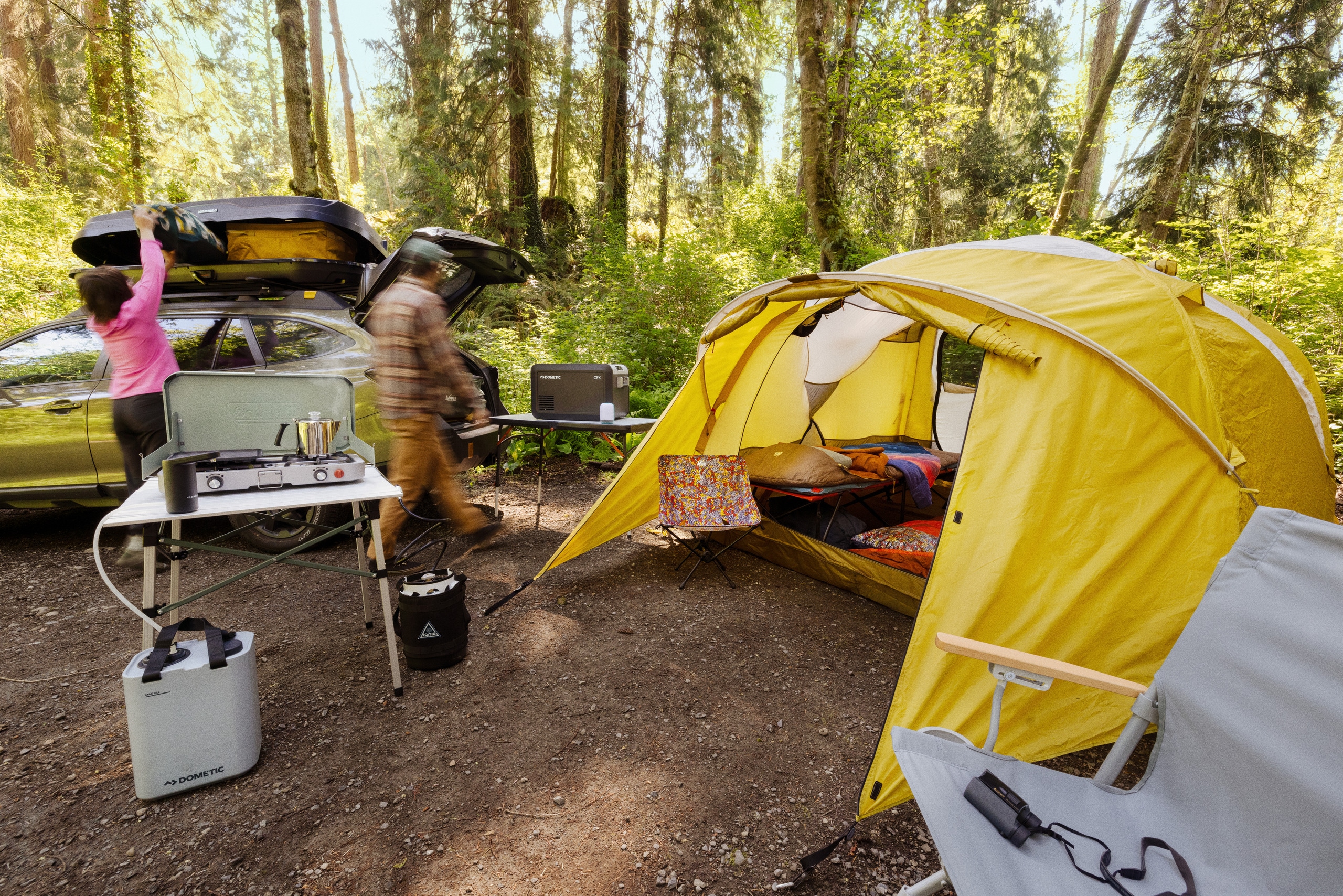
Car camping is a surefire way to escape workday stress and relax into nature. The fun begins when you pull up to a spot and pitch your tent—which is why it's important to pick the right one.
As your home away from home, your car-camping shelter keeps you comfortable throughout all of Mother Nature’s moods and helps you wake up rested for your day outside. This article will help you choose the right tent for your needs, whether you’re looking to try out a budget-friendly option for two beginners or spring for a polyester palace that can fit a family of four, one wiggly dog and all their attendant gear. We'll cover the most popular tent types as well as design differences among shelters, tent seasonality, key features to consider and more. (Prefer backcountry camping? Read How to Choose a Backpacking Tent.)
Jump ahead using the links below or read on to learn more about the different factors that go into choosing the best tent for you.
- Car-camping tents vs. backpacking tents
- Tent sleeping capacity
- Tent seasonality and location
- Rooftop vehicle tents
- Tent shapes and types
- How to use tent specs to choose the best tent for you
- Optional tent accessories
Editor’s note: We significantly updated this article on Oct. 7, 2025, to include new and current subject matter expertise on camping tents, as well as new links.
Car-Camping Tents vs. Backpacking Tents
Tents designed for car camping usually work best when you can drive up to your campsite or carry your gear on a very brief walk. For these reasons, weight and packability are less of a consideration when choosing car-camping tents. These shelters tend to be heavier, more affordable and have a wider variety of extra features compared to lighter options meant for backpacking. The cost savings is mainly due to a difference in materials: It's more expensive for brands to engineer fabrics and poles that are both extra-light and extra-strong, but when weight is less critical, costs dip and material choices expand. If you plan to pack your tent and hike with it to a campsite, you’ll need a tent designed for backpacking, which will be lighter and take up less pack space.
You can use backpacking tents for car camping, but their light weight often comes with a higher price tag. They also may have fewer bells and whistles, like storage pockets and extra space. Likewise, some car-camping tents are light enough to take backpacking on occasion but will likely be more expensive than their heavier car-camping counterparts.
What to Know about Tent Sleeping Capacity
The first consideration in selecting a car-camping tent is how many people will sleep in it and the amount of extra space needed in the sleeping area for nonhuman occupants such as pets and gear. Car-camping tents come in “person” sizes, from 2-person nests to palaces that sleep 8 people or more. That rating typically equates to how many sleeping pads can fit on the tent’s floor. For comfort, many people like buying at least a tent size larger than the number of people who will share it. Deciding on your tent size will ultimately depend on how you plan to use the space.
A couple with an infant, for example, may want a 4- or 6-person model spacious enough to accommodate a portable crib. A family of four with a dog and multiple duffels will probably be happiest with a 6- or 8-person tent, depending on their sprawl. And, if that family expects to include their kids’ friends or cousins on some camping trips, the 8-person model may be the better bet.
Additional space for playing cards, changing clothes or storing gear isn’t included in the “person” sizing either, so if you want room for these extras (or if you sleep on a cot rather than a sleeping pad) you may want to increase your tent size.
Consider a tent’s vestibule space in your calculations. If your dog will sleep beneath that awning or if you prefer to store gear there rather than inside the tent, you might get away with a tent size that matches the number of your human occupants.
But remember, car camping generally lets you prioritize comfort over weight savings—and, consequently, there are few trade-offs to sizing up, says Luca Stewart, a former senior sales specialist at REI Co-op in Sandy, Utah. One notable trade-off is ease of setup: The largest 8- to 10-person tents can be unwieldy for one person to assemble alone, particularly if that person is short (making it hard to reach the center pole clips of tents that are broad and tall). And the tenting locations at some campsites may be sized for 4-person tents but not larger models that can span 100 to 150 square feet. Larger tents will also take up more space in your vehicle and require more room to store.
How much space do you need?
Users | Floor area |
|---|---|
Two people | 29–33 square feet |
Two people who toss and turn while sleeping | 40–45 square feet |
Two people with a child or dog | 40–60 square feet |
Four people | 56–60 square feet |
Four people who can’t pack light | 75–88 square feet |
Four people with a dog and occasional sleepover friends | 110–160 square feet |
Understanding Tent Seasonality and Location
Tents come in 3-season, 3–4 season and 4-season models.
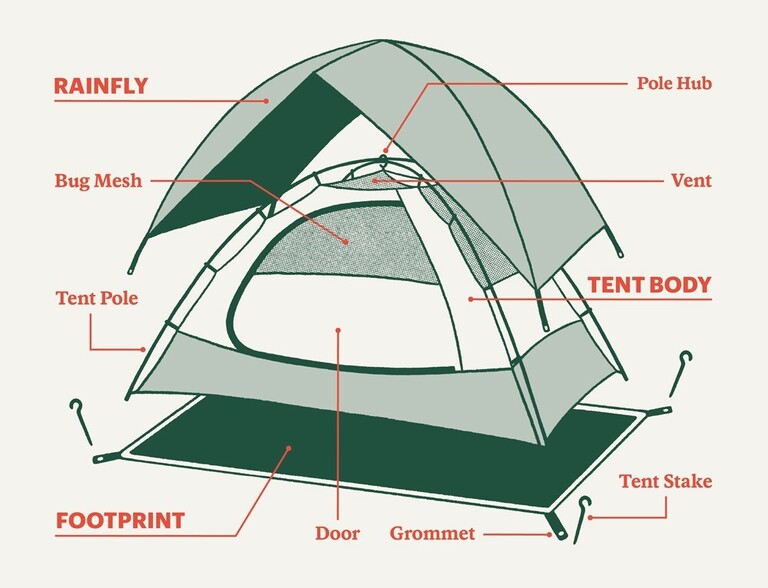
Most campers are best served by a 3-season tent, says Ed Zebrowski, product information specialist for REI Co-op. These structures are built for the mild and stormy weather experienced in spring, summer and fall across temperate U.S. locations. Three-season tents typically use a double-walled design that pairs a tent body made mostly of mesh (to ventilate while keeping out insects) with a waterproof tent fly that prevents rain from entering the interior.
Extended-season (3–4 season) tents are built to handle stronger winds and light snow. They may weigh more than 3-season models, thanks to additional pole structure for extra stability in storms. And they often use less mesh (or offer the option of covering the mesh with fabric panels) to provide more warmth in early spring or late fall conditions. They’re ideal for campers who regularly occupy exposed sites (such as high-elevation locations above treeline).
Engineered to withstand fierce winds and substantial snow loads, 4-season tents can be used in any season. Their chief function, though, is to stand firm in the face of seriously inhospitable weather, principally in winter or above treeline. They use more poles and heavier fabrics than 3-season tents but offer few mesh panels (hindering ventilation and making them feel warm and stuffy in mild weather). They usually feature a rounded dome design to eliminate flat roof spaces where snow can collect.
Additional aspects of a tent’s shape and construction can influence its storm-worthiness. Tents with tall peak heights that allow occupants to stand up inside are noisy in wind and sometimes less stable. “The taller the tent, the worse it is in the wind,” says Stewart. “Those large fabric panels catch the wind and get shaken like crazy.” Such designs are best for wooded areas and sheltered campsites. Beach camping, on the other hand, calls for a low-profile, dome-shape tent with rounded walls that deflect the gusts that are common along shorelines.
For maximum rainproofing, look for tents that include a full rain fly that extends to the ground (or nearly). “Some tents use a partial fly that covers just the top—like a hat—but not the tent walls,” Stewart explains. “That’s fine if the rain falls straight down, but windblown rain can work its way inside.”
What to Know about Rooftop Vehicle Tents
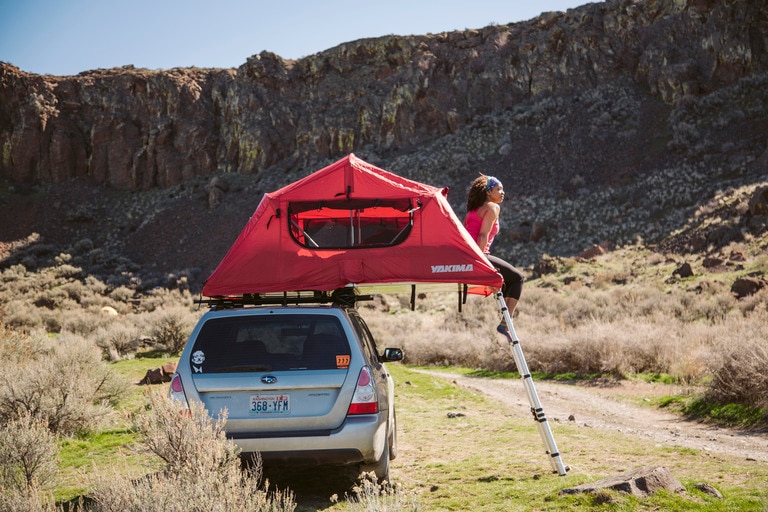
Growing in popularity, these sturdy tents attach to your car’s roof rack so that no matter where you drive, you’ve always got a place to camp. Convenience, comfort and storm-worthiness are the standout benefits: Rooftop tents usually come with sturdy canvas fabrics and heavy-duty poles that withstand heavy rain and wind. They can accommodate thick, 4-inch mattresses that make sleeping feel especially plush. And setup is speedy (most rooftop tents are pitched within minutes).
One trade-off is expense, as rooftop tents can cost $2,000 to $5,000, compared with $200 to $400 for similar-size ground tents. They can also weigh more than you—or your vehicle—can reasonably carry. “Most roof racks have a weight limit of 165 pounds, or 210 pounds on heavy-duty options,” says Zebrowski. So, you’ll want to confirm weight compatibility: Yakima’s 154-pound SkyRise HD Tent might be more suited to your vehicle’s weight threshold than the 230-pound iKamper Skycamp 3.0, for example. When it comes time to install or remove the rooftop tent, you’ll need a strong assistant to help.
Pros and Cons of Rooftop Tents
Pros | Cons |
|---|---|
Quick to pitch | Expensive |
Sturdy and quiet in storms | Heavy |
Suitable for campgrounds and dispersed sites | Difficult access for dogs |
Accommodate thick mattresses | Can make exits challenging |
Elevated above sandy or swampy ground | Requires a level parking spot |
What to Know about Camping Tent Shapes and Types
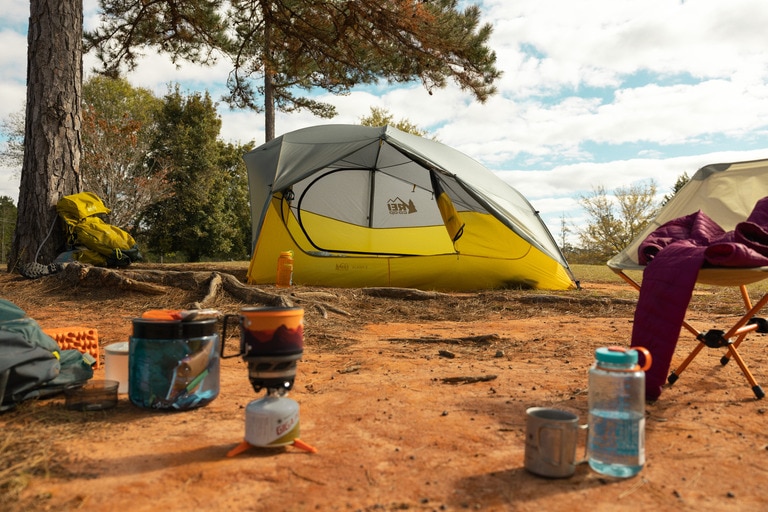
Car-camping tents come in a range of shapes. Some are square, others are rectangular and a few even connect various rooms into something resembling a small fabric-walled apartment.
Tent Shapes
Cabin-style and dome-style tents are among the most popular styles in the U.S. Here's a little more about each.
Cabin-style tents feature near-vertical walls to maximize overall peak height and livable space. Some models come with family-pleasing features such as room dividers and an awning, or a vestibule door that can be staked out as such.
Dome-style tents offer superior strength and wind-shedding abilities, both of which you'll appreciate on a stormy night. They’re tallest in the center, but their walls have more of a slope which slightly reduces livable space. Pay particular attention to sloping walls if you plan to sleep on cots, which raise you above the floor. “Steep angles will cut into your head space when you’re in a cot,” explains Zebrowski.
Tent Types
Freestanding tents can stand on their own without guylines for tension, thanks to sturdy poles that give structure. Freestanding tents typically weigh more than staked tents, but most car-campers don’t mind the extra ounces. They also offer several advantages: They’re more stable on rocky ground where staking is difficult, they’re easy to reposition once pitched, and you can overturn them to shake out dirt and debris before you pack the tent for storage. The majority of family camping tents are freestanding.
Semi-freestanding tents usually require one or two points to be staked to the ground to give the tent structure. They can be lighter than freestanding tents because they don't require as robust a pole system.
Non-freestanding tents need to be staked down at multiple points to stand. Non-freestanding camping tents often have a tall, cabinlike structure held up by poles, while the roof and body of the tent are staked down taut.
How to Use Tent Specs to Choose the Best Tent for You
Here's how to weigh the technical specs of your prospective tent.
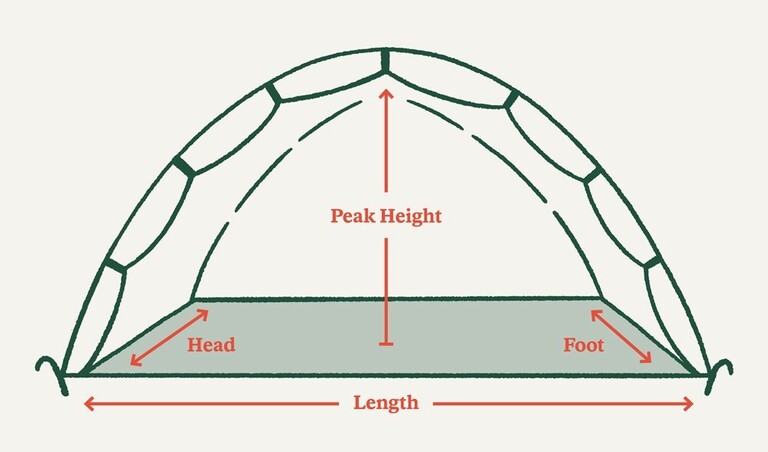
Peak Height: If you like being able to stand up when changing clothes or enjoy the airiness of a high ceiling, then look for a tent with a tall peak height (listed in the spec charts). Your trade-off here is wind strength: Tall walls act like sails in the wind, even when properly secured with staked cords.
Tent Floor Length: If you're tall (over 6 feet) or like additional space, consider a tent with a floor length of 90 inches rather than the more typical 84 to 88 inches. This will allow you to stretch your legs out when you sleep.
Tent Doors: When choosing your tent, think about the number of doors you need as well as their shape and orientation. If you're camping with your family, multiple doors help you avoid climbing over each other for midnight bathroom breaks. Also note how easy or noisy the doors are to zip open and shut. Zippers on the doors resist snagging and breaking better than others. In buggy regions, consider D-shape doors (which allow you to unzip only the bottom of the “D” while you lace up boots) rather than an arched shape (which tends to admit more insects).
Tent Poles: A tent's pole structure helps determine how easy or hard it is to pitch. Fewer poles allow for faster setups. It's also easier to attach poles to clips than it is to thread them through long pole sleeves. Many tents use both clips and short pole sleeves in an effort to balance strength, ventilation and setup ease. Color-coded corners and pole clips also make setup faster. Aluminum poles are stronger and more durable than fiberglass.
Rainfly: A rainfly is a waterproof cover designed to fit over your tent's roof. It guards against rain and dew while also protecting the tent body from fabric-degrading ultraviolet rays. Two rainfly types are common: Roof-only rainflys allow more light, views and airflow while offering fair rain protection. Full-coverage rainflys offer maximum protection from wind and rain.
Tent Materials: Most tent fabrics are made of polyester, which comes in a range of deniers (fiber thickness). Higher-denier fabrics are often used in canopies, floors and rainflys because they are more rugged than lower-denier ones. If you’re camping with dogs, the denier of the tent floor is especially important for guarding against paw-induced punctures.
A few tents use nylon for durability. Nylon is typically stronger than polyester, and therefore nylon fabrics may use a lower denier to achieve a similar tear-strength. This makes nylon fabrics more compressible, so these tents are smaller when packed.
Rainflies are typically coated with polyurethane or impregnated with silicone to make them waterproof. Flame retardants may also be applied to tent fabrics. And although tent canopies aren’t waterproof as the fly materials are, they may feature a durable water repellant (DWR) coating to help shed rain. DWR treatments have traditionally used fluorinated “forever” chemicals, though some tents now rely on nonfluorinated alternatives. “If you want to reduce the amount of forever chemicals in your life, fabric coatings are worth asking about,” suggests Zebrowski.
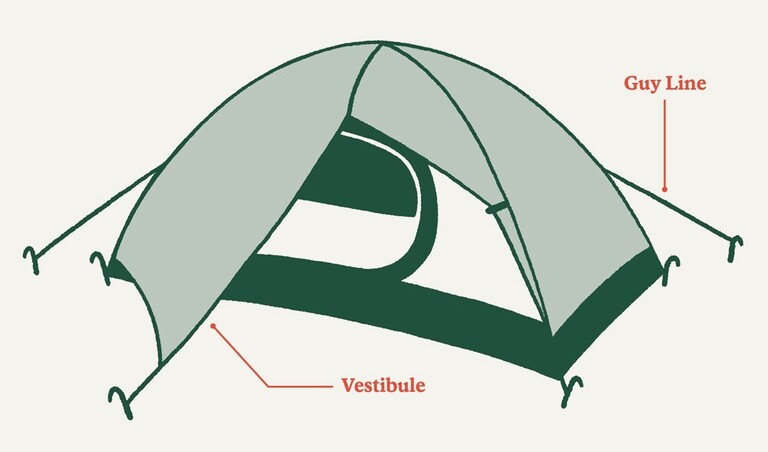
Vestibules: Awnings may be built into your rainfly to create a “front porch” for storing boots, duffels or bikes out of the rain. And some tents accept accessory vestibules that extend the original design for additional storage.
Other Important Features
These tent features may not be listed within the short list of a tent's technical specs, but they're important to consider when choosing a shelter. Here's what to consider.
Ventilation: Mesh panels are often used in the ceiling, doors and windows of 3-season tents. This enhances cross-ventilation to help manage condensation inside. For hot, humid climates, seek out larger mesh panels.
Interior Loops and Pockets: A lantern loop is often placed at the top-center of a tent's ceiling for hanging a light. Loops on interior tent walls can be used to attach a mesh shelf (called a gear loft, sold separately) to keep small items off the tent floor. Similarly, interior pockets help keep your tent organized. Sometimes pockets are made of opaque fabric that diffuses the light of a headlamp, creating a soft, lanternlike effect.
Guyout Loops: Some tents include loops on the outside of the tent body for attaching guy lines. Guy lines allow you to secure tent poles and walls for greater security during high winds.
Optional Tent Accessories
An array of options can make camping more comfortable and/or prolong your gear’s lifespan.
Footprint: This is a custom-fitted groundcloth (usually sold separately) that goes under your tent floor. (Related Reading: What Is a Tent Footprint?) “It increases the longevity of your tent by adding another protective layer for the floor,” says Zebrowski. Although tent floor fabrics are built to be durable, rocks, roots and prickly vegetation can eventually pierce the fabric—especially when pressure is applied from inside the tent (e.g. the weight of a full cooler or a human). DIY versions using tarp fabrics can work well too, just be sure to cut your fabric precisely so it doesn’t extend beyond the tent floor. (A too-large footprint will funnel rainwater beneath the tent floor, where it can seep inside.) Though tent footprints are often sold separately, many tents have a companion footprint made to fit the tent’s exact dimensions. It typically shares the same name as the tent (e.g. the REI Co-op Wonderland 6 Footprint pairs with the REI Co-op Wonderland 6 Tent).
Gear Lofts: Most tents come with an internal pocket or two to keep small items (such as smartphones, headlamps and eyeglasses) off the tent floor. This allows more space to sprawl and makes it easier to find important items at night. A gear loft is an optional interior mesh shelf that can store greater volumes of gear out of the way.
Specialty Stakes: All tents come with an included set of stakes, but certain conditions call for specialty stakes. Sandy beaches and deserts, for example, won’t grip the basic aluminum skewers that are sold with most car-camping setups. Instead, opt for broad snow stakes, which work in sand as well, or make anchors by filling several stuff sacks with sand, attaching them to guylines and burying them in the beach. Likewise, rocky terrain that’s harder to puncture may require heavier-duty stakes.
Power and Appliances: Portable power stations are now small and light enough for camping, and they’re capable of running a tablet for movie-watching, a portable fan to cool the air or medical devices like sleep apnea machines.
Temperature Regulation: Sensitive sleeper? Try a battery-powered fan to cool off at night or boost your tent’s warmth with a portable heater.
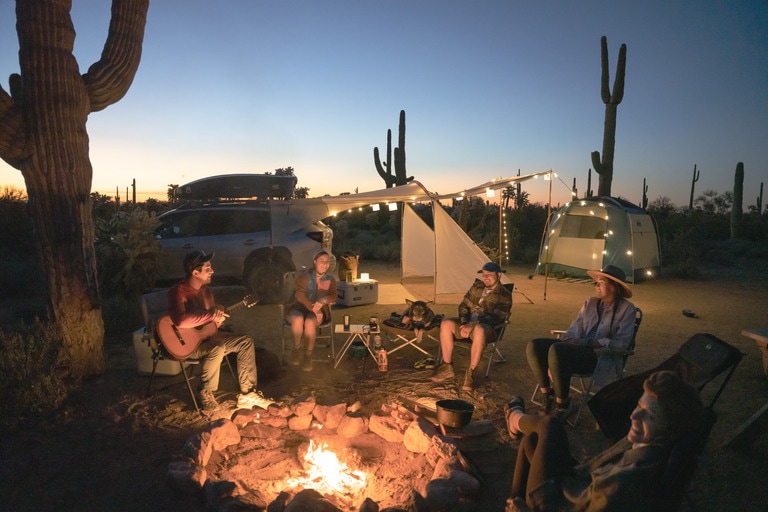
Lighting: Lanterns make wayfinding easier at night, and LED string lights let you create a party atmosphere in your tent. You can even hang a small lantern or headlamp from a gear loop for hands-free illumination.
Repair Kits: It’s a good idea to pack fabric tape in case a rambunctious dog puts a paw through the mesh. Back at home, you can use a tent repair kit to mend pole segments or fabric. However, manufacturers often offer repair services, and their technicians may achieve a better, longer-lasting fix than you can. When in doubt, call your tent’s customer service team for help. (Related reading: How to Repair a Tent)
Why Trust This Guide
To create this comprehensive resource on camping tents, we recruited camp experts whose experience includes reporting on outdoor gear for major publications, providing gear recommendations to outdoor enthusiasts and, of course, spending myriad nights sleeping under the stars.
Meet the experts
Luca Stewart has logged thousands of miles on backcountry trails and has spent many nights camped outside. He's completed bucket-list treks like the Tour du Mont in France, Italy and Switzerland, as well as the Lost Coast Trail in California. He also spent four years providing tailored gear recommendations to camp enthusiasts while working as a senior sales specialist at the REI store in Sandy, Utah.
Ed Zebrowski has eight years of experience as a product information specialist at REI, during which he has fielded thousands of questions from outdoor enthusiasts in order to help them find the right gear for their outdoor adventures.
Kelly Bastone has spent the last two decades covering outdoor gear for a variety of publications. She has decades of backpacking and camping experience, including thru-hiking the Appalachian Trail.