Outdoor activities are tough on feet, so a pair of high-tech socks is your first line of defense for dry, comfortable and blister-free feet. While "technical socks" might sound funny, there's no denying the big improvement they make over your old all-cotton tube socks.
This article compares your choices.
Socks by Activity
Socks at REI are organized by intended activity. Each features subtle differences in construction:
Athletic/multisport socks: This broad category ranges from traditional white gym socks (updated with moisture-wicking fabrics) to technical socks intended for cross-training and running. Most provide some sole cushioning but have minimal bulk overall.
Running socks: These range from thin liner socks with very little padding to those with dense cushioning in the heel and ball of the foot. Some runners prefer less padding for a better fit in their shoes; others like more padding for added cushioning and reduced foot fatigue.
Walking socks: These offer cushioning and moisture-wicking properties for fitness walkers.
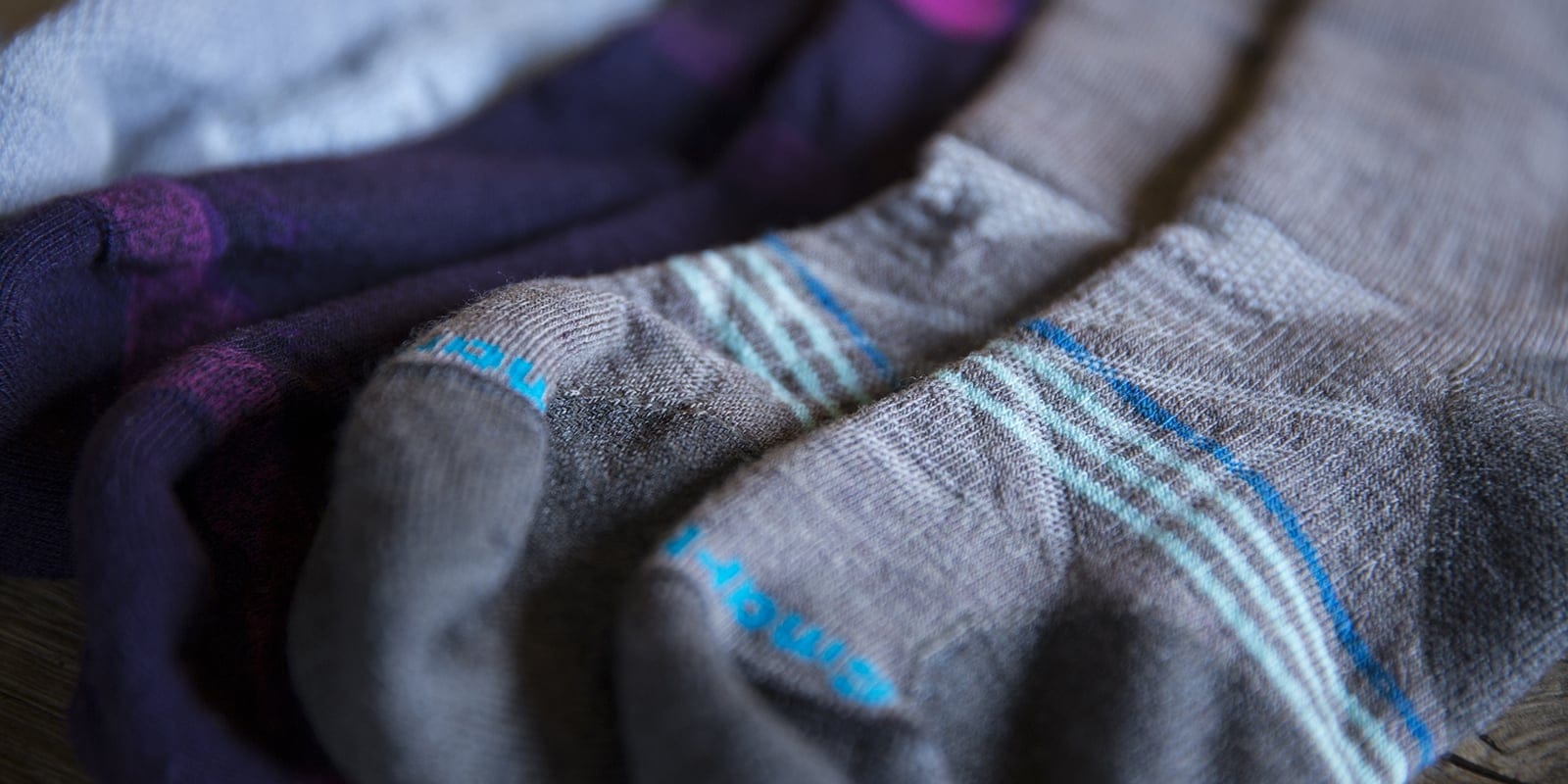
Casual socks: Though distinguished by their casual styling (colors, stripes, etc.), these lightweight socks, at least those found at REI, usually feature performance fabrics such as merino wool.
Lightweight hiking socks: These relatively thin socks provide a good fit for hikers with high-volume feet (i.e., feet that are wide or have a high instep). They wick away moisture and offer modest cushioning in the heel and ball of the foot. They are thinner, especially on the top, than midweight socks and can be worn with or without liner socks.
Midweight backpacking socks: Their additional thickness gives a good fit to hikers with low-volume feet (i.e., feet that are narrow or have a low instep). They offer more padding in the heel and ball of the foot than do lightweight hiking socks, plus cushioning on the top of the foot and leg for comfort on long trails. They can be worn with or without liner socks.
Mountaineering socks: These heavyweight socks are your thickest option, with extra bulk and padding for cold, rugged conditions.
Ski and snowboard socks: These are padded in the shin area and usually underfoot as well. Otherwise, they are thin and not intended to provide significant warmth; rather they are meant to protect your feet from pressure points and rubbing inside the boots. Their design also serves to not interfere with the energy needed to make quick turns.
Specialized Socks
Here are some multi-activity sock options to consider.
Liner socks: These are worn under a pair of regular hiking socks. Typically made of synthetics such as CoolMax® polyester, they pull moisture away from the feet to the outer sock where it can evaporate. Liner socks are popular with hikers because they can be washed and dried more quickly than regular socks on long trips.
Waterproof socks:You have 2 choices. Waterproof/breathable oversocks are great for backpacking in rainy weather, when keeping your regular socks dry is a real necessity. Or, choose waterproof/breathable socks worn in place of regular socks. These feature a thick exterior, a moisture barrier and a fleece interior. They provide warmth for paddlers or surfers in cold water.
Toe socks: Like gloves for your feet, seamless "toe socks" help prevent between-toe blisters. (Note: Between-toe blisters can also be the result of too-tight shoes.) Typically made of synthetic fibers, toe socks are intended for running or hiking.
Fleece socks: These are a cozy choice with shoes or sandals, or by themselves as house slippers. The fabric wicks moisture but does not conform to the foot as much as a hiking sock.
Heated socks: These use low-amperage battery power to provide fast, shockproof heat. Popular for sedentary pursuits (e.g., fishing, spectator sports) in cold weather.
Understanding Sock Materials
Each of your feet are densely covered with about 250,000 eccrine sweat glands, making feet one of the sweatiest places on your body. Performance fabrics help absorb and disperse all that moisture. Here are your most common choices:
Merino wool: The fine, itch-free fibers of merino wool have virtually replaced the scratchy ragg-wool socks previous generations used. Their biggest advantage is that they are thermostatic (temperature-regulating), so your feet stay comfortable in a wide range of temperatures. Wool can absorb up to 30% of its weight in water, which helps feet remain dry in most conditions.
- Pros: Comfortable in cool or warm conditions, absorbs and wicks moisture, cushions, doesn't itch like ragg wool.
- Cons: Dries a bit slower than synthetics, more expensive.
Synthetics: Several materials are often combined or used in select areas of the sock for greater comfort and fit. Nylon and Lycra® spandex help socks retain their shape, create a snug fit and, in some sock styles, provide arch support. CoolMax® polyester, Wickspun™ acrylic and Isolfil® polypropylene are commonly used fibers that wick away moisture to keep your feet dry and prevent blisters.
- Pros: Durable, dries fast, wicks moisture, cushions.
- Cons: Less comfortable in hot conditions, insulation reduced when wet.
Ingeo™: Pronounced IN-gee-oh, this corn-based polylactic acid (or PLA) fiber acts similarly to polyester but is an eco-friendly alternative.
- Pros: Made from a renewable resource, recyclable, wicks moisture, controls odors.
- Cons: Less durable than other fabrics; can only be commercially composted.
Silk: This natural insulator is used in some liner socks. It wicks moisture and offers a smooth texture against the skin.
- Pros: Lightweight, wicks moisture, comfortable against skin.
- Cons: Less durable than other fabrics.
Cotton: Cotton is not recommended for active uses, so you'll find few or no such styles at REI. The problem with 100% cotton socks is that they absorb sweat, saturate quickly and dry slowly, which is a perfect recipe for blisters.
- Pros: Comfortable for non-active uses, inexpensive.
- Cons: Not recommended for active wear.
Sock Features
Padding: Look for padding on the heel and ball of the foot for cushioning and protection. Be sure the amount of padding does not make your shoe too tight. Padding is created either by increasing the density of the weave in those areas, or in some cases by weaving long-wearing materials like acrylic into those areas. This extra padding can be a real foot-saver on hard trips over rough terrain.
Arch reinforcements: Some socks offer a tighter, reinforced weave in the arch to improve support. This is primarily helpful if you have high arches, but can be useful for those with regular arches or flat feet as well. Without proper support, arches can develop arch pain or even plantar fasciitis, which can cause severe pain in your heels. Keep in mind, though, that your footwear is the key factor for arch support.
Height: In many cases, this is merely a personal or style preference. However, crew and quarter socks do offer abrasion protection from your boot tops, so we recommend socks at least this tall when you're wearing mid- or high-cut boots.
Fit: To get the right size, look for manufacturer-specific size information on any REI.com product page. When you try on socks, pay attention to how they fit in the toe and the heel. Correct length is the key criteria. If a sock is too long, it will bunch up over your toes. If it's too short, the sock will slide down into the shoe and feel tight. For heavily padded socks, try them on with your shoes to ensure they fit comfortably without making your shoes too tight.
Sock FAQs
Q: I hike in a hot climate. What socks should I wear?
A: Fit is your #1 criteria, so it depends on your footwear. Counter-intuitively, midweight socks actually absorb more water than lightweight ones, which allows your feet to stay cooler and drier despite the extra bulk. Wool gets saturated a bit faster than synthetics, but they help regulate temperatures better.
Q: How thick should my socks be?
A: Proper sock thickness depends on the fit of your footwear. If you have a low-volume foot, you'll probably want thicker socks; high-volume feet usually require thinner socks. Always try on socks with your shoes to make sure they fit comfortably.
Q: Does wearing a liner sock under my regular sock prevent blisters?
A: Not necessarily. The most important factor is having your footwear fit right. An REI footwear specialist can help you with this. Consider liner socks whenever additional volume is needed or in combination with slightly thinner regular socks.
Q: What socks should I bring on a weeklong backpacking trip?
A: Save space by bringing several pairs of liner socks and 1 pair of backpacking socks. Your sweat gets absorbed by the liner socks, while your backpacking socks stay relatively clean. With this approach, you need only to replace the liner socks every day with fresh ones. Wash out your liner socks as needed (they dry much faster than thicker socks.)