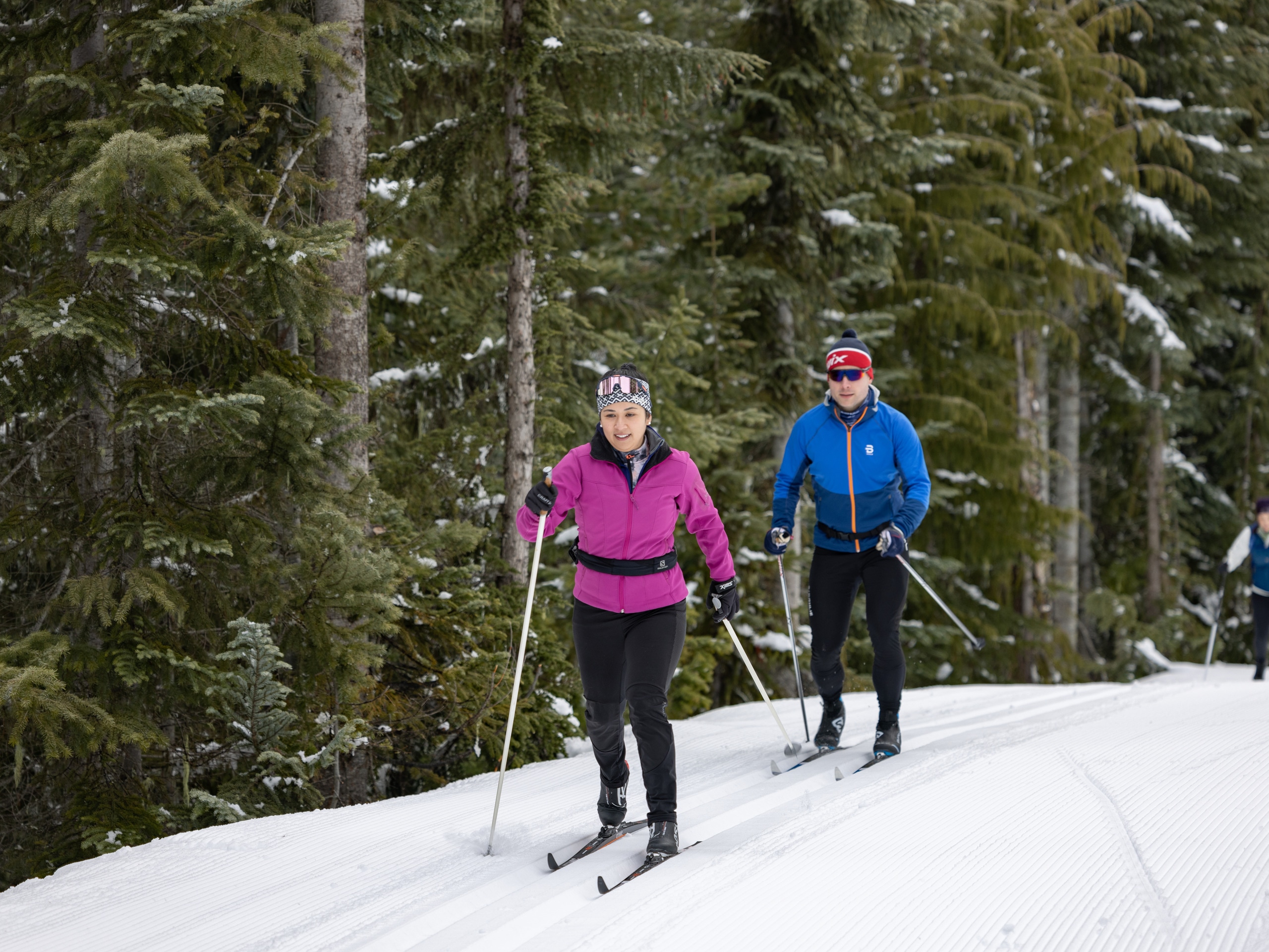
Cross-country skiing is a highly aerobic activity that can generate a lot of body heat. Your clothing needs to protect you from the elements while allowing sweat to quickly move away from your body so you don't overheat. If it doesn't, you risk getting chilled (or even hypothermic) once you stop. When cross-country skiing, wear multiple lightweight layers of clothing for warmth and versatility. This allows you to add or remove layers as needed and it creates the most insulation during your winter activity. For example, wear two lightweight layers rather than one bulky heavyweight layer for the most warmth. The layers trap what's called "dead air space" to help retain warmth around your body.
Here's a quick overview on what to wear cross-country skiing, with more details below:
- Base layer: The first layer of clothing, worn closest to your skin, should be made of materials like polyester or wool that dries quickly and moves sweat away from your body so you don't get cold.
- Middle layers: Next, you'll want a layer for warmth, such as a fleece or lightweight puffy jacket.
- Outer layer: You'll want a cross-country ski jacket that is water resistant, windproof and breathable.
Also, here are some general tips for how to manage your comfort while you're out skiing:
- Be proactive. Don't wait until you're too cold or too overheated to change your clothing.
- Bring extra layers for extended outings. If your clothes get wet from too much sweat or rain, you'll appreciate having extra dry clothing in your day pack to change into.
- Choose versatile clothing: Look for clothing with features that allow you to adjust or regulate your temperature, such as zip-necks, vents or front or side zippers.
For help choosing clothing for your next cross-country ski adventure, visit an REI store near you by using our store locator. You can also contact REI via live chat, a phone call or an email through our Help Center.
Shop Cross-Country Ski Clothing
Base Layers for Cross-Country Skiing

The first layer of clothing worn next to your skin is the base layer. Your underwear, base layer top and bottoms should be comfortable and form-fitting but not so tight that they constrict your movement. This could be base layers made of polyester or merino wool. Non-cotton running or workout tights, yoga pants or inexpensive thermal underwear could all work.
Here are some other tips for your base layers:
- Pick materials such as polyester or merino wool that wick moisture away from your skin toward the fabric's outer surface and dries quickly so that your sweat doesn't soak your clothing and chill you. It's best to avoid cotton because it absorbs your sweat and takes a long time to dry once wet.
- Depending on winter temperatures, you may want a short-sleeve top, a lightweight or medium weight long-sleeve top or a zip-front that lets you ventilate.
- Start out skiing a little chillier than you expect (if that's comfortable) because you'll quickly heat up as you start moving.
Read more in our article on Choosing Base Layers.
Middle Layers for Cross-Country Skiing
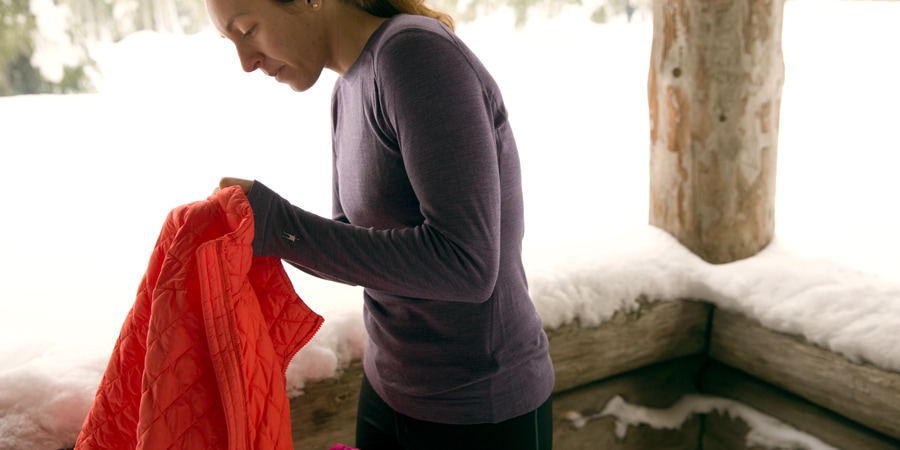
Next, wear one or two insulating layers on your upper body for warmth. This will depend on the weather, how much you sweat and whether you run hot or cold. If you're skiing in warmer winter temperatures, you may need just one middle layer. If you're more prone to getting cold or plan to stop a lot, consider two middle layers for warmth.
Examples of a middle layers:
If you're on a budget, look in your closet for items you already own, such as a thin wool sweater, an inexpensive fleece top or a training top you might wear running or cycling on cold days.
Outer Layers for Cross-Country Skiing
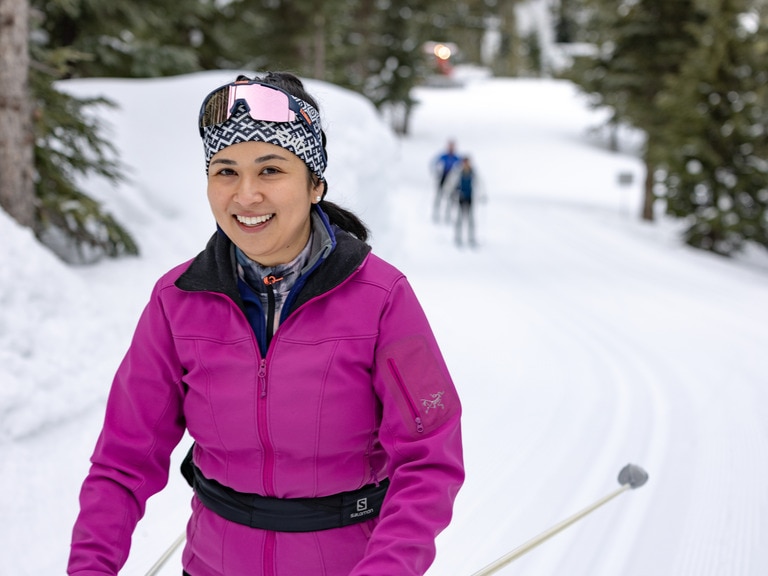
Thicker, bulky jackets that work well for some winter sports such as downhill skiing don't work as well for cross-country skiing because you're constantly moving and could quickly overheat. For your outermost layer, look for jackets or pants that are wind resistant and "breathable" (that means the material allows moisture, i.e. sweat, to pass through so you're comfortable and not too sweaty). Make sure your outer layer can fit over your other layers of clothing.
Examples of outer layers:
- Soft-shell jacket: A soft-shell jacket is a great choice for most cross-country skiing days because the fabric is water resistant so it can repel light snow or rain. But the material is also stretchy and breathable, moving with you while allowing perspiration to pass through so you don't overheat.
- Hard-shell jacket: A soft shell won't protect you from heavy snowfall or downpour. In those cases, it's helpful to have a waterproof/breathable hard-shell jacket in your pack. A windbreaker or wind-resistant, breathable rain jacket that you wear running, walking or cycling in the winter are both good choices. Shop cross-country ski jackets.
Pants: Look for wind resistant but breathable materials for your lower body. Many people choose to wear lightweight, non-cotton stretchy pants, such as yoga or running pants, that allow a good range of motion. Depending on winter temperatures, you may wear these pants over a base layer or alone. Cross-country ski pants typically have a windproof material in the front and breathable, stretchy material in back.
Hats and Gloves for Cross-Country Skiing
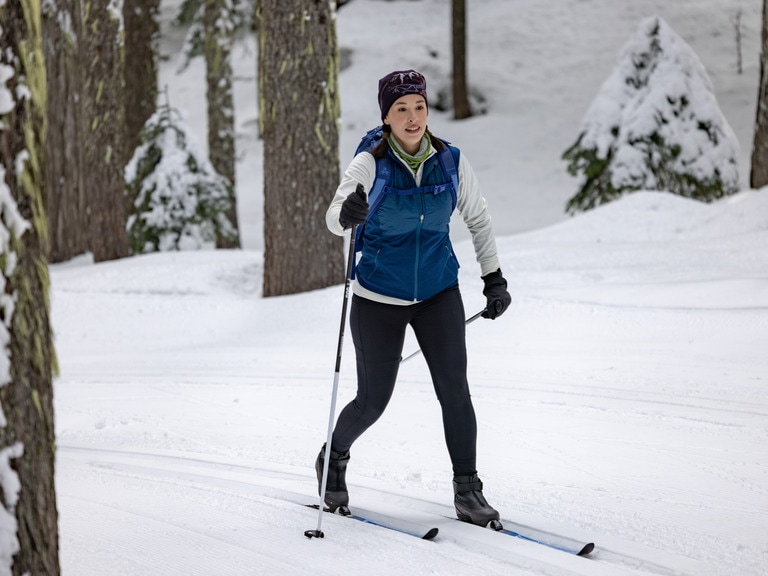
A significant amount of body heat can be lost from your head and hands if not covered. For your head, a light cap with visor works well on mild days.
- Add a headband to cover your ears when it gets cooler, or a wool or fleece hat. Wear a balaclava to protect your head and neck when temperatures dip.
- For your hands, use a layering system: glove liners and windproof gloves or mittens. As it gets warmer or colder, simply remove or add layers.
Socks and Gaiters for Cross-Country Skiing
For your feet, a base layer (liner socks) and an insulating layer (thin wool or synthetic socks) are often used—your ski boots act as the outer layer. While thick socks can certainly be used to create more warmth, be aware of how much space is available in your boots. Another option is to wear over-the-ankle gaiters to prevent snow from sneaking into your boots.
Sun Protection for Cross-Country Skiing
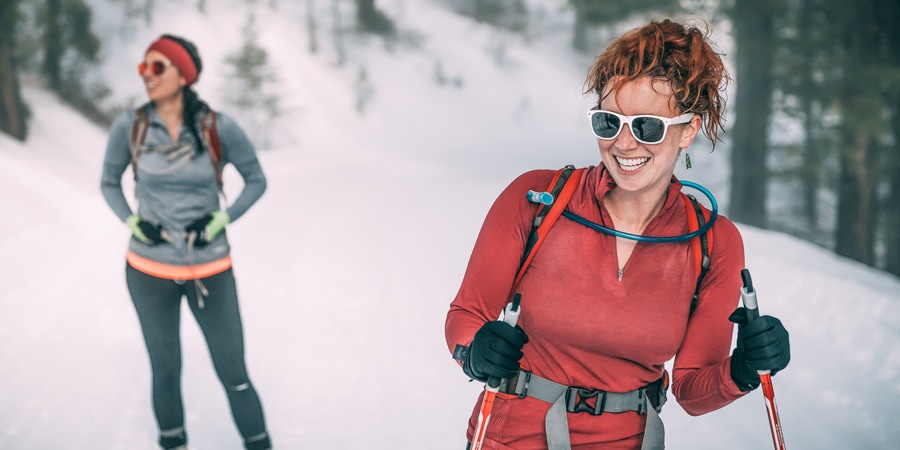
You need to protect yourself from both direct sunlight and reflective sunlight off the snow—even during a cloudy day. Wearing layers with complete skin coverage prevents sunburn and helps provide warmth and moisture wicking. Remember to wear sunglasses and regularly apply sunscreen as well (see the REI Expert Advice articles on Sun Protection Clothing and Choosing and Using Sunscreen for more information).