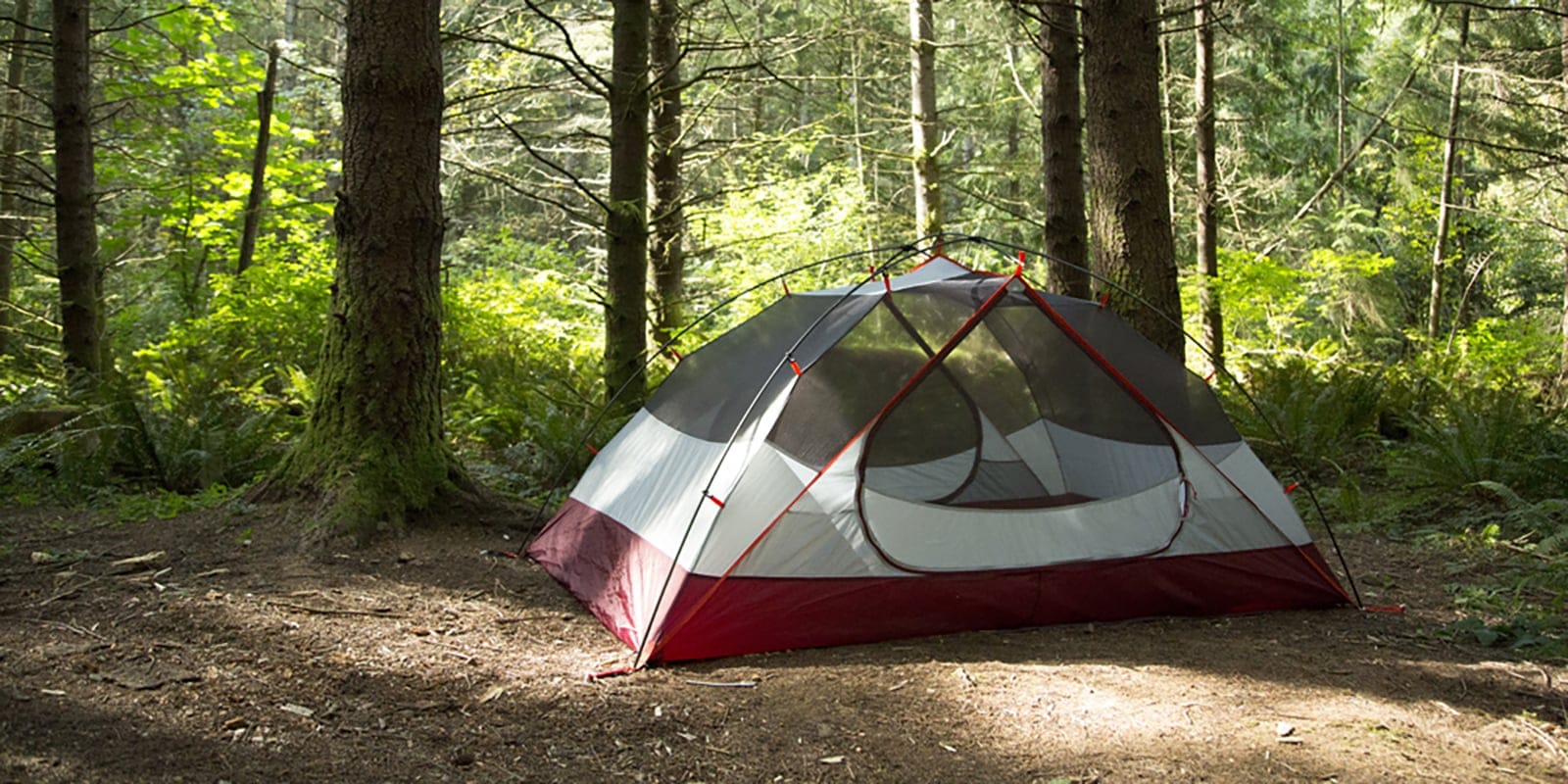
Unlike an urban dwelling, your home in the outdoors requires only a modest amount of love and attention. Treated well, a quality tent will provide years of faithful service in the field.
This article offers a wide range of tips on how to care for your tent. If you do nothing else, though, follow these four important rules:
- Always read the directions.
- Be gentle with zippers and poles.
- Clean your tent and fly from time to time.
- Never store a tent wet.
Video: Tent Care Tips
Tent Care During Setup
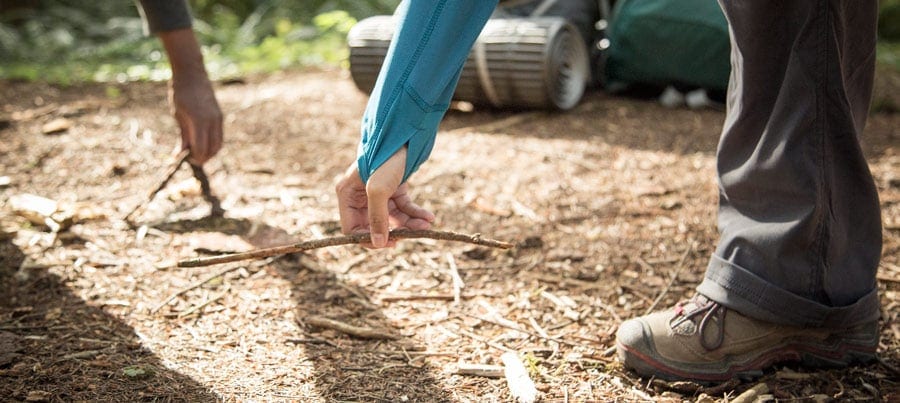
Before heading into the wild, do a practice pitch. Learn how to set your tent up in a no-pressure setting. Confirm that you have all the stakes, guylines and accessories you need. When you're in the field, follow these guidelines and you'll extend the life of your tent:
Look for an established campsite. This key Leave No Trace principle should lead you to setup spots that are smooth, level and relatively free of vegetation. After that, you only need to clear away debris (pine cones, twigs, small rocks) that could poke a hole in your tent floor. Avoid disturbing your tent site any more than that.
Use a footprint. This custom-cut ground cloth is designed specifically for the floor plan of your tent. A footprint protects your tent floor from abrasion and provides a clean surface where you can pack up your tent. Also, because it doesn't extend beyond the perimeter of your tent floor, a footprint won't collect rainwater the way a generic ground cloth or tarp can. If using a generic ground cloth, tuck any excess material under the tent floor.
Avoid leaving your tent set up in direct sun for extended periods. Minimizing the exposure to ultraviolet (UV) rays is a key element to increasing the life of your tent.Over time, UV rays degrade the fabrics in the canopy and rainfly.
Because the fly is more UV resistant, you can leave it on if the tent will be basking in the sun while you're off bagging peaks or exploring. Polyester flys, which many tents have, are more UV resistant than nylon rainflys.
If you'll be away for a long time, the best practice—regardless of fly material—is to move your tent completely out of the sun.
Go slow with the poles. Don't whip a pole around, trying to snap its shockcorded sections into place. You can chip a section and weaken the pole—or whack your hiking companion. Setup will go more smoothly if you unfold and fit pole sections together one at a time.
Tent Care During Use
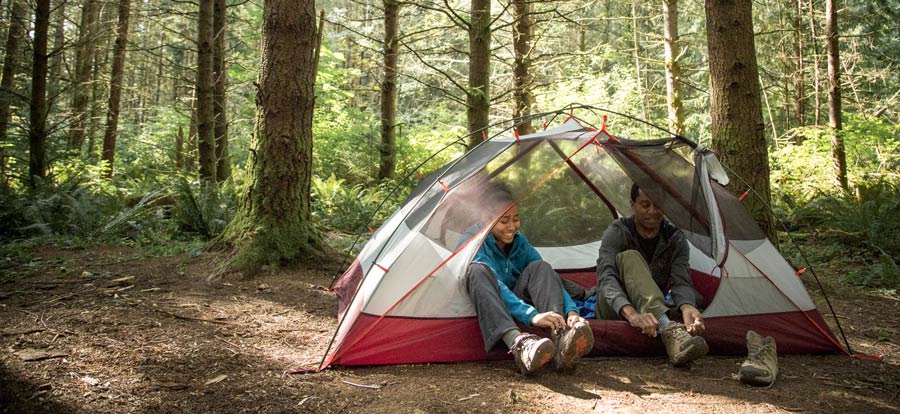
Be gentle with your zippers. Don't force a stuck zipper. Instead, hold the zipper track with one hand and gently back the slider up, wiggling it from side to side until the stuck fabric is free. If the zipper splits, gently back it up until it re-engages. If it continues to split, take a pair of pliers and gently squeeze the zipper slider to give it a slightly tighter hold on the zipper track. Be careful not to overtighten and jam the slider, though.
Leave boots outside or in the vestibule. Dirt, grit and pebbles falling onto the tent floor will be perfectly positioned to abrade and puncture your tent.
Keep food and fragrant personal products in a secure container outside of the tent. Little creatures will chew through the fabric in search of their next meal.
Your tent is not a dog kennel, so never leave an unsupervised dog inside it. Teeth and claws can do serious damage to tent materials when your faithful companion decides it's time to join you outside.
Tent Care During Break Down
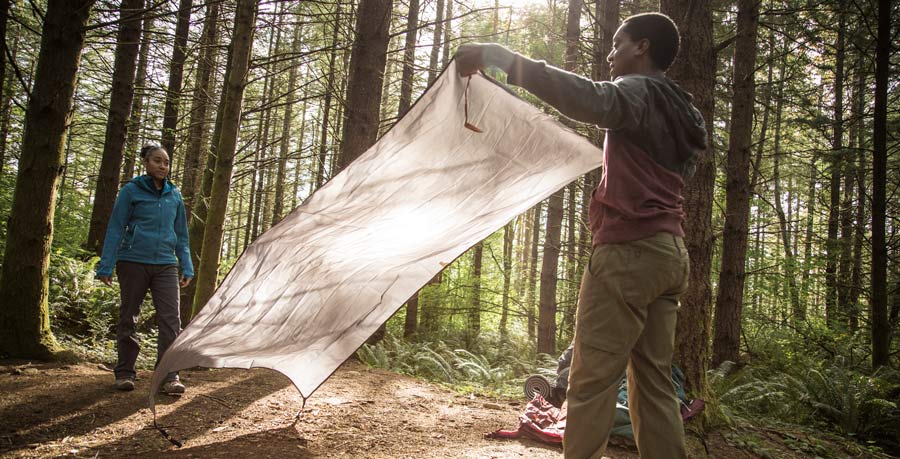
Shake your tent out. Clean out dirt and debris and remove trash before you pack up. If your tent is freestanding, this is easier because the poles help hold the tent open while you dump out the dirt.
When removing a shockcorded pole from your tent, push rather than pull. If you pull and the other pole end or a pole section gets hung up, then you can put undue stress on the elastic cord.
Start in the middle when you break down your poles. This evenly distributes tension along the cord. Repeat this trick on each subsequent half section until your pole is fully folded.
Dry before stuff-sacking. Even a well-ventilated tent accumulates condensation, often under the floor and rainfly. Moisture left on a tent does damage (see below), so dry it as much as possible before packing up and hitting the trail each day. You can drape your tent and fly over a branch, a bush or a boulder, but be careful not to poke or snag the fabric.
If you must pack up in wet conditions, make sure to dry the tent as soon as you get back. If it's a sunny day, set it up in the yard; if the weather is wet, hang your tent to dry in a garage or a non-carpeted room.
Roll it or stuff it? This is an age-old debate and there's no definitive answer. Stuffing advocates argue that it avoids repeated creasing (and weakening) materials and coatings along fold lines. Folding advocates suggest it's less stressful than the stuffing process itself. Tent materials should be sturdy enough to withstand either approach.
Tent Care at Home
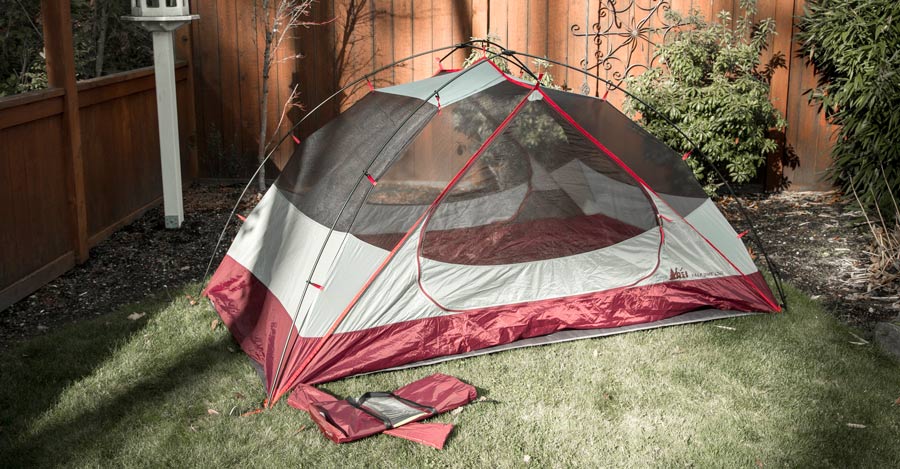
Thoroughly air-dry your tent after trips and cleanings. There's no such thing as too much drying time. Set it up indoors or in a shaded outdoor spot. If you don't have enough space to pitch it, drape it or hang it until dry.
Make sure your tent is 100 percent dry before storing it. No tent-care rule is more important. Damp fabrics grow mildew, giving tents a funky smell and harming polyurethane waterproof coatings. Over time, moisture also starts to chemically break down coatings. A neglected tent that becomes flaky, tacky or smelly is a candidate for serious intervention or replacement.
Store your tent loosely in a cool, dry place. Though nicely compact for backpacking, the stuff sack is a poor choice for long-term storage. You want tent fabrics to relax and breathe. An old pillowcase or similarly sized mesh bag is ideal.
Avoid storing the tent in a damp or hot location like a basement, an attic or car trunk. If a damp storage place is your only option, then place your dry tent inside a sealed plastic bin or other container.
How to Clean Your Tent
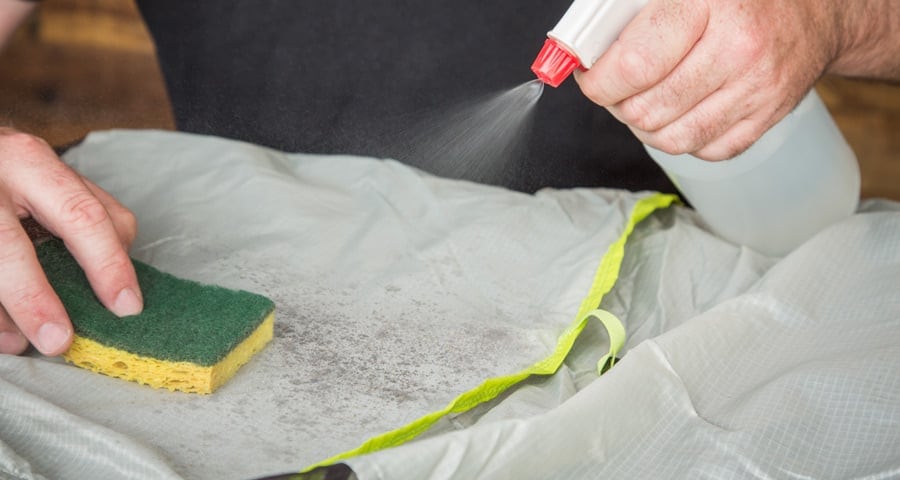
Clean your tent after any long camping trip, especially if it was exposed to sand, fine dust, bird droppings or tree sap. If you do a lot of short trips, give your tent a gentle cleaning once per season.
Never machine-wash or machine-dry a tent. A washer, especially a top-loader with an agitator, can stretch or tear fabric, mesh and seams. Dryers can do the same, and can generate enough heat to do damage as well.
Do a basic cleaning. Use a non-abrasive sponge, cold water and a non-detergent soap. Gently scrub soiled areas by hand, being extra gentle on coated areas of the floor and fly.
Avoid household cleaners such as harsh dish soaps, bleach, spot removers or laundry presoaking products. Most household soaps are perfumed, which will ultimately attract insects, rodents and bigger creatures. Most of these soaps also impair a tent's durable water repellent (DWR) coating.
For step-by-step instructions on cleaning your tent, see our article, How to Clean a Tent.
Waterproofing Tent Seams and Coatings
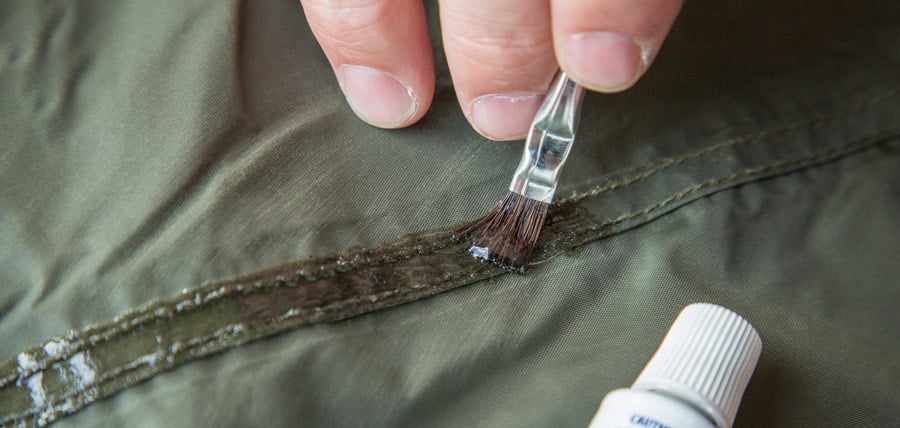
Re-waterproofing a tent or rainfly is an easy way to extend the life of your tent. Most tent sealing products need 24 hours to dry completely, so make sure you have a designated space free from debris where the tent can be spread out for a day to dry.
Reseal leaky seams. Most tents are sold with seams already sealed, usually via seam tape. Seams are vulnerable areas, so inspect them periodically for damage. If the seam tape fails, gently remove the sections of tape that are peeling off. The tape leaves a residue on the inside of the seam, so apply new seam sealer to the outside of the fabric. You can also fix tiny holes in the main tent fabric with seam sealer.
If the waterproof coating on the fabric is failing, decide whether you want to reapply the coating or replace the tent. When your fly or floor starts to peel (usually visible on the inside of the fabric), you can recoat worn areas. Start by gently cleaning to remove flakes; then apply a thin coat of paint-on polyurethane sealant. If your tent's coating is gooey and has a foul odor, it's time to check to see if your tent maker is one of the few that carry replacement rainflys. If the floor is failing, it's time for a new tent.
Be sure to get the correct product for your tent's fabric and coatings. Most rainflys are polyester or nylon and have a polyurethane coating. A few are lightweight nylon infused with silicone (which never needs recoating). Each type of material requires a coating and seam sealer formulated specifically for that fabric.
See our article, How to Waterproof a Tent, for step-by-step instructions and a video.
Shop Fabric and Gear Care Products