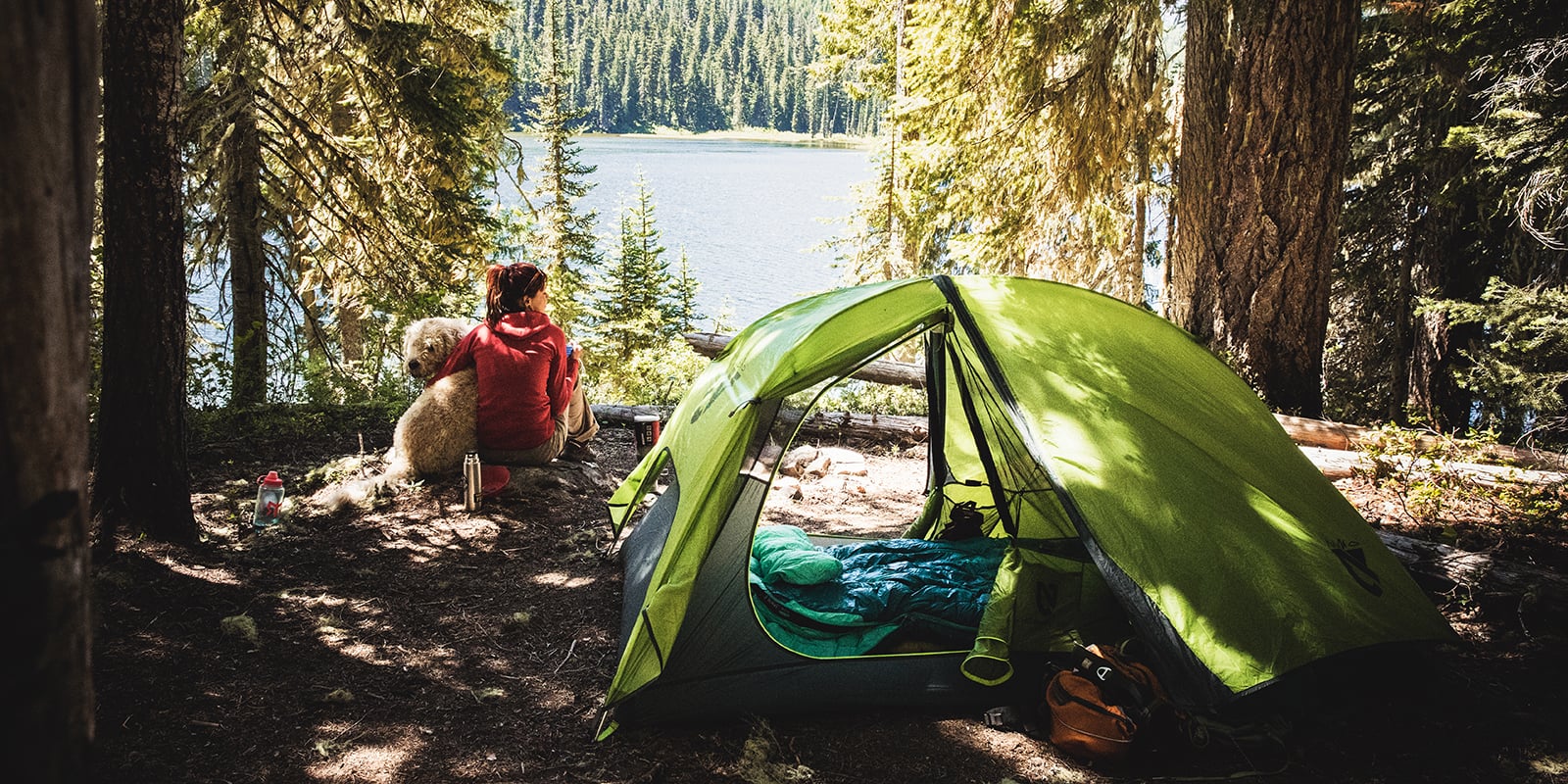
New to backpacking? Get up to speed quickly by following Leave No Trace principles and the campsite-selection tips provided here.
Your goal: Be responsible, and treat the backcountry gently. You appreciate arriving at a clean campsite in a wild, beautiful setting, right? Please do your part to make sure those coming after you will enjoy the same experience.
Spring Through Fall
- Know in advance where campsites can be found along the trail. Consult a guidebook or online resource, then discuss your options with a ranger when you pick up your backcountry permit. (In some heavily visited areas, you may asked to pre-select a specific site.)
- Some popular areas may be closed to camping due to heavy use. Know the local rules and please abide by them.
- Advance reservations can sometimes be made for popular hiking destinations. Consult with the ranger office that oversees the area. If that's not possible, obtain your permit as early as possible on the day of your departure (or the day before—rules vary at different wilderness areas).
- Schedule your day so you arrive at your chosen campsite at least 2 hours before sunset. You don't want to race to finish last-minute chores in twilight.
- Seek out previously impacted areas. These are usually flat, shaded spots close to a water source.
- Consider others when selecting your site. Don't crowd other campers unless positively no other choice exists. Also: Don't plunk down your tent in a spot that spoils a view that other people came to see. When you enter the wilderness, blend in, don't barge in.
- What's the most important consideration when selecting a campsite? Views are nice, but proximity to water is usually factor No. 1. You will need water for cooking, cleanup and filtering for your next day's drinking supply.
- You want to be close to water, but not right at water's edge. Choose a spot at least 200 feet away from water and the trail. You want to 1) stay out of sight (if possible) of other hikers and 2) give wildlife an unobstructed path to water.
- One downside of camping near a lake or slow-moving water: bugs. If mosquitoes are a problem, try to select a site where a breeze is stirring.
- If your campsite will be a basecamp for day trips, choose a site that offers ample shade during the day. A tent's nylon canopy deteriorates when left in direct sunlight for prolonged periods.
- Many people like to point the head-end of their tents toward the east to catch the sun's early morning rays. It's not essential, but it may help nudge you out of the sack in the morning.
- Anticipate the wind. If it's gusting, try to select a campsite where boulders or trees provide a windbreak.
- Be mindful of low spots. If you are camping along a river or within narrow canyons, seek higher ground when making camp in case bad weather moves in overnight. Low spots are chillier and tend to collect water.
- If you're camping on the beach, choose a spot beyond the most obvious tide line.
- Don't pitch your tent in a plant-filled meadow, on a lakeshore or in some other pristine, untrampled spot. You may cause damage to the scenery that will take years to reverse. If you are off-trail and must camp in a rarely traveled area, camp on smooth rock or bare ground to minimize your impact.
Winter
- Camp either on snow or on bare ground that supports little or no plant growth. Camping on snow reduces your environmental impact to nearly zero—very appealing. Just avoid areas with animal tracks to avoid disrupting wildlife.
- Camp higher rather than lower. Cold air tends to collect in valleys.
- Calculate where the sun might arrive first in the morning. Position your tent where it will receive full-throttle sunshine first thing.
- Consider the wind. Examine the surface of the snow: Does it have a frosty, brittle texture while other spots in the area are soft? This indicates harsh wind patterns. It's best to look elsewhere for a site.
- Scan the area for signs of avalanche activity. Can you spot a section of trees that was mowed down by a past avalanche? Any avalanche debris in the area below you? See any snowy basins or steeply pitched couloirs looming high above you? If so, move to a less-threatening area.
Year-Round
- Keep your site clean. This should be obvious, but some people ...