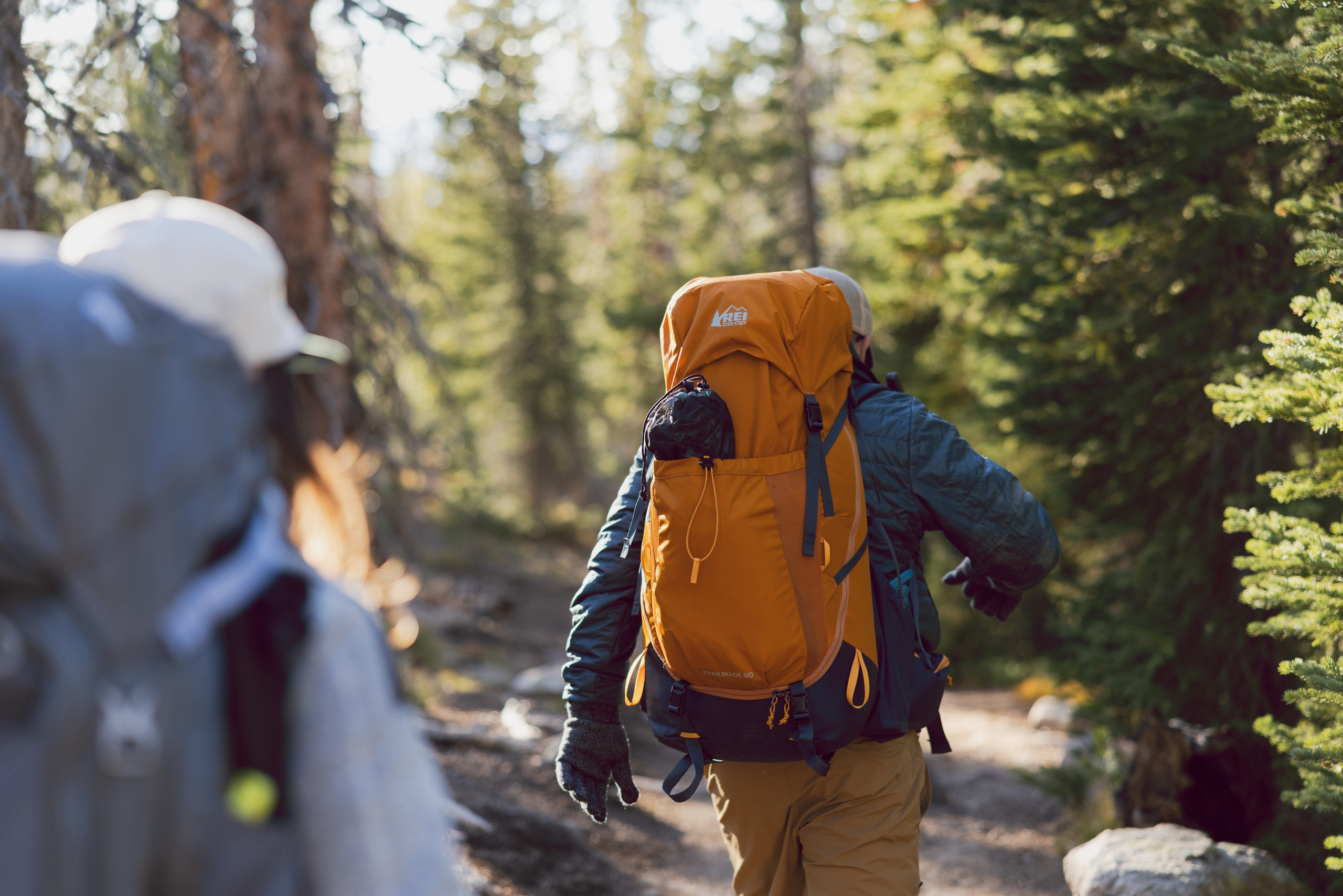
The weather's good and you're itching to get into the backcountry. Whether you want to backpack for a night or a week, this article will set you on the right path.
If this is your first time out, see our article on Backpacking for Beginners for all the basics you'll need to know. If you're planning a thru-hike, read our article about thru-hiking.
Here, we'll talk about the deeper details of how to plan a backpacking trip, including:
- Narrowing your trip choices: Understanding the key parameters of your trip will set you up for success from the get-go.
- Choosing your specific destination: Learn the pros and cons of the various resources that can help you pinpoint your specific destination.
- Route details: Knowing how many miles to go before you sleep, where you'll get your water, and other crucial details are important to figure out before you even set foot on the trail.
- Gear and supplies: Do you need permits? What are the expected trail conditions? Will there be bothersome critters or insects? How much food will you need? These are the planning questions that will determine how you pack.
- Final preparations: Before you head out the door, there are a few last-minute pieces of business to take care of.
Narrowing Your Trip Choices
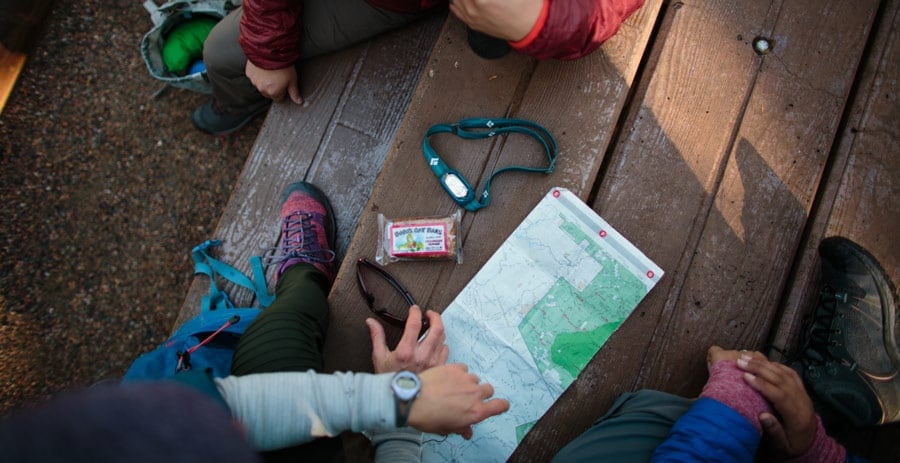
First you need to decide on your trip parameters; this will help you narrow down your options in order to choose your specific destination.
Time vs. distance: Your choice of backpacking destination will largely be limited by these two primary factors:
- How much time you have: If you're limited by time, you'll need to know how many miles you want to tackle each day and ensure that the route you choose is within your time constraints. Most people will plan to hike 3-10 miles per day, depending on what shape you're in and how much elevation gain there is.
- How far you want to go: If you're choosing a destination with a fixed length, you'll still decide how many miles you want to hike each day, but this will determine how many days you'll be on the trail.
Region and aesthetics: If you only have a weekend, pick a place close to home so you can spend more time on the trail than on the road. Or you may decide that you're looking for a specific environment or location, which may be worth your travel time. Desert or forest? Craggy peaks or lush waterfalls? These details will inform the logistics of your trip.
Group size: If you're solo backpacking, you have more leeway on your hiking speed and where to stop for the night; if you're with others you'll need to accommodate the pace of the slowest member of your group. That said, with others, you can lower your pack weight by sharing a tent, stove, food, etc. Also keep in mind that some trails can't accommodate the tent space requirements for larger groups.
Preparation time: If you're headed out next week, your destination may be different than if your trip is three months away. Are you in good enough shape to do a difficult route with significant elevation gain on the spur of the moment? (If you're not, see our article on how to train for a backpacking trip.)
Base camping: You might also decide to hike in and set up a base camp from which to do day hikes or summit ascents. If you're with others, consider splitting the extra weight of a larger, more comfortable tent (one person can carry the fly and footprint, one the tent body, one the poles). Bring a lightweight ascent pack if your big pack doesn't cinch down enough to work as a daypack.
Time of year and weather: Some trails won't be accessible in early spring because they're covered in snow.
Shuttles: If you're hiking a point-to-point trail, you have some decisions to make: shuttle two cars; secure a bicycle at the end point so you can ride it back to the car parked at your starting point (only certain trails will accommodate this solution); hitchhike back to your car; or, pay for a local shuttle service, if one is available (or bribe one of your friends with a case of their favorite beverage.)
Backpacking Resources
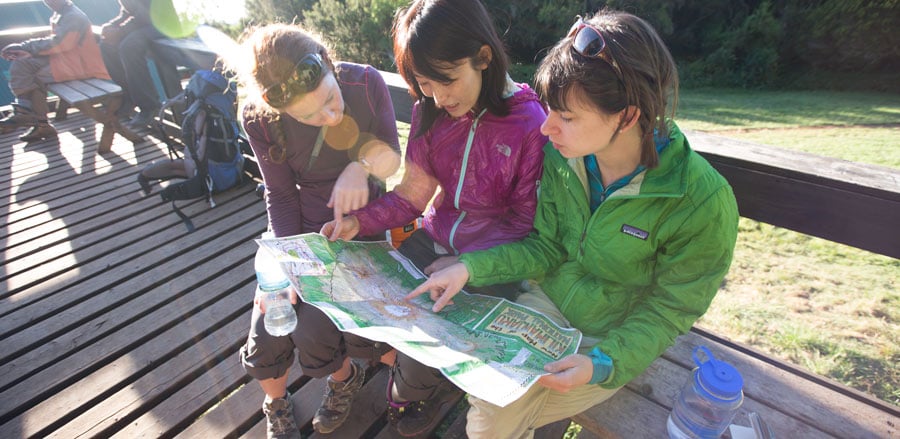
Once you have your general parameters, there are several ways to find routes that will meet your goals and will be appropriate for your skill level:
Guidebooks and websites are great resources because you can see all the stats you're likely to need: trail difficulty, distance, elevation gain, directions, water sources, trail features and such details as whether dogs are allowed. Websites may also showcase recent trip reports that may give you a great sense of what the trip will really be like at the time you plan to hike it.
Word of mouth: If you're going with friends, or know folks who like to backpack, they may be able to suggest some great locations for you; just be sure they understand the parameters you've already narrowed down beforehand.
Talk to locals: You can also try contacting local hiking organizations or ranger districts in the area where you want to travel. The rangers will have the most up-to-date information about trail conditions and it's always a good idea to contact them before your trip, regardless.
Topo maps: If you know the region you want to visit and you're comfortable reading a topo map, you may be able to choose a route based on the details you'll be able to glean there. It's still probably a good idea to cross-reference your choice with others who have more current knowledge of the trail—maps can become out of date quickly.
Route Details
So, you've chosen your trail, now's the time when you really get to know it and make your day-to-day plan. Before your trip, get a detailed topo map of your route and study it. Look for the following so you won't have any unpleasant surprises on the trail:
Campsites: First, find out where the established campsites are. If it's too far from one camp to the next, figure out if there's another likely place you can stay. Knowing how to read a topo map will help, or you may get details from trip reports or the other backpacking resources noted above.
Water sources: Bringing along a water filter or purifier is essential, but they're useless if you don't know where your water is coming from. Are there reliable streams? A lake you're walking by? Or will you need to take a detour to reach your water source? If you're getting your water from snowfields, you'll need to factor in enough fuel to melt the snow. If your water will be murky, you may need to bring a specific type of filter or prefilter.
Terrain: Hopefully, you have a general idea of what you're getting yourself into before you go, but your map (or GPS device) will show you exactly where your elevation gains will happen, where you'll get your rest breaks with views, etc. Trip reports will tell you if the road is out, if there are sections of the trail that are washed out or re-routed, and such things to watch out for as snow on the ground, lots of mud or perhaps even the presence of poisonous plants.
Gear and Supplies
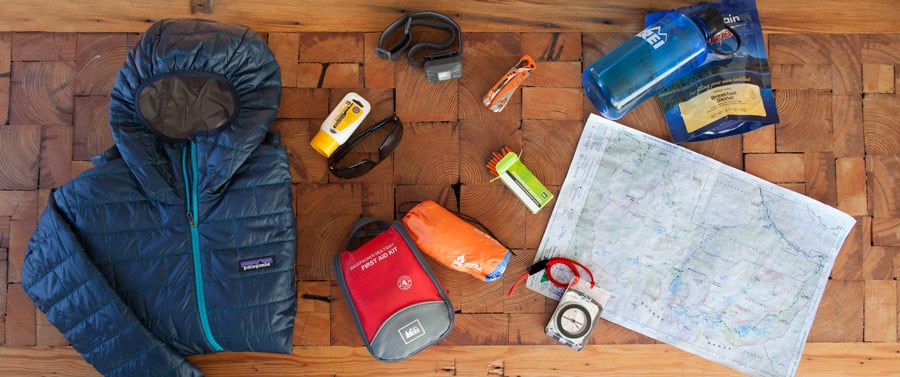
Now that you know the details of your destination, you're ready to ensure you'll have everything you need for the trip. Here are things to keep in mind:
Permits and passes: Federal lands vary in their permit requirements for backcountry camping. Some wilderness areas allow entry only through an annual lottery system.
Animals: The most common animals you'll need to deal with when backpacking are scavengers like raccoons, mice and other rodents. In some areas, you may need to research what to do if you encounter a cougar or venomous snake. Will you be backpacking in bear habitat? Find out what to do if you encounter grizzly or black bears and what food storage requirements, such as bear canisters, are in effect. Learn more in our articles on Backpacking in Bear Country, and Food Handling and Storage for Campers.
Insects: Find out if biting insects are a problem where you're going. Insect-repellent clothing, a sleeping net for a hammock, or a mosquito net for meal times can be invaluable for comfort. Some backpackers wear rain gear to prevent mosquito bites.
Food: Plan to carry 1.5 to 2.5 pounds of dry food (or 2,500 to 4,500 calories) per person per day. Elevation gain, speed and distance traveled will affect how often you eat and how much. Some experts recommend overpacking food at first, if you're new to backpacking. Do an overnight test run and figure out your personal amount. Always carry some extra food in case of emergency. Learn more meal planning tips for backpacking.
Fuel: What you eat will determine how much stove fuel you need to bring. Will you drink coffee every morning or grab a breakfast bar and go? Do you need to melt snow or make hot water bottles for your sleeping bag? Will you be making freeze-dried meals or cooking regular food? Again, practice ahead of time so you learn how much fuel you use doing all these activities and you can estimate how much you need to bring. Also, remember that you can't bring fuel on an airplane. If you're flying, you'll need to plan on buying it at your destination.
Check gear condition: Make sure all your equipment is in good shape with no holes or malfunctions: backpacking tent, pack, sleeping bag, sleeping pad, stove, headlamp, boots or shoes, rainwear, etc. Make sure your shoes fit well and are comfortable. If you can, do an overnight as a trial run or refresher for a longer backpacking trip.
Shared gear: Going with others? Decide who's bringing what to avoid duplication or missing items. Common shared gear includes a stove, tent and water filter.
Checklist: We recommend you print out this comprehensive backpacking checklist and keep it with your backpacking gear. Lay out all the gear you plan to bring on the floor at home. This makes it easier to see what's missing and to cull items you don't really need so you can save weight. Be sure to actually check off items on the list. Also, ask yourself, does this trip require something you don't have.
Final Preparation
Right before you leave for your trip, do the following:
Pack your backpack: Once you put everything in your backpack and hoist it for the first time, you might decide you don't need that extra can of chili after all. See our articles on How to Pack a Backpack for tips on packing efficiently and Ultralight Backpacking Basics for tips on lightening your load.
Check the weather: Either plan accordingly based on what you learn, or consider postponing or canceling the trip if you need to.
Share your itinerary: Always leave your detailed itinerary with someone you trust. Write down who to contact and when, if you haven't returned at your expected time. Leave a piece of paper with contact information under the front seat of your car, too.