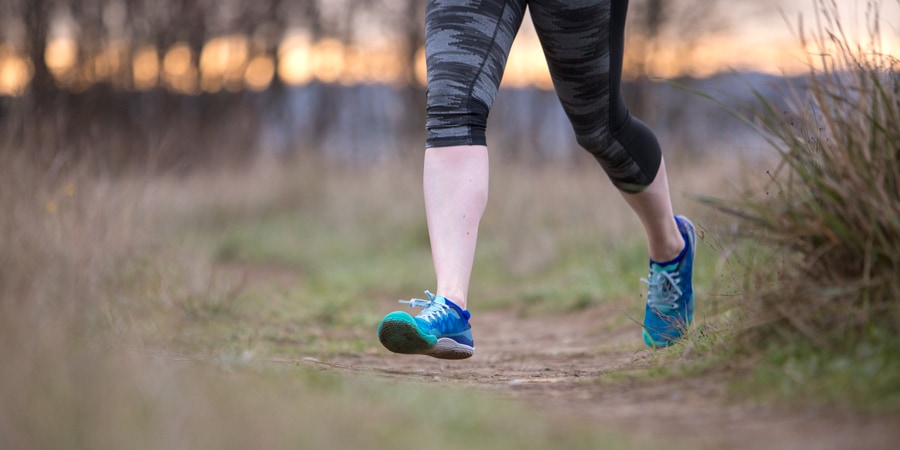
How much cushioning belongs in your running shoes is largely a matter of personal preference. Evidence over the years has supported the benefits of running with more, or less, or no cushioning at all—but there's no objectively superior option. Proponents of amply cushioned shoes are drawn to their comfort and shock-absorption, while minimalist running-shoe advocates appreciate the benefits of a more natural running gait and improved terrain feel.
In this article, we'll help you learn about minimalist shoes, including "barefoot" running shoes. We'll also offer tips on how to transition from a more cushioned shoe to a minimally cushioned shoe in your training.
What Are Minimalist Running Shoes?
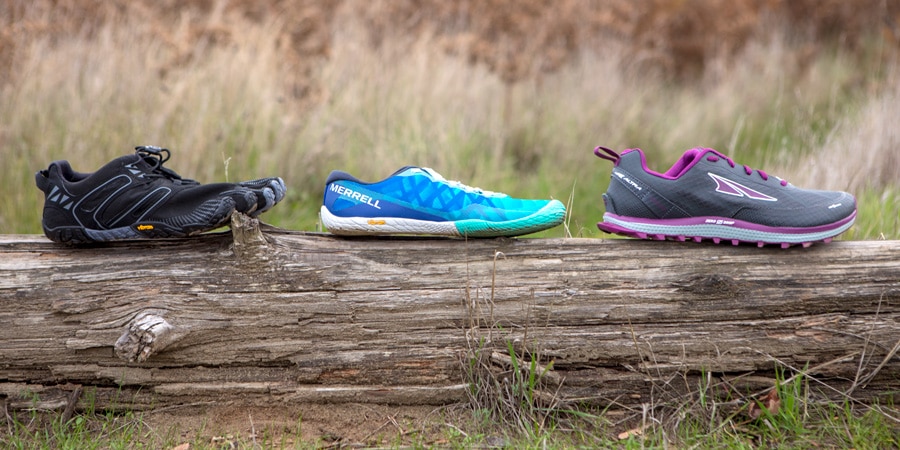
Minimalist running shoes are loosely defined as shoes that, compared to "traditional" running shoes, more closely mimic the way we naturally run when barefoot while still providing some protection from hazards on the ground. They're characterized by minimal amounts of cushioning in the midsoles and, in particular, by a lack of beefy heel cushioning.
Traditional running shoes often feature a "heel-to-toe drop" of 10-12 millimeters (meaning they have an extra 10-12 millimeters cushioning underneath the heels relative to the toes). By contrast, minimalist shoes usually have less than an 8-millimeter drop. They might also have no drop at all ("zero-drop" or "balanced cushion" shoes), meaning your heel and forefoot are at the same level as they are when you're barefoot.
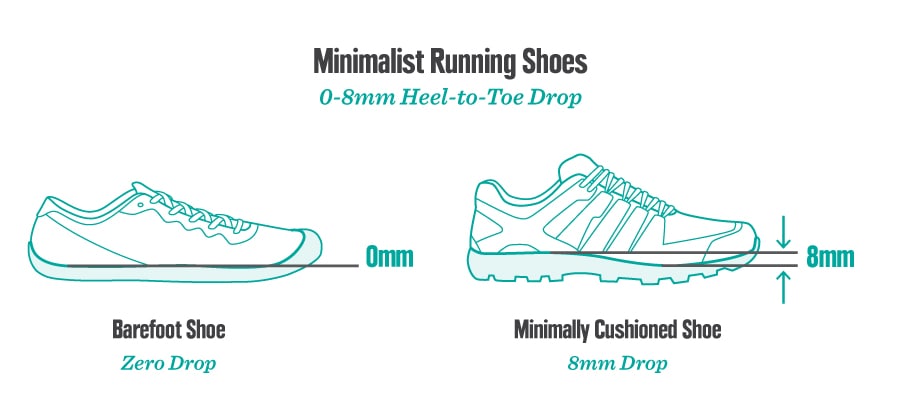
The above info is true for most barefoot and minimally cushioned shoes, but you will also find a few outliers in those categories that have a heel drop that falls outside these ranges. Note, too, that heel drop and the overall amount of cushioning in a shoe are independent of each other. It is possible, for example, to find ultra-cushioned shoes—sometimes called "maximalist" shoes—that have a zero heel-to-toe drop. Learn more about shoes at the other end of the cushioning spectrum in What You Need to Know About Maximalist Running Shoes.
Benefits of Running in Minimalist Shoes
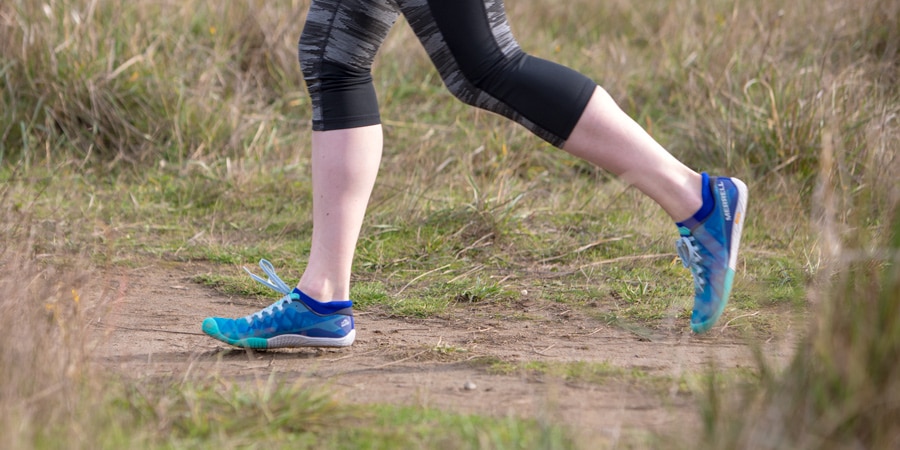
- Minimalist shoes encourage a low-impact gait: A lower heel-to-toe drop naturally encourages you to land more on your midfoot or forefoot rather than your heel. Minimalist shoes won't automatically alter your gait, but they can be a good teaching tool if you want to learn how to run with a midfoot or forefoot strike. (No study has definitively proven that heel striking causes more injuries than forefoot or midfoot striking, but heel striking is generally considered a higher-impact stride.)
- Minimalist shoes help you feel the ground: Minimalist shoes' thin cushioning improves your connection to the terrain beneath your feet. Being more in touch with the ground improves "proprioception," your body's ability to fine-tune its running mechanics.
- Minimalist shoes are lighter: Minimalist shoes often weigh less than traditional running shoes by several ounces. This means they require slightly less muscle power in your legs to lift your feet off the ground with each stride. Over many miles, these weight savings can add up—as long as you don't mind the trade-off of less cushioning.
Other Medical Considerations with Minimalist Shoes
While anyone can try running in barefoot or in minimalist running shoes, not everyone will be able to do so successfully. Compared to a heel-striking gait, the forefoot or midfoot striking that most minimalist shoes encourage puts more strain on the Achilles tendon, which can lead to injury in some runners. In addition, if you have plantar fasciitis, tendinitis, flat feet, bunions or hammer toes, minimalist shoes might not be right for you.
Consult your doctor or podiatrist before deciding whether switching to minimalist shoes and potentially altering your running gait will be beneficial or harmful for you.
How to Choose Minimalist Running Shoes
If your doctor has given you the OK to try minimalist shoes, you have a few key considerations:
- What surface will you run on most of the time? Road-running and trail-running shoes differ in construction, as well as support and stability control.
- How much cushion do you want? Once you've decided to go minimalist, the choice is between barefoot and minimal cushioning.
- Does the shoe fit? Your shoe should fit well from the start with no breaking-in period.
What Surface Will You Run on Most of the Time?
Trail runners offer better traction on a variety of terrain and more protection against rock impacts and abrasion. Road-running shoes, in contrast, offer more stability control options. To learn more each category, read How to Choose Trail-Running Shoes and How to Choose Running Shoes.
How Much Cushion Do You Want?
Running shoes are broadly classified into four categories of cushioning: Barefoot, Minimal, Moderate and Maximum. The term "minimalist shoes" applies only to the first two categories, so your first decision is whether you want barefoot or minimal cushioning. The choice is largely determined by how much cushioning you're willing to forgo.
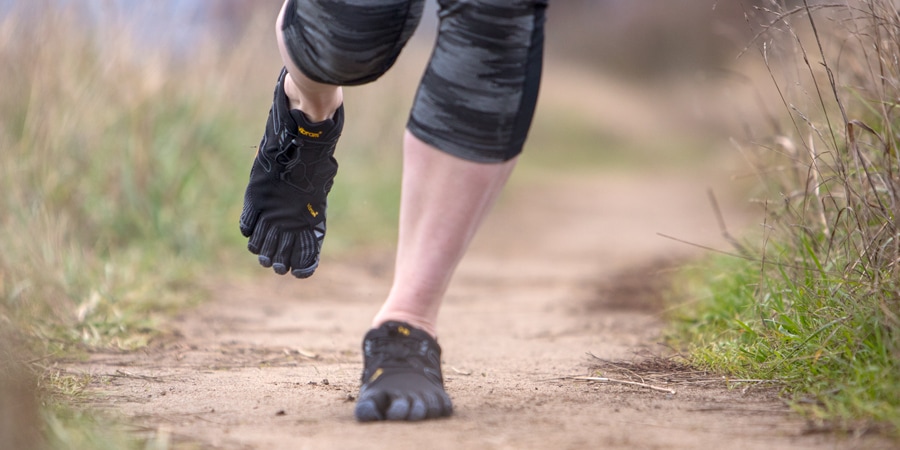
Barefoot running shoes: The notion of "barefoot" shoes is an oxymoron, of course, since true barefoot running is defined by the absence of shoes. But this term is used to describe shoes that offer the closest feel to being barefoot. They may either come with separate toe pockets to let each toe flex individually, or they may fit more like slippers.
Barefoot shoes, which are almost always zero-drop shoes as well, have a flexible, extremely thin layer (3-10 millimeters) of shoe between the bottom of your feet and the ground. They provide no arch support or stability elements. You can wear them with or without socks; toe socks are available for barefoot shoes with individual toe pockets.
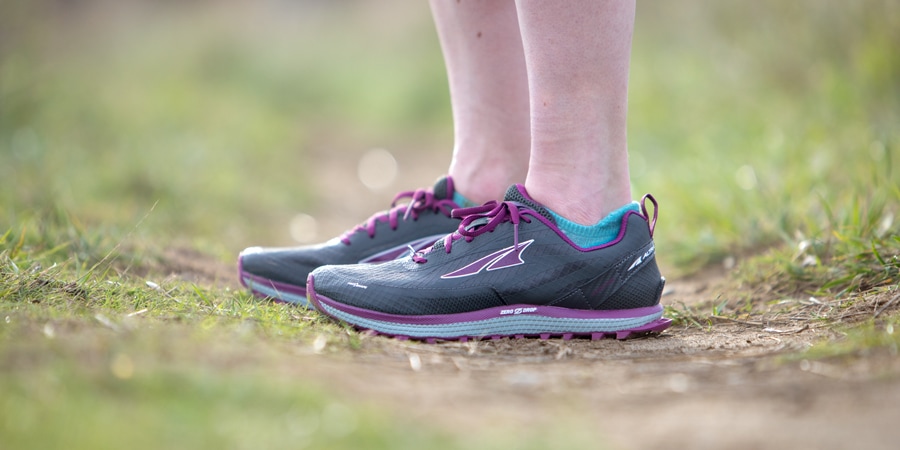
Minimally cushioned running shoes: These are a hybrid of barefoot shoes and traditional running shoes. They're nimble, lightweight and flexible, with little to no arch support, but contain more cushioning than barefoot shoes. They're an excellent way to ease into barefoot running, or to simply get a better feel for the terrain without forgoing all midsole padding.
Get a Fit Assessment
Once you've settled on the shoe you want, take the time to be sure it fits you well. Brands vary in sizing and how they fit, so it's important to get assessed by a fit expert. REI offers both online and an in-store options.
Connect with a Live Expert to Get Advice about Running-Shoe Fit and Choices
You can also try on shoes and get expert fit advice in REI stores. Call ahead and ask for details on the store's current COVID protocols.
Fit tips: The heels and toes of barefoot shoes should fit like a glove. (A snug fit is especially important in the toes of "five-finger" style barefoot shoes in order to prevent chafing.) Minimally cushioned shoes, in contrast, need to have enough width in the toe boxes (about a thumbnail's worth) to allow the feet to spread out naturally. For that same reason, also make sure you have a little extra length in minimally cushioned shoes.
How to Transition to Barefoot or Minimalist Running
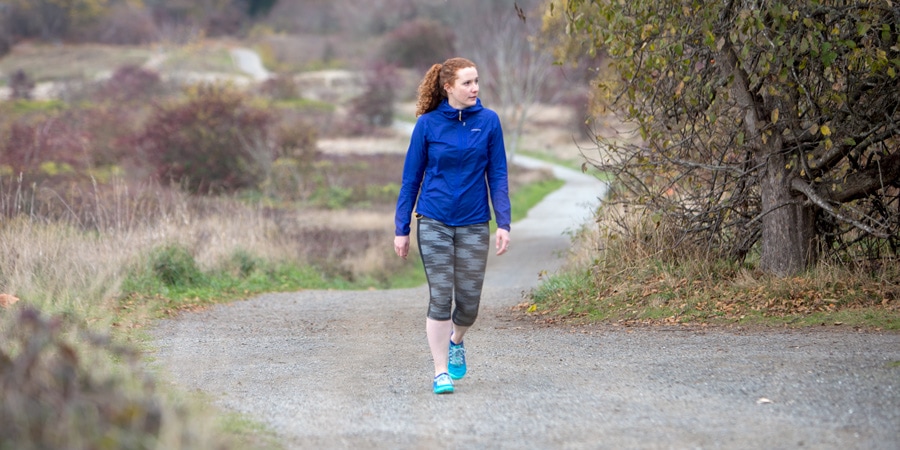
Many runners incorporate barefoot or minimalist running into their training—say, as a workout once or twice a week, or as a warmup drill before a run in more cushioned or supportive footwear. This can be a great way to reap some of the benefits—an opportunity to strengthen your arches and improve your running form—without giving up your traditional running shoes.
The key to the barefoot/minimalist transition is to start gradually. For example, if you've always run in stability or motion-control shoes, first try switching to neutral shoes for a while before going more minimalist. Or, if you've already been running in neutral shoes and want to try running barefoot, let your feet adapt gradually by first transitioning to minimalist shoes.
1. First, acclimate your feet.
- Practice walking barefoot or in your new minimalist shoes before you attempt to run.
- Gently stretch your calf and arch muscles.
- If you are going truly barefoot (no shoes at all), start by just standing on gravel. You need to build up toughness on the soles of your feet.
- Run a short distance on a soft surface such as wet sand, grass or a rubberized track.
2. Practice your running mechanics.
- Practice landing on your midfoot versus your heel. Don't be afraid to let the heel contact the ground, but concentrate on striking with the midfoot first.
- Don't overstride. Use short strides and a quick cadence with your midfoot strike. Run with an app that measures stride cadence and aim for 180 strides per minute; it is very difficult to heel strike at that stride rate.
- Your landings should feel gentle, relaxed and quiet. Avoid letting the soles of your feet slap against the ground.
3. Gradually increase distance.
- Start slowly and don't do too much too soon.
- Try using the 10 percent rule—don't increase your weekly mileage (in barefoot/minimalist footwear) by more than 10 percent each week.
4. Use caution.
- Switching to shoes with a smaller heel-to-toe drop measurement makes your Achilles tendons work harder. Be extra careful with easing into longer miles in zero-drop shoes.
- Listen to your body. If you feel any pain, stop.