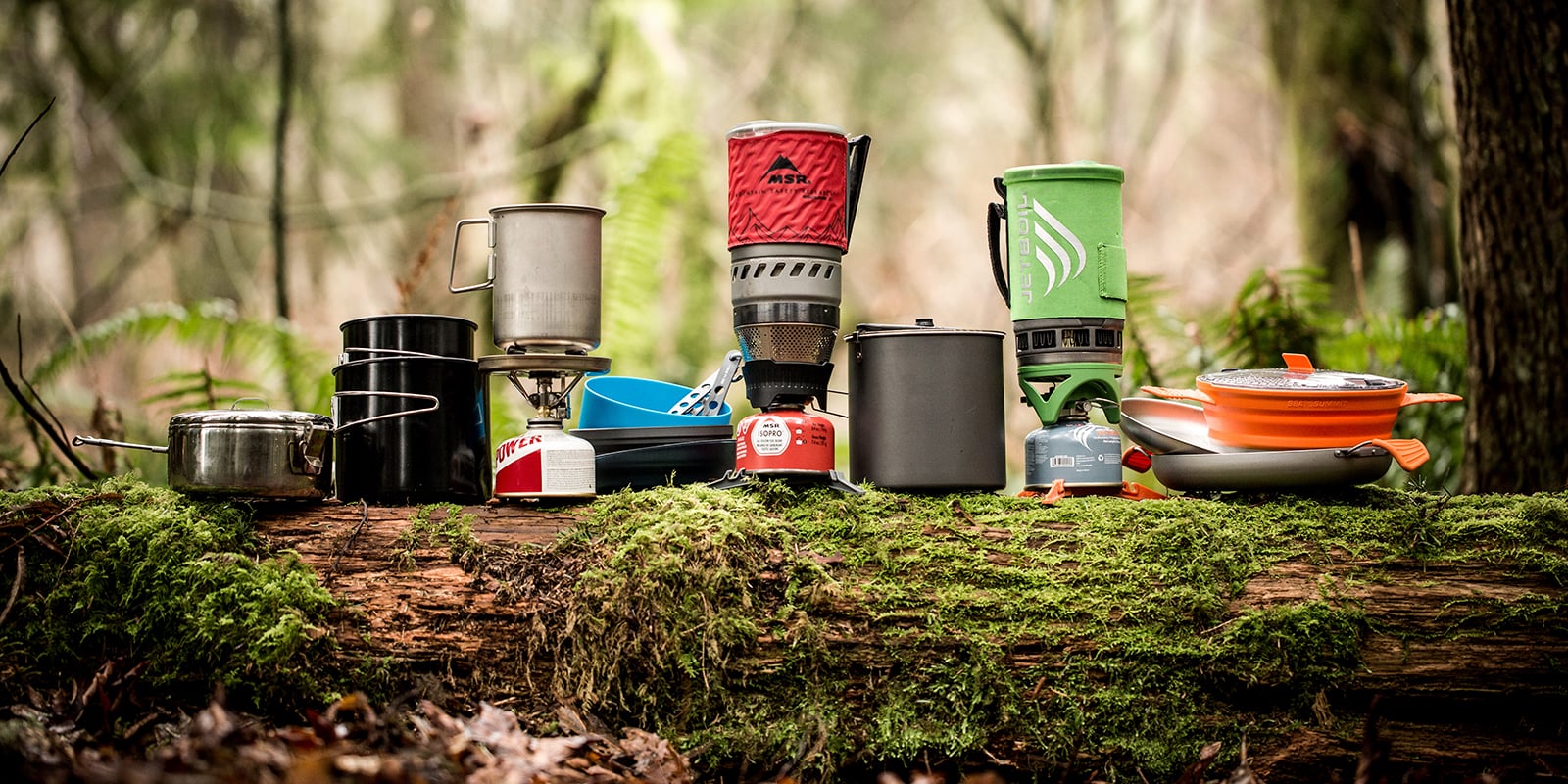
When you're backpacking, do you look forward to a cooked meal at night and hot coffee in the morning? If so, you'll want to bring a stove. But what kind of stove to bring depends on many factors: How light do you want it to be? How versatile? Do you need a stove that simply boils quickly or do you want one that simmers? How many people are you cooking for? Are you going to be traveling internationally and what type of fuel will be available to you?
When deciding how to choose the best backpacking stove for you, the following decision points will help you choose:
- Stove type: Backpacking stoves are loosely categorized by the type of fuel they use and how the fuel is stored.
- Stove specs and features: Burn time, average boil time, weight and convenience features may help you narrow your choices.
- Stove usage tips: Understanding some of the nuances of how a stove works will ensure that you're making an informed decision and also getting the best out of your purchase when you're out in the field.
Types of Backpacking Stoves
There are three main categories of backpacking stoves:
- Canister stoves: These easy-to-use, low-maintenance stoves typically screw onto the threaded tops of self-sealing fuel canisters that contain two pre-pressurized gases: isobutane and propane.
- Liquid fuel stoves: These versatile stoves connect to refillable fuel bottles. While most liquid-fuel stoves run on white gas, you do have other options available, which can be a particular benefit if you're traveling internationally.
- Alternative-fuel stoves: This growing category includes stoves that run on fuel pellets or wood.
If you already have some thoughts about what you want from a backpacking stove, this quick chart may help; but keep in mind, one size may not fit all. For example, you may want one type of stove for fast-and-light backpacking in summer, and another type for a group trip in winter. For more details about your options, read on below. For a few of our favorites, read Best Backpacking Stoves: Staff Picks.
Quick Guide to Backpacking Stoves
Good for: | Canister | Integrated Canister | Remote Canister | Liquid Fuel | Wood-burning | Alcohol/Tablet |
|---|---|---|---|---|---|---|
Cold weather / high elevation | (some) | (some) | no | yes | no | no |
Larger groups | no | yes | yes | yes | no | no |
Boiling water mainly | no | yes | no | yes | yes | yes |
Simmering | yes | no | yes | yes | no | no |
Ultralight hiking | yes | no | yes | no | yes | yes |
International travel | no | no | no | (multi-fuel) | no | no |
Ease of use | yes | yes | yes | no | no | yes |
Video: Canister vs. Liquid Fuel Stoves
Canister Stoves
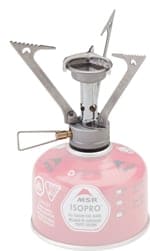
Canister stoves are easy to use and low-maintenance.They screw onto the threaded tops of closed fuel canisters that contain two pre-pressurized gases: isobutane and propane. Some of these stoves are incredibly small, fold up compactly and weigh only a few ounces. They may be usable in some international destinations that cater to American trekkers.
Pros:
- They're small and lightweight.
- They're quick to light. No priming is necessary before lighting a canister stove. Simply turn the valve and light with a match, lighter or piezo-igniter.
- The flame adjusts easily and simmers well (most models).
- The canister self-seals when you unscrew the stove, so there's no worry about spills and leaks.
- Some canister stoves have a built-in pressure regulator to provide consistent heat output throughout the life of the canister. This improves cold weather and high-elevation performance, too.
Cons:
- Their arms may not be long enough to hold large pots securely.
- It's tough to know how much gas is left inside the closed canister, so you may want to carry an extra to be sure you don't run out. (A small 4-ounce canister makes a good backup.)
- A windscreen should not be used with an on-canister stove because it can trap excessive heat and lead to fuel exploding.
- In cold weather, canisters can depressurize and produce a weak flame (unless the stove has a pressure regulator)
- Compared to liquid-fuel stoves, the cost of fuel is greater.
- Canister waste: Empty canisters need to be disposed of properly; you'll want to research recycling options near you.
Within the category of canister stoves are additional types:
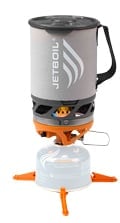
Integrated canister systems: These tall-profile cooking systems feature a burner that screws onto the fuel canister and pairs seamlessly with a twist-on, insulated cooking pot and a lid with drain holes and/or a pour/sip hole. They can be used with accessories such as a French press for coffee making. A 4-ounce fuel canister (sold separately) can nest inside.
In general, they're designed to boil water quickly, not cook and simmer foods (though some models let you use a different pot from the one that comes with the set, and newer versions may be shorter and wider and easier to eat from). They boil water fast and efficiently, in part thanks to a built-in windscreen. Some of these stoves also have a built-in pressure regulator that allows for consistent performance in low temperatures and at higher elevations. However, compared to standard canister stoves, the integrated system is heavier and prone to tip-overs.
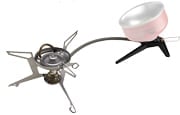
Remote canister stoves: This type of stove sits on its own base and has a fuel hose that connects it to the canister. They typically pack down small and are lightweight, though you'll add a few more ounces and bulk compared to a standard canister stove.
On some models the canister can be used in an inverted position to improve cold-weather performance. These stoves may have wider support arms for large-pot stability. A windscreen may be used with off-canister stoves.
Video: How to Measure Canister Fuel
Liquid-fuel Stoves
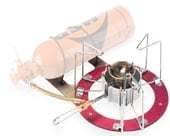
All liquid-fuel stoves run on white gas, which is highly refined to have few or no impurities. It burns hot and clean, performs well in below-freezing temperatures and, compared to the per-ounce cost of canister fuel, is much less expensive.
Some multi-fuel stoves can also run on some or all of the following: unleaded auto gasoline, kerosene, jet fuel or diesel.
Fuel versatility makes multi-fuel stoves a great choice for international travelers who face limited fuel choices outside the U.S. (Note: Except for emergencies, REI doesn't recommend the use of unleaded auto gas from a gas station pump because of gasoline additives that can damage your stove.)
There are two main downsides to liquid-fuel stoves:
Most require priming, which involves igniting a few drips of fuel in a cup below the burner, creating a small flame that preheats the fuel line. This enables the stove to convert liquid fuel into a vapor. You will need to pump your fuel bottle, too, to increase pressure.
They also require periodic maintenance, such as cleaning the fuel hose or replacing O-rings (in the stove and on fuel bottles). There may be many little parts and pieces to keep track of.
Pros:
- Liquid-fuel stoves tend to be low-profile and offer greater stability on uneven ground.
- It's easy to tell how much fuel you have left by peering into the fuel bottle.
- While you do have to buy a fuel bottle, there's no canister to discard.
- These stoves perform better than other options at high elevations and in cold temperatures.
Cons:
- Priming and maintenance are required.
- Fuel spills are possible.
- They tend to be heavier than canister stoves.
- Multi-fuel stoves can cost a bit more.
- Fuels other than white gas have more impurities that may, over time, clog stove parts such as the fuel tube.
Video: Lighting a Liquid Fuel Stove
Alternative-fuel Stoves
These stoves can be good choices for long-distance backpacking and also for home emergency kits. Some are ultralight; others are a bit heavier. There are a few different kinds:
Wood-burning Stoves
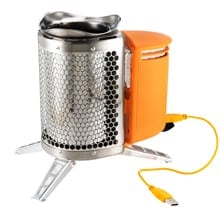
Because these burn twigs and leaves you gather in the backcountry, you carry no fuel, a nice option for longer or lighter trips.
Pros:
- These can be simple and lightweight, such as a titanium base-and-windscreen/pot-support setup that folds flat.
- Some models can generate enough electricity while burning twigs to charge a mobile phone or other small gadget via a USB connection.
- Some models can be outfitted with an optional grill.
Cons:
- Finding dry fuel during wet weather can be challenging.
- Use may be prohibited during a burn ban or in some places at high elevation (for example, Yosemite prohibits twig-burning stoves above 9,600 feet).
Denatured Alcohol Stoves
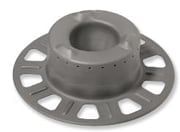
These stoves appeal most to ultralight backpackers because they weigh only an ounce or two. In addition, you only need to carry a bottle of alcohol sized to meet your trip needs.
Pros:
- Denatured alcohol stoves havefew parts that would require maintenance.
- Denatured alcohol is inexpensive and relatively easy to find across the U.S.
- The fuel burns silently.
Cons:
- Alcohol does not burn as hot as canister fuel or white gas, so it takes longer to boil water and requires more fuel.
- A windscreen is often a must.
- Denatured alcohol can be hard to find outside the U.S.
Solid-fuel Tablet Stoves
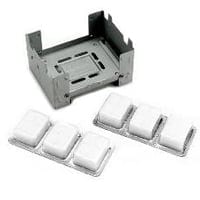
These are also a popular choice with ultralight backpackers. Some models are so small they fold up and fit in your pocket.
Pros:
- Inexpensive
- Low weight: a pocket-size model may weigh 3.25 ounces; a stove/pot combo, 7 ounces.
- Compact size
- Tablets light easily and may be extinguished and reused later.
Cons:
- They are slow to bring water to a boil
- Tablets may have an odor
- Tablets may leave a greasy residue on the pot's underside.
Backpacking Stove Specs and Features
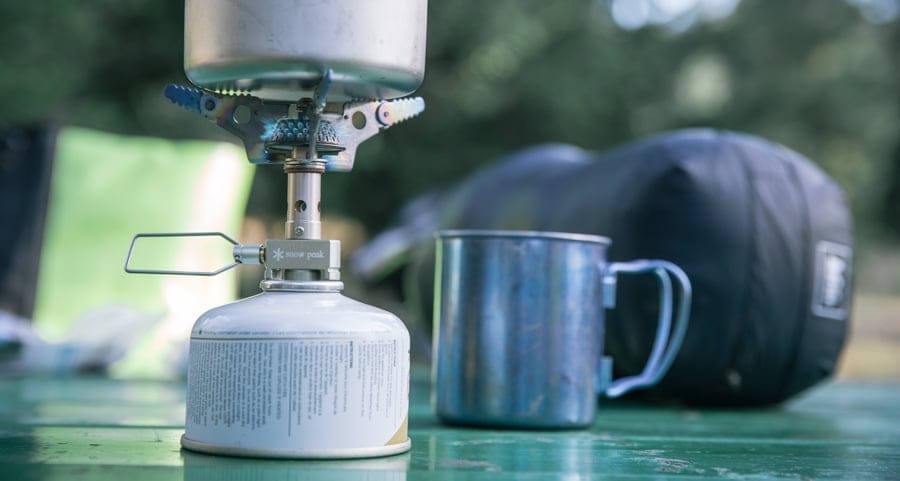
Below are a few of the other key decision points that will factor into your choice for the best backpacking stove for you.
Stove weight: If you're counting ounces on a long, solo thru-hike, your choice will differ from someone who mainly enjoys weekend backpacking with friends.
Burn time: When looking at your choices, you can compare how long a stove burns using a given amount of fuel.
Average boil time: This spec can help you choose between models, especially if fuel-efficiency is a priority for you. Some general boiling and simmering guidance:
- Integrated canister systems boil water fastest while also using minimal fuel. Simmering may be possible, but it's an afterthought in their designs.
- Canister stoves boil water quickly, and some models are good to excellent at simmering—great for camp gourmets.
- Liquid-fuel stoves boil water very quickly, even in cold weather. Simmering ability varies widely by model.
- Alternate-fuel stoves are intended primarily for boiling, though they are slower, sometimes by minutes.
Piezo-igniter: This is a push-button spark producer found on some canister-fuel stoves. It's a handy feature, especially if your matches are lost or wet.
Stabilizers: Sometimes sold separately, stabilizers can be attached to the bottom of fuel canisters to reduce the chance of upright models tipping over.
Stove Usage Tips
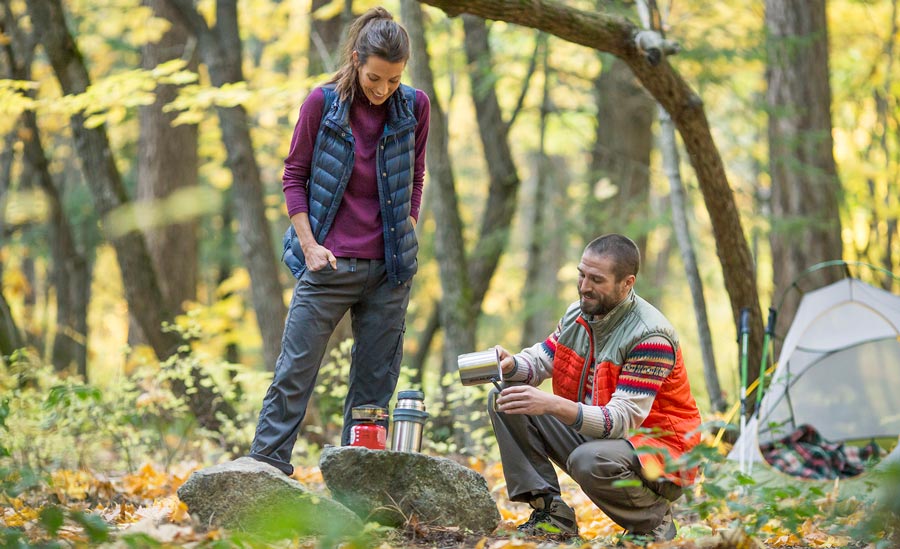
Usage tips for any backpacking stove:
- Do NOT cook inside tents or enclosed spaces. This can cause carbon monoxide poisoning and create a high fire risk.
- Check all fuel lines, valves and connections for leaks or damage before lighting your stove.
- Operate your stove on the most level surface possible.
- Bring a multi-tool with pliers in case you need to do any field repairs on your stove.
- If you're not counting ounces, an old car license plate makes a great base for a stove, especially on sand.
- If your stove comes with a piezo-igniter, it's still a good idea to always carry stormproof matches in case the piezo-igniter fails.
Usage tips for canister stoves
- New fuel canisters usually contain a small amount of air near the top; after this bleeds off, the fuel will flow and ignite. If the stove tips, a large yellow flame-up may occur.
- In cold temps, keep the canister warm by putting it in your sleeping bag at night or hiking with it in your duffel bag or jacket pocket. Warmth helps keep the pressure up.
- A stove with a pressure regulator will burn more efficiently at higher elevations so you won't waste fuel.
- When cooking on snow, use a piece of foam underneath the canister for insulation or you'll end up with a chunk of ice frozen to the bottom.
- Most canisters in the U.S. feature a Lindal valve with standardized threading. This allows fuel canisters to be interchangeable between brands. You'll notice, though, that manufacturers generally like to recommend using their own brand of fuel with their stoves.
- Recycling: Some places allow you to recycle your spent fuel canisters. (Previously, they were often considered hazardous waste.) Check with your local recycler to make sure they take them.
Usage tips for liquid-fuel stoves:
- If you can, use alcohol for priming. It helps to keep your stove soot-free.
- Don't fill a fuel tank to the brim. Leave room for the air you pump in to pressurize it. Also, fuel expands as it warms, so leaving an air space prevents excessive pressure buildup.
- Empty the fuel tank before storing your stove for several months or longer.
- Use a windscreen.
- Consider using a heat exchanger for cold weather or extended trips—this metal collar channels heat to the pot for faster boiling and saves fuel.
- Don't spill fuel on bare skin. In extreme cold, this can cause frostbite due to the rapid evaporation of fuel.
- White gas is known to degrade over time. If using aged white gas (not advised), use a filter to strain out any tiny sediment that might be lurking within and clog your stove. If older white gas shows a tint of color, that's often a sign it's past its prime.