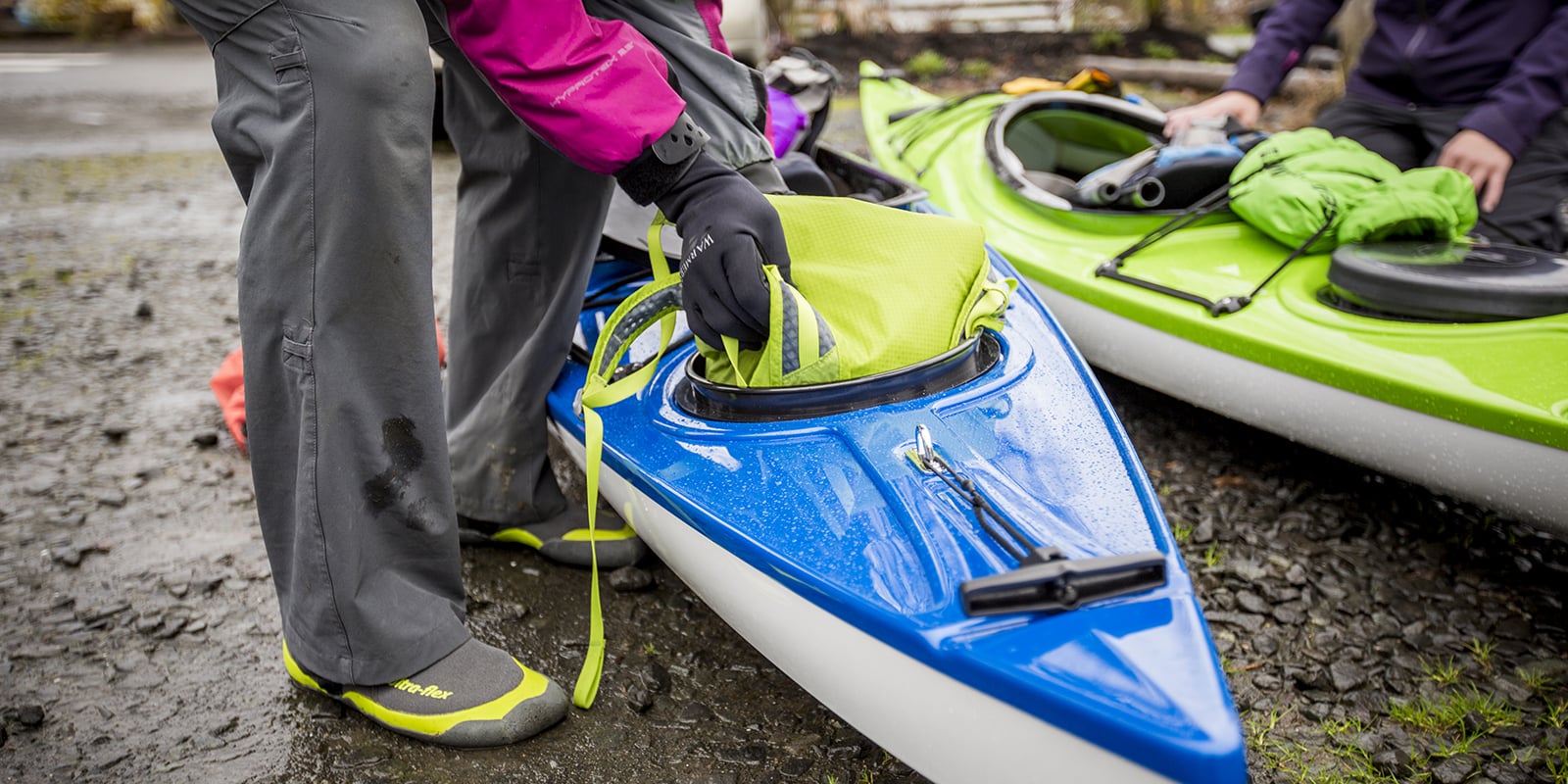
Once you've organized your gear and stored it in protective storage bags, the next step is to pack it correctly inside your boat. There's no single "right" way to pack a canoe or kayak. But there are a few important considerations that you should keep in mind:
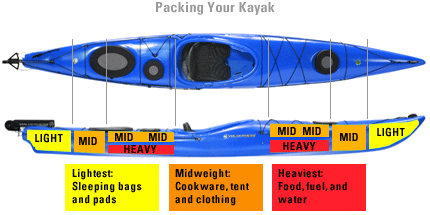
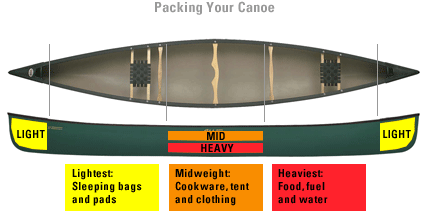
Weight Distribution
Stability
Remember to pack as much weight as you can low and along the center line of your boat. This will improve the overall stability of your craft.
Trim
"Trim" refers to the back-to-front, front-to-back tilt of your boat. A well-trimmed boat lies flat in the water from front to back.
The reason that trim is important is because canoes and kayaks tend to act like weather vanes in the water. When winds (or currents) start pushing, the end that's sticking out of the water often turns downwind or down current, making staying on course much more difficult. A well-trimmed boat will drift sideways to the wind or current, making it easier for you to stay on course.
Poor trim is often at the root of common paddling problems. If one paddler consistently out-powers the other, for example, or both paddlers have to paddle on the same side of the boat to stay on course, the trim may be to blame.
To ensure proper trim, pack while your boat is in the water whenever you can. When checking for correct trim, keep in mind that your own weight (and the weight of your paddling partner) will affect the tilt.
NOTE: There are situations in which adjusting the trim so that it's a little tilted can actually make paddling easier. When traveling downwind, for example, a boat that's slightly bow-light may catch some wind and travel more quickly. Until you have a few paddling trips under your belt, though, concentrate on keeping your boat as flat and level as possible in the water.
Access
As you store your gear and clothing in your boat, consider how likely it is that you'll need access to it during the day. Pack equipment that you'll need to get to (like your lunch or an extra clothing layer) near the top of your load, and less crucial gear (like your tent, which you probably won't need until nightfall) near the bottom.
Safety Concerns/Special Placements
First-aid kit
A first-aid kit needs to be close at hand. Store yours under your seat, or in a nearby seat or thwart pack.
Emergency paddles
Emergency paddles must be immediately accessible, yet secure enough that they aren't dislocated in rough conditions or capsizes. Most canoers store them flush against one of the gunwales on the side of their main gear load, shock-corded in place. Most kayakers store them in the deck rigging or inside the cockpit, flush against one side.
Signaling devices
Flares, whistles and other signaling devices should be carried on your person at all times. Most PFDs have small chest pockets that are perfect for the job.
Safety lines
Safety lines should be immediately accessible. Make sure these coiled ropes are secure so they can't come loose and entangle anyone during a capsize.
Navigation equipment
You may have to consult your map and compass a number of times during the day. Store them in a waterproof case, either tied/taped to a thwart, attached to a gunwale nearby, or stuffed in one of your paddling jacket pockets.
Incidentals
Keep a supply of water and/or your water filter nearby so you don't have to stop paddling every time you get thirsty. Store a light snack or lunch nearby as well. Keep your sunglasses handy, either in a pocket or around your neck on some kind of leash. Stash your camera and binoculars close at hand, too, so you're ready for action.
NOTE: Consider storing small items like the incidentals above in a seat or thwart pack along with your other day-use items, so they're easy to reach but aren't loose all over the bottom of your boat.
A Few Hints for Efficient Packing
- Make it as difficult as possible for water to get into your most important gear items. Wrap items like sleeping bags and stoves in extra plastic bags for additional protection, then bury them deep in reliable waterproof dry bags.
- Pack a full set of dry clothes and a pair of shoes in a separate, small dry bag (apart from your main clothing bag), so that should something happen to your main clothes bag(s), you'll still have access to warm, dry clothes.