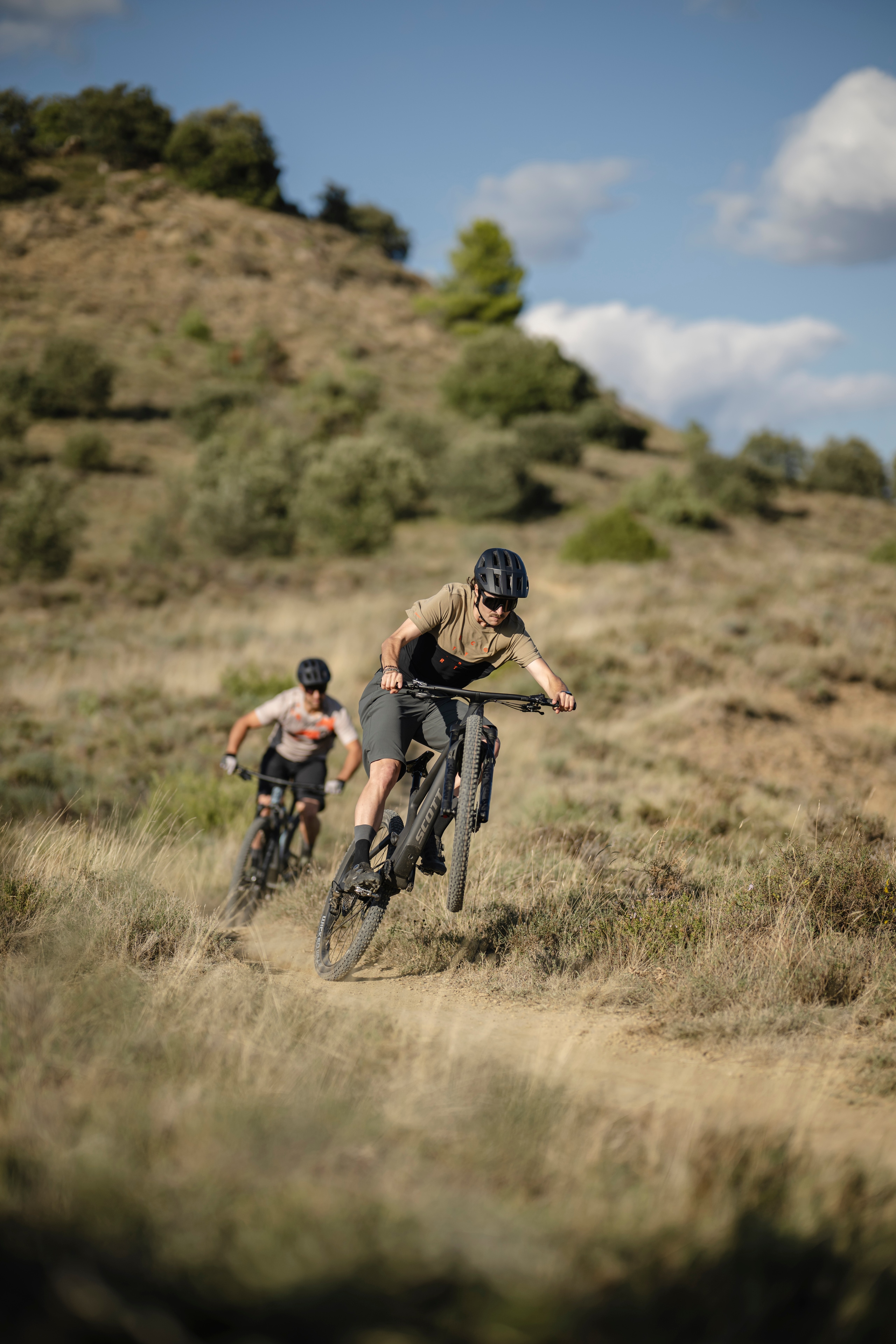
Buying a new mountain bike can feel both exciting and overwhelming, with so many high-quality options available today. Don't fret. Our up-to-date buying guide walks you through how to pick the best mountain bike for you. As you're deciding, consider a few key questions:
- What kind of trails do you want to ride? This will help you narrow down the type of mountain bike you may want.
- Hardtail or full-suspension? Full-suspension bikes have a suspension fork up front and a rear shock, while a hardtail has only a front suspension fork.
- What wheel size do you need? The right diameter wheel size for you largely depends on what you're looking to get from a mountain bike and the type of terrain you like to ride.
- Which frame material? Aluminum and carbon are the most commonly used materials.
- How is my mountain bike supposed to fit? Buying a bike that fits correctly is key to achieving your best riding.
Note: This article covers the basics of mountain bikes. For a more detailed discussion, talk with bike pros at your local REI store or other bike shop.
Types of Mountain Bikes
Different riding styles require different bike styles, so one key consideration is where and how you plan to ride. This will help determine the kind of mountain bike you should get. Just keep in mind that the lines between different bike subcategories can be blurry. And just because a bike is designed for a certain style of riding doesn't mean that is the only way it can be used.
Before we dive into the types of mountain bikes, here are two terms that you'll see a lot in the descriptions:
- Head-tube angle is the angle that the head tube forms with the ground. A steeper head-tube angle—a higher number—generally indicates that a bike will turn faster and climb better. A slacker angle—lower number—generally means a bike will be more stable going downhill at high speeds but will require a rider to be more attentive to steering while climbing.
- Travel: The travel in a bike's suspension is the amount of movement offered by the front fork or rear shock, usually measured in millimeters.
Trail Mountain Bikes
Trail bikes are the most common style of mountain bike and are suitable for most riders who do a bit of everything. Instead of being designed for any specific type of racing, trail bikes are optimized for all-around fun and versatility. With shocks that are on the shorter end of the travel spectrum (120-150mm), these bikes are a little livelier and quicker-handling, lighter, and pedal a bit more efficiently. Some bikes that have more travel (130-150mm) emphasize descending a bit more; the geometry of their frames, and a cushier suspension, enable them to tackle steep and challenging descents. In general, though, all trail bikes pedal well and can handle advanced mountain bike trails. They can be hardtail (front suspension) or full-suspension (read more on the difference below).
Typical specs of a trail bike: 120-150mm of suspension travel; 65-68° head-tube angle
Good for riders who want to: ride routes that are mostly singletrack, and that include climbs and descents. You primarily ride for recreation, and you don't plan to compete regularly. You want an all-around versatile mountain bike that you can take on many trails.
All-mountain Mountain Bikes
Think of all-mountain biking as trail biking, only burlier with bigger leg-burning climbs, longer, more challenging descents and more technical features—both man-made and natural. Bikes for all-mountain riding are designed to perform well on steep descents while also being light and nimble enough to pedal uphill.
Typical specs:140-170mm of suspension travel; 65-68° head-tube angle
Electric Mountain Bikes (or e-MTB)
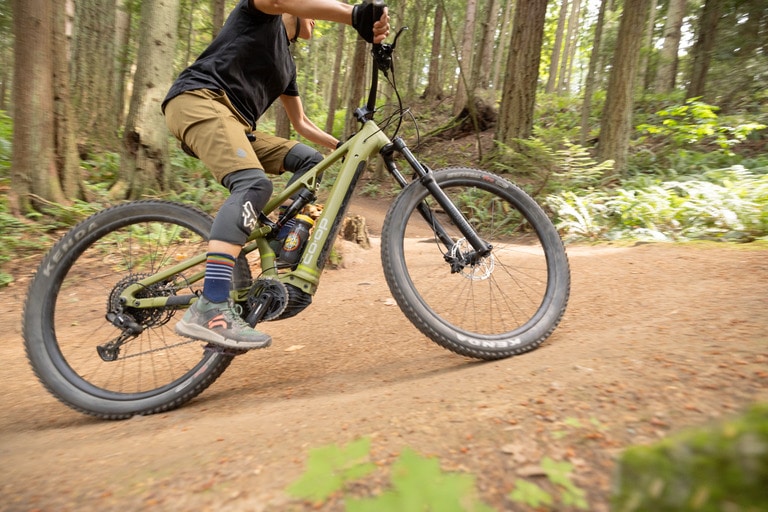
Electric mountain bikes allow riders to go farther and cover more terrain. All the mountain bike styles discussed below can be found as e-bikes that include battery-powered motors. E-bikes fall under three different classes. Class 1 e-bikes, which are most common in the U.S., are pedal-assist only with a top assisted speed of 20 mph. Class 2 e-bikes have pedal assist and throttle power, meaning the motor can power the bike without the rider needing to pedal; both of which top out at 20 mph. Class 3 e-bikes are pedal-assist only, but have a top motor assistance speed of 28 mph. Most U.S. mountain bike trails that allow e-bikes typically permit Class 1 models. Check the rules for your local trails before you buy. The International Mountain Bicycling Association (IMBA) has good resources on eMTBs and where you can ride. Other resources include PeopleforBikes Ridespot, Trailforks, Trails Are Common Ground and the MTB Project.
Good for riders who want to: go further and to be able to ride more varied terrain (including climbs) with additional pedal assist.
Cross-country Mountain Bikes
Traditionally designed to tackle fast, aerobically demanding races, cross-country (XC) mountain bikes weigh less than trail bikes and they pedal with more efficiency. To do so, they feature less travel in their suspension designs, typically around 100mm to 120mm; have a firmer pedaling platform (meaning the bike "bobs" minimally when you pedal); and their steeper head-tube angles allow for quick and nimble handling. They are fast and fun to ride in less technical terrain, but not so well-suited to rougher or steeper trails. They can be hardtails (that is, with no suspension in the rear) or full-suspension.
Typical specs: 60-120mm of suspension travel; 67-70° head-tube angle
Good for riders who want to: ride smoother trails with fewer technical challenges. You want something lightweight and quick handling. You prioritize climbing efficiency over descending capability, and you may also want to do some cross-country or endurance racing.
Enduro Mountain Bikes
Named for a discipline of racing in which riders are timed on the downhills but are not timed on the climbs, these bikes have slacker head-tube angles and large amounts of suspension travel. This setup enables them to tackle very steep and rough descents. They are also suited to occasional riding at bike parks. Unlike pure downhill bikes, they still have the gearing, pedaling efficiency and reasonable weight that allows riders to do the long, leg-burning climbs often necessary to reach the rowdiest descents. (Some riders even describe them as mini downhill bikes.)
Typical specs: 130-180mm of suspension travel; 63-66° head-tube angle
Good for riders who want to: ride very steep and challenging downhills; very rocky and technical terrain; jumps and drops; and occasionally, lift-serviced bike parks—and you want to ride them at speed. You prize descending capability over climbing efficiency and don't mind a bike that is a bit slower or tougher to pedal uphill than a trail or XC bike.
Downhill Mountain Bikes
Downhill bikes are strictly for chairlift or shuttle-assisted riding, because they aren't suited for pedaling more than very short distances. With their massive amounts of travel and their sturdy frames, they are heavy but stable, and they inspire confidence on jumps, berms, rock gardens, and wooden ramps and drops. REI does not sell downhill bikes.
Typical specs: 180-200mm or more of suspension travel; 62-64° head-tube angle;
Good for riders who want to: ride at lift-serviced bike parks only;
Fat-Tire Bikes
Oversize tires, from 3.7 to 5 inches or more, give fat-tire bikes both flotation and traction on sand or snow. Fat-tire bikes can also be ridden on trails, though their extra weight and less-precise handling mean that if you're mostly riding dirt, you should consider a different style of bike.
Good for riders who want to: ride on snow, sand or other challenging surfaces
Hardtail vs. Full-Suspension?
When shopping for a new mountain bike, you'll inevitably face a key choice: full-suspension or hardtail? The main function of a suspension system is to keep the wheels of the bike on the ground, maximizing control for the rider and insulating them from rough terrain.
Full-suspension bikes have a suspension fork up front and a rear shock, while a hardtail has only a front suspension fork.
Full-suspension mountain bikes: With both a front suspension fork and a rear suspension shock, full-suspension mountain bikes help absorb the most impact and chatter from the trail. An added benefit is that it insulates the rider from rough terrain, reducing fatigue and creating a smooth and more comfortable ride.
Rear suspension also offers better traction and control and inspires more confidence in difficult terrain. Modern suspension designs are very good at minimizing the "pedal bob" that riders used to experience when climbing uphill on full-suspension bikes, so while most such bikes today can "lock out" the rear suspension for better pedaling-power transfer, it's now usually unnecessary; a rider often can enjoy better traction on climbs with the full suspension engaged.
Hardtail mountain bikes: With front suspension forks but no rear suspension, hardtails can be good options for budget-conscious buyers. Traditionally, cross-country riders were most likely to gravitate toward hardtails as these bikes allow more direct transfer of power from the pedal stroke, but there are also trail-oriented hardtails with slacker geometry and longer-travel forks. Some of these trail hardtails come with wider, "plus size" tires—more on that below—which are more forgiving and can compensate a bit for the lack of rear suspension.
Rigid mountain bikes don't feature any suspension. Many fat-tire bikes are rigid because the wide tires and low tire pressure provide enough cushion. Beyond fat-tire bikes, rigid bikes are generally rare, because while they're less expensive, they require a lot of skill to ride.
Mountain Bike Wheel Size
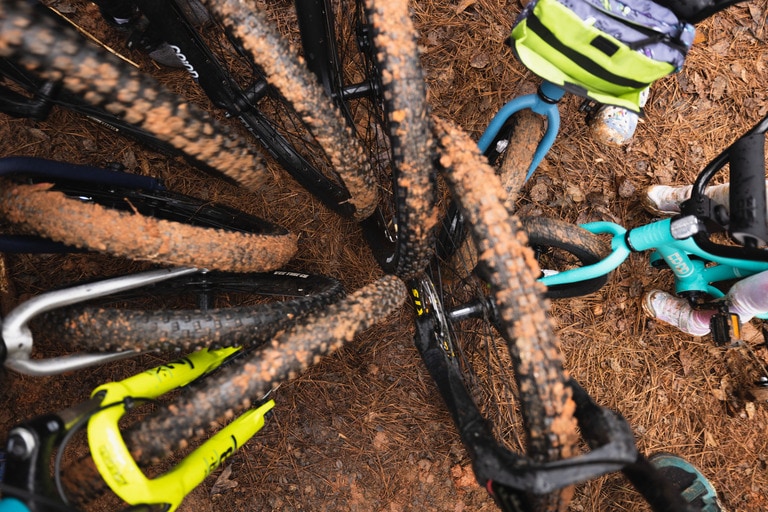
When you walk into a bike shop and inquire about mountain bikes, you're likely to be asked what diameter size wheels you want. Here's the rundown:
26 in.: In the not-too-distant past, all mountain bikes were equipped with 26-inch wheels. It is still a popular wheel size for its responsiveness and maneuverability, but now when you walk into a bike shop and inquire about mountain bikes, you are likely to be asked, "26 inch, 27.5 inch or 29 inch?"
27.5 in. (also known as 650b): Compared to 29ers, bikes with 27.5-inch wheels generally feel more playful, quicker to accelerate and more maneuverable—for example, they're often easier to pilot around a very tight turn. But they still roll fast and maintain good momentum. Smaller riders may prefer 27.5-inch wheels, or they may be the only option in small or extra-small frame sizes.
29ers/700c: Bikes that feature bigger 29-inch wheels may feel a little slower to accelerate, but once moving, they generally maintain faster rolling momentum. They're also easier to roll or hop over technical obstacles like rocks and logs. Despite the general reputation of 27.5-inch wheels being more playful and maneuverable, modern frame geometry on 29ers have made the handling differences between the two quite subtle.
Mixed-wheel size: Some mountain bikes now come with a 29er in the front and a 27.5 in the rear. This mixed-wheel size setup, also known as a "mullet," offers the better rollover capability of a 29er, with the extra maneuverability of a 27.5. It's still a relatively rare configuration.
For more help choosing between 27.5-inch and 29-inch wheels, see 27.5 in. vs. 29er: Which Mountain Bike is Right for Me?
27.5+ in.: The plus symbol indicates extra-wide tires, typically 2.8 to 3 inches in width. These wider tires, also called "plus tires," offer a more comfortable and forgiving ride and better traction than a traditional trail tire (which ranges from 2.2 to 2.6 inches in width). Plus, tires are most often found on hardtails, where they can make up in part for the lack of rear suspension.
24 in.: Kids' mountain bikes typically have smaller, 24-inch wheels. Generally speaking, these suit kids ages 10 to 13, but this depends more on the size of the child than the age. Younger or smaller children can get started on mountain bikes with 20-inch. wheels.
Mountain Bike Frame Materials
A bike frame's material influences its weight, durability and price. Aluminum and carbon fiber are the most commonly used materials for mountain bike frames.
Carbon fiber is common on high-end mountain bikes because of its strength and low weight. It is relatively expensive.
Aluminum frames are less expensive than carbon frames, but they are heavier. The highest-end aluminum frames can be as little as a pound or so heavier than carbon frames. Budget aluminum frames can be significantly heavier. Because lower-end aluminum bikes also tend to come with heavier parts, the total weight of the bike can be significantly greater than a carbon bike.
Other frame materials include steel alloys and titanium. Steel is tough and inexpensive but relatively heavy for a mountain bike. Titanium is light and strong but too expensive for all but highest-end mountain bikes.
For more information, see the REI Expert Advice article, Understanding Bike Frame Materials.
Other Mountain Bike Buying Decisions
While much discussion around the above features may occur in the bike shop, some other decisions arguably make a bigger impact on your riding experience. Think hard on your decision, and consider spending more money on these features, if you want to roll out of the shop with a bike you'll be happy riding for a few seasons.
Mountain Bike Gearing
The number of gears on a bike is a result of the number of front chainrings multiplied by the number of sprockets on the cassette. The more gears a bike has, the greater the rider's ability to fine-tune their gearing to the terrain they're riding and find a comfortable pedaling cadence.
In the past, mountain bikes came with two or three chainrings in the front. Now many mountain bikes come with a single chainring in the front and a wide-range cassette in the rear containing anywhere from 8 to 12 cogs. This kind of single-chainring setup is called a "one-by," as in 1x8, 1x9, 1x10, etc. Bikes with one chainring are lighter and simpler: You only need to think about shifting on one side of the handlebar, and you don't have to worry about "cross-chaining," or finding yourself in a bad combination of front chainring and rear sprocket.
Less-expensive bikes still have double or triple chainrings. Having to shift in the front and rear can increase the chance of cross-chaining or mis-shifting. On the other hand, bikes with 2x or 3x setups offer more gearing options, including very low climbing gears.
Bike gearing can be modified after you buy a bike, though doing so can be expensive.
Learn more about bike gears in our article, Bike Gears and Shifting Basics.
Air vs. coil spring suspension
Less expensive hardtail mountain bikes can either come with an air fork or a coil fork. Air forks use a combination of pressurized air and suspension fluid to expand and contract, while coil forks use a metal coil spring to provide resistance. Air forks are significantly better than coil forks at absorbing impact, which improves bike handling and reduces the amount of energy that gets transferred to the rider's body. If possible, invest in a bike with an air fork. You'll ride better and experience much less upper-body fatigue.
Hydraulic vs. cable-actuated brakes
All reliable modern mountain bikes come with disc brakes. Disc brakes feature brake pads that grip onto a brake rotor mounted to the wheel hub. They are far superior to rim brakes in terms of power and performance under all conditions.
Disc brakes come in two versions. Hydraulic disc brakes offer more progressive and stronger braking with less finger effort, and they self-adjust for brake pad wear. Cable-actuated (also known as mechanical) brakes need manual adjusting as the pads wear. Hydraulic brakes are more expensive and complicated to service, but they're worth the investment if you can afford it. Hydraulic brakes cause less upper-body and hand fatigue and enable better bike control through the ability to more subtly moderate speed.
Tubeless tires
Many mountain bikers today prefer to ride with tubeless tires and wheels. These wheel setups forego the inner tube in favor of a sealant solution that can immediately patch small punctures. Going tubeless significantly reduces the chances of a pinch flat, and allows the rider to run lower tire pressures, meaning better traction and a smoother ride.
When bikes are sold they usually come with tubes. If you can, look for bikes whose wheels and tires have a label or sticker that says "TLR" (tubeless-ready), or that otherwise indicate that they can be set up to roll without tubes. If the bike you're considering has wheels that are not tubeless-ready, make sure you know what you're committing to. Swapping out wheels later can be quite expensive.
Dropper post
When riding a mountain bike over varying terrain, you'll need to be able to move your body back and forth over your bike. Being able to drop your saddle makes that significantly easier. That's why most mid- to higher-end mountain bikes today come with dropper posts, or seat posts whose height you can adjust with the push of a remote button on the handlebar. Dropper posts have become so ubiquitous that most experienced riders today would struggle to ride without one. If the bike you're eyeing doesn't have one, fear not: They're one of the easier parts to upgrade down the line.
Find a Mountain Bike That Fits You
Buying a bike that fits correctly is key to achieving your best riding because it affects both comfort and bike handling.
How mountain bikes are sized: Mountain bikes are most often sized in inches (15", 17", 19") and/or by name: XS, S, M, L and XL. Sizes generally correspond to your height, and most bike manufacturers include size charts that list a height range for each bike size. If you're in-between sizes, test-ride both, because variations in body dimensions—for example, if you have a longer torso versus longer legs—likely will make one size fit better for you.
Visit a bike store and go for a test ride. The best way to find the right fit is to go to REI or a specialty bike shop and ask to ride several bikes. With the help of a sales specialist, you should be able to narrow down your selection to two or three bikes. Take each on a ride of at least 10 minutes, ideally on a trail and including a short hill and descent. In most cases one bike will simply feel better than the others. You want a bike to feel like a natural extension of your body.
To learn more about fitting a mountain bike, see our Mountain Bike Fitting Basics article.
Before You Leave the Shop
Any REI bike shop will give your bike a final mechanical safety inspection before you wheel it out the door. Also, ask for the suspension settings to be adjusted to your body weight.
Make sure you have at least the essentials for repairs and maintenance: spare tube, patch kit, tire levers, pump, multi-tool, chain lube and something in which to carry it all. And don't forget a helmet.
Your unique riding style and preferences often mean that you'll want to do more fine-tuning after hitting the trail. If the bike doesn't react to you or support you in the way you expect, take your bike into a qualified bike shop like REI.